
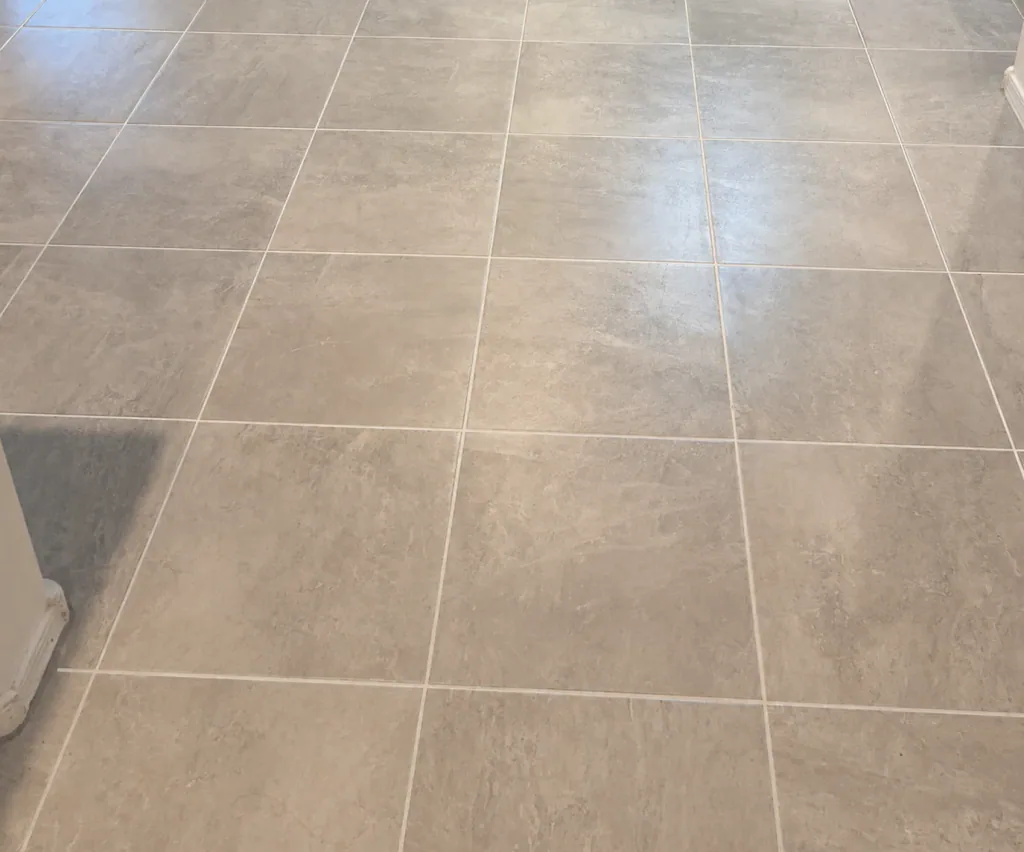
What causes grout haze?
Grout haze is a thin layer of grout left on the tile after installation. The water from cleanup evaporates, but the cement or resin stays behind. It can leave the floor looking cloudy, streaky, or dull even when the grout joints look finished.
Common reasons that film gets left behind include:
- Incomplete cleanup. The excess grout is removed, but a thin film remains on the tile face.
- Residue drying before it is removed. Working too large an area or missing the grout's cleanup window lets the film harden.
- Spreading residue during washing. A grout-loaded sponge or dirty rinse water carries material back across the tile.
- Residue caught in the texture. Recesses in textured tile can hold grout that a quick surface wipe misses.
- Using the wrong cleanup product. A cleaner intended for cement haze will not necessarily remove epoxy or premixed grout residue.
Haze can also become more noticeable later as dirt and cleaning products collect on the leftover film. That is why a floor can keep showing footprints and streaks despite regular mopping.
Which product removes grout haze?
Find the grout name on the bag, tub, receipt, or installer's invoice, and confirm what the tile is made of. Those two details determine which remover to use. Appearance helps you investigate, but a white or shiny film alone does not identify its chemistry.
Cement grout haze: an acidic grout haze remover
For cured cement haze on compatible porcelain or ceramic tile, use a product labeled for cement grout haze removal. The acid breaks down the mineral residue so it can be scrubbed loose and rinsed away. An everyday floor cleaner is not designed to dissolve that hardened cement film.
Aqua Mix Cement Grout Haze Remover is one example. Its directions require at least 10 days of curing before use. Other products and grouts have different waiting periods, so follow both labels rather than applying one timing rule to every floor.
Do not use this method on marble, travertine, or limestone. Acid can etch the stone itself. Decorative glazes, trim, and grout joints also need a compatibility check.
Epoxy or premixed grout haze: a dedicated resin remover
Resin residue needs a formula designed to loosen that particular grout film. Some dedicated removers are alkaline-based; a general alkaline floor cleaner is not automatically an epoxy remover. Look for the exact grout type on the label and check the grout manufacturer's recommendation.
For example, FILA EPOXY OFF is formulated for cured epoxy, urethane, and premixed grout haze on listed nonabsorbent surfaces. It excludes absorbent natural stone. Its application time also differs from a cement haze remover, so the products are not interchangeable.
Grease and cleaning buildup over the haze: an alkaline cleaner first
An older floor may have two layers to remove: oily dirt or cleaning buildup on top, with cement haze underneath. A compatible alkaline tile cleaner breaks down the greasy layer. Once that solution is removed and the floor rinsed, the exposed cement residue can be treated separately with an appropriate haze remover.
FILA describes this two-stage cleaning process for dirt layered over grout residue. The alkaline cleaner handles the surface soil; the acidic remover handles the cement on acid-resistant tile. Do not mix the products together.
How to remove grout haze step by step
- Check the cleanup window. If grouting is still underway, follow the grout's fresh-cleanup instructions. For dried haze, wait until both the grout and remover instructions allow treatment. Fresh grout is not ready for every chemical cleaner.
- Prepare a small test area. Remove loose grit and protect nearby surfaces. Wear the gloves and eye protection specified on the label. Start in an inconspicuous spot before treating the whole room.
- Apply the correct remover. Follow its dilution and pre-wetting directions. Do not substitute an improvised vinegar mixture for a product chosen for your tile and grout.
- Allow the specified contact time, then scrub. Work in a small area with the recommended non-scratching pad or nylon brush. Give textured recesses attention, and keep the solution from drying on the tile.
- Lift the dirty solution off the floor. Use clean cloths or suitable wet-extraction equipment as directed. Pushing the loosened grout around with a mop can leave another film.
- Rinse and inspect after drying. Use fresh water and clean tools. Compare the test area's clarity, sheen, and grout color with the untreated floor. Continue only if the residue is removed without changing the finish.
These steps describe the process, not a universal dilution or dwell time. For example, FILA's cement haze remover instructions include pre-wetting, working in small areas, collecting the residue, and rinsing. Use your chosen product's directions for the actual quantities and timing.
How we diagnose and treat a hazy tile floor
We start with the tile, the grout used, and when the haze appeared. We also ask what cleaners or sealers have already been applied. A film left after grouting needs a different approach from a floor that became cloudy after repeated mopping.
Next, we test a small area with a cleaner suited to the material and suspected residue. The result tells us whether we are removing surface soil, grout film, or both. We remove the loosened material, rinse, and inspect the dry surface before recommending treatment across the floor.
If cleaning exposes a dull patch in the stone rather than removing a film, the problem may be etching. If white powder keeps returning, moisture and salts may be involved. Neither problem is solved by repeatedly applying a stronger haze remover.
What if the grout haze will not come off?
Check the diagnosis before increasing the strength or using a rougher pad. The remaining marks could be resin residue, sealer film, mineral deposits, or damage to the finish. Thick, hardened deposits and haze on natural stone need a different assessment from a light film on porcelain.
Our tile and grout cleaning service includes assessing the surface and residue so we can recommend the right treatment. Send a photo of the dry floor, a close-up of the haze, and the grout product name if you have it. We will explain what the test area shows and what it will take to clean the floor.