
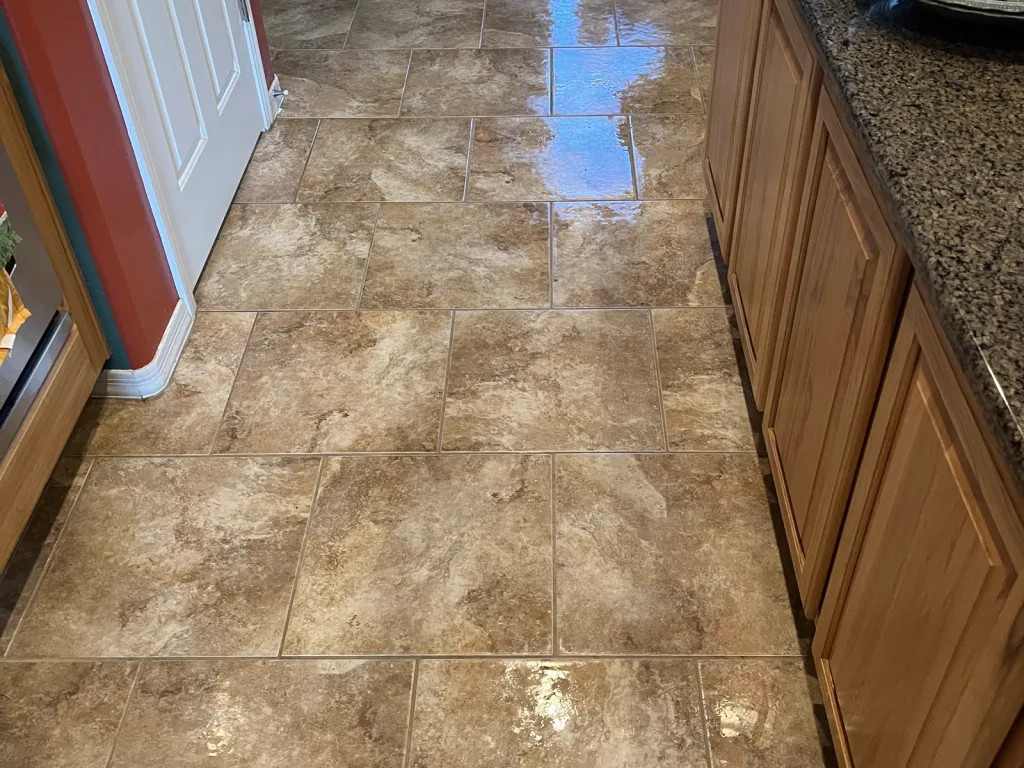
“Stain Wranglers performed miracles! They brought my dirty stained grout back to new condition with their color seal! I was thinking of tearing a perfectly good floor out, but now I don’t have to! Professional team came and did a beautiful job! Highly recommended!”
Tile and Grout Cleaning in San Tan Valley and the East Valley
Grout is porous, it sits below the tile, and it collects everything a floor is asked to carry. Soil, cooking grease, body oils, detergent film, and hard-water minerals all end up in the joint rather than on top of it, which is why a floor can be mopped every week and still look tired. Professional tile and grout cleaning reaches into the joint, where a mop cannot.
We clean it with hot water under pressure inside an enclosed rotary tool, so the soil that comes loose is recovered in the same pass instead of settling back into the joints. We assess the dry result, discuss whether sealing or color sealing would help, and recommend maintenance products for your floor. The goal is a floor you can keep looking clean in the months ahead, with a care routine you understand.
Google Reviews
More than 100 reviews with a five-star rating.
“Needed the tile and grout clean. Flooring looks brand new.”
“We had them clean grout on tile floors throughout the house. It had been awhile since we had done so they were pretty dirty. They got them back in shape for us! Good job”
“Stain Wranglers was great to work with. Justin was on time and easy to communicate with. He was honest and did a great job for reasonable price. He was knowledgible and trustworthy. We will use his services again!”
“They were professional and were great with my hyper toddler, very appreciative.”
“Wonderful service and the customer service is top notch! They got my floors spotless, which with 4 dogs is no easy task! Highly recommend!”
“AMAZING!!! Looks like I got brand new floors! Thank you. Would highly recommend”
“I highly recommend his floor cleaning services! He's reliable, professional, and does an excellent job. My floors looked amazing, and I couldn't be happier with the results.”
“Stain Wranglers are honest, reliable and trustworthy. They have impeccable work ethic and will treat you fairly. Please give them a try.”
“Outstanding customer service! So refreshing to use a company that carries very high standards. Stain Wranglers exceeded our expectations. A+”
Will it just look dirty again in two weeks?
You want more than a floor that looks good on the day we leave. If you’re worried about paying for grout cleaning and ending up back where you started, tell us. We’ll discuss what is affecting the appearance and how to care for the floor after the work.
- Maintenance products matched to your floor. We recommend what to use for your tile, grout and any sealer, along with the right dilution and cleaning method. More cleaner is not always better; leftover residue can leave the floor looking dull or dirty.
- Clear sealing where it helps. A suitable sealer reduces absorption and improves stain resistance, giving you more time to clean up spills. It does not recolor an uneven joint or keep dirt from landing on the floor.
- Color sealing for a more even appearance. If sound grout remains discolored after cleaning, color sealing can restore or change its color while adding stain resistance. We check the grout and discuss the color before recommending it.
These steps help you maintain the result over the months ahead. How the floor holds up depends on traffic, spills, moisture and regular care. If discoloration returns quickly, get in touch so we can discuss what changed rather than simply repeating the same cleaning.
Why mopping stops working
A mop does not remove soil from a tile floor so much as redistribute it. Detergent emulsifies grease and dirt into the water, that water gets pushed across the surface, and it drains into the lowest, most absorbent thing in the room, which is the grout joint. Cement grout wicks it in. Over enough cycles the joint holds more soil than the mop is taking away, and the floor reaches a plateau where it never quite looks clean no matter how often it gets washed.
Detergent residue makes it worse. Anything left on the surface after the water evaporates stays slightly tacky and pulls the next round of dust straight back down into the same joints. That is the mechanism behind one of the most common complaints we hear, that a floor seems to get dirty faster the more diligently it is mopped.
What a restorative clean actually removes
- Embedded and tracked soil down inside the pore structure of the grout, not just the film on top of it
- Cooking grease and oils saponified with an alkaline degreaser rather than smeared around
- Detergent and soap film, the sticky layer that makes a clean floor re-soil quickly
- Body and personal-care residue in showers, tubs, and the tile around them
- Surface mineral deposit from hard water, where the tile and grout will tolerate the chemistry that removes it
- Soil trapped in texture, the recessed pattern on slip-resistant and tumbled tile that a flat mop head never reaches
For a film left after grouting, our guide to removing grout haze explains why the tile material and grout type matter.
The tool is most of the difference
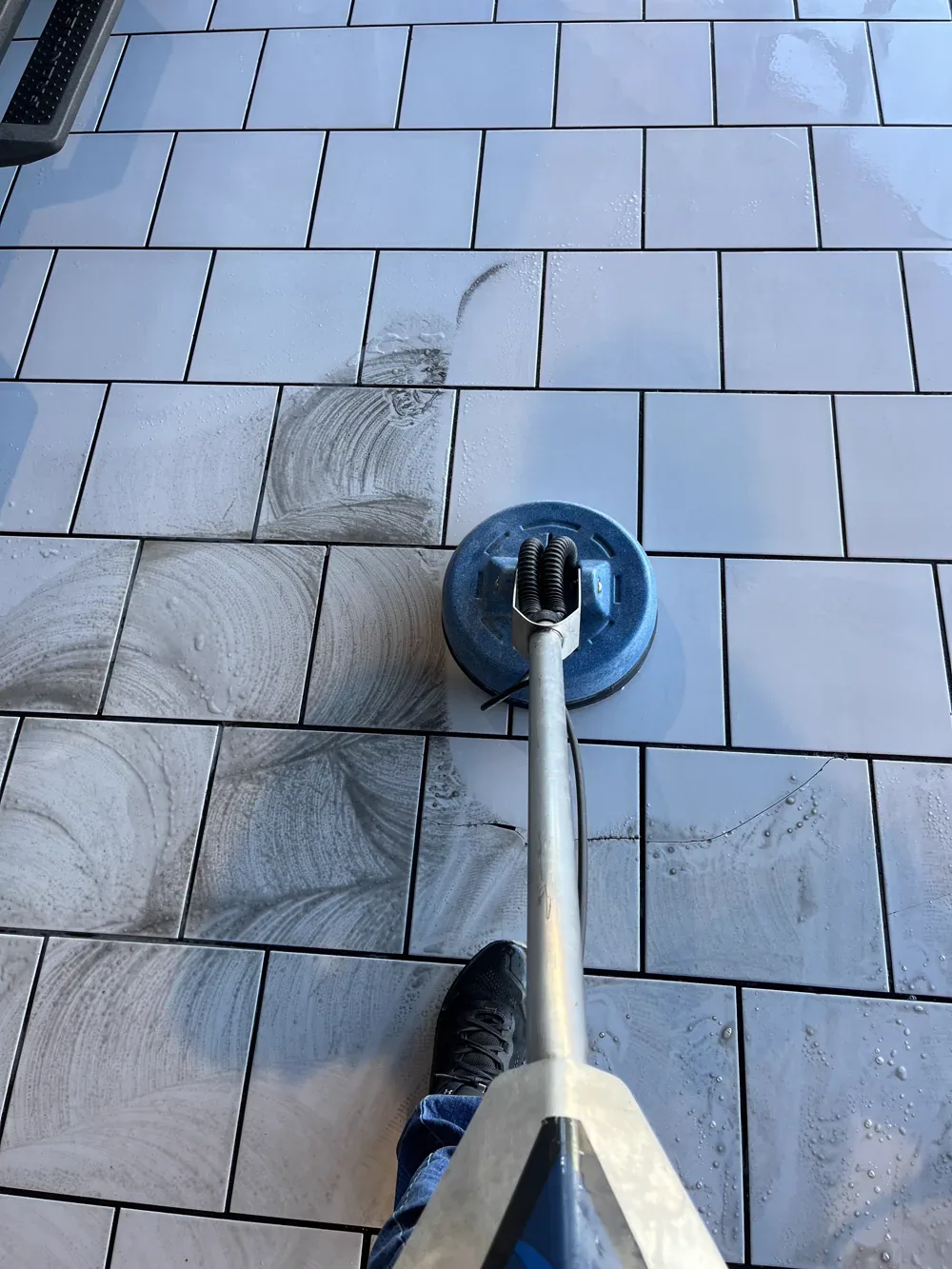
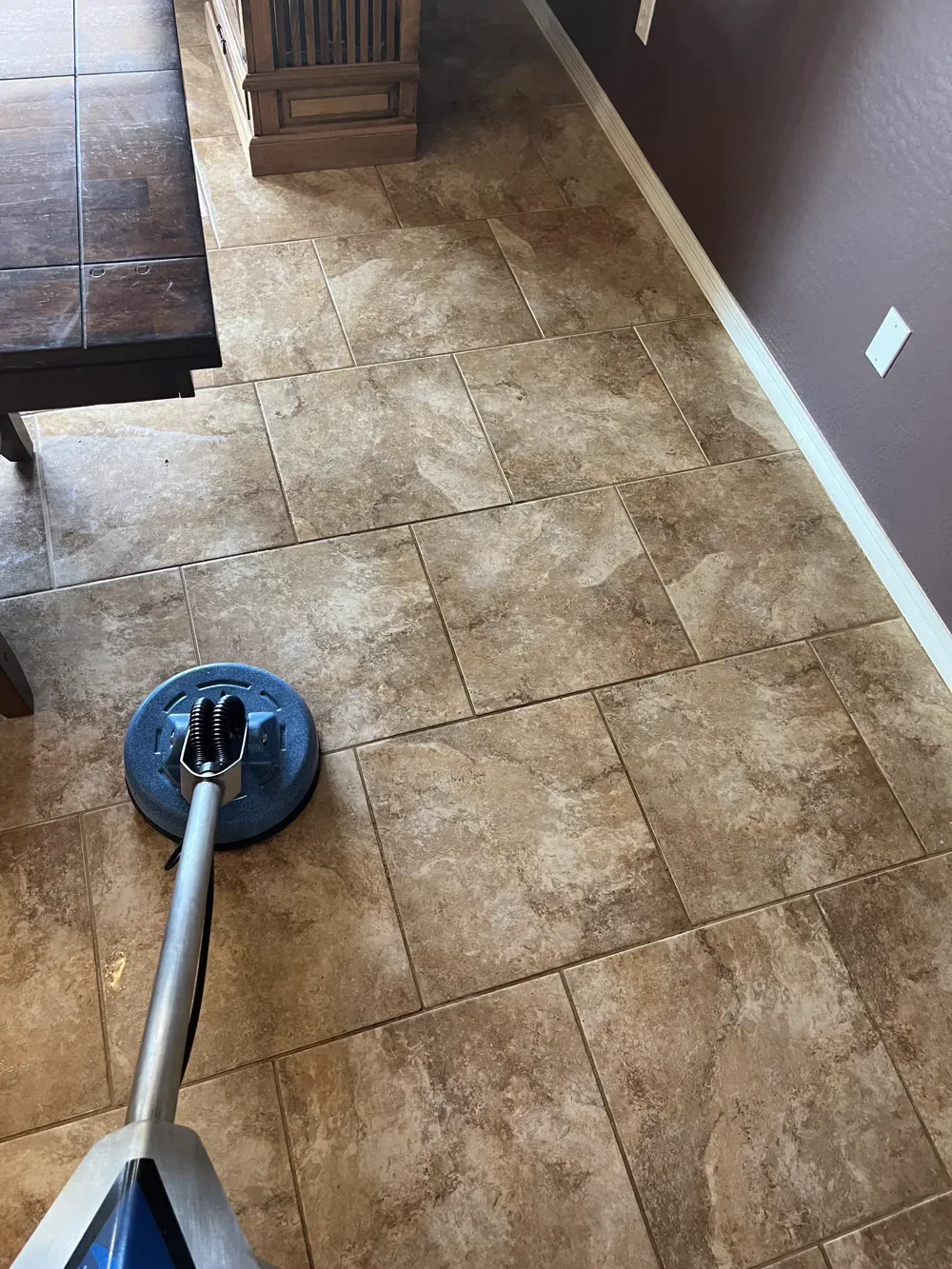
The equipment that separates a professional clean from a rented machine is an enclosed rotary extractor. Two jets inside a sealed housing drive roughly 200°F water at 800 to 1200 PSI into the tile and the grout joint, and a vacuum hood around them pulls the slurry back at 13 to 15 inches of mercury before it can run anywhere.
Because the housing is enclosed, that pressure is safe indoors and it is aimed where it needs to go. It reaches into the grout matrix and the pore structure of the tile, which is exactly the depth a mop, a scrub brush, or a consumer scrubber physically cannot get to.
Agitation still matters before the tool ever touches the floor. A counter-rotating brush works the chemistry down into the texture and the joint valleys and keeps it from flashing off, which in a room at 105°F is not a small consideration.
How a visit runs
- Identify the surface. Glazed ceramic, porcelain, unglazed quarry tile, natural stone, terrazzo, cementitious or epoxy grout, and any existing coating, wax, or color seal. Every decision after this depends on that answer.
- Dry soil removal first. We vacuum before anything gets wet. In a dusty climate the grit tracked across a floor is abrasive in its own right, and wetting it just turns it into mud in the joints.
- Apply chemistry matched to the material. Neutral for routine or sensitive surfaces, alkaline where there is grease, and acidic descalers only where the tile and grout will genuinely tolerate them.
- Agitate. Brushes work the product into the texture and down into the joints while it is still wet.
- Rinse and extract, twice. Hot rinse under pressure, recover the slurry, rinse again, recover again. The second pass is what keeps detergent film off the finished floor.
- Inspect dry. We look at the floor once it has dried and tell you what is left, whether that is nothing, a color problem, or a joint that needs repair.
How we choose chemistry for the tile and soil
We identify the tile, grout, soil, and any previous treatment before selecting a cleaner. A product that loosens grease on porcelain may be unsuitable for a stone border or the finish on adjacent trim.
Neutral cleaners
For routine soil and for any surface where we are being careful, including most natural stone.
Alkaline degreasers
Used for suitable greasy soils where the material and existing finish tolerate the formula. The product label and test area determine the application.
Acidic descalers
Considered for compatible mineral deposits only when the tile, grout, and surrounding materials tolerate the formula. Acid can etch marble, travertine, and limestone and can damage cement grout.
That last line is the reason a household bottle of vinegar or a calcium remover so often leaves a floor looking worse. The acid does remove the deposit. It also keeps going into the grout and any calcium-based stone underneath, and the dull, roughened patch it leaves behind is physical loss, not residue. No further cleaning brings that back.
Justin uses TMF products for cleaning work and selects the formula after identifying the surface and soil. For example, the manufacturer lists Groutmaster as an alkaline extraction cleaner with its own mixing and application directions. That is a product reference, not a recommendation to apply it to every tile. Natural stone, coatings, grout, and surrounding trim all affect the choice.
The cleaner also needs time to work without drying on the floor. We work in sections, use agitation where needed, and recover the dirty solution. The product label and the test area guide that sequence; adding more chemical does not replace removing the soil.
What cleaning cannot fix
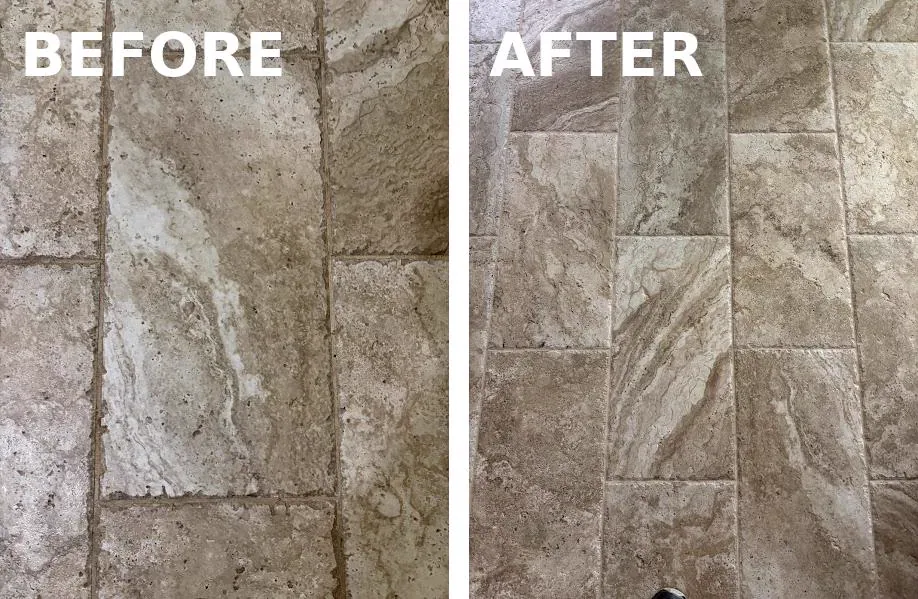
This is the part of the conversation we would rather have before the work than after it. Cleaning removes contamination. It does not change or repair the surface itself, so none of the following responds to it:
- Permanently altered grout color, where pigment has been changed rather than covered
- Missing, cracked, or crumbling joints, which have to be raked out and repacked
- Etching on stone tile, where acid has dissolved the surface and left it dull and rough
- Worn polish and scratches on a stone floor, which need honing rather than chemistry
- Efflorescence that keeps returning, until the moisture carrying those salts is found
- Failed shower waterproofing, which is a membrane and pan question, not a surface one
- Degraded topical coatings, which have to come off before anything underneath can be judged
When we run into one of these we say so on the visit. Two of them have their own process and their own page: grout repair for joints that have physically failed, and grout color sealing for grout that is clean but permanently blotchy or mismatched.
Natural stone floors have their own pages too. Start withstone tile cleaning to see how each stone is handled, or go straight totravertine floor cleaning andmarble floor cleaning for soil on a sound stone finish, and floor polishing for etching and worn traffic lanes.
Sealing after the clean
After cleaning, we assess whether your grout would benefit from a clear penetrating sealer. On suitable grout, it reduces absorption and improves stain resistance. That gives you more time to wipe up spills, but prompt cleanup still matters.
Clear sealing protects without recoloring the joint. If clean, sound grout remains uneven in color, we can discuss color sealing instead. The choice depends on the grout, previous treatments and the appearance you want.
Neither option repairs damaged grout or fixes a moisture problem. We address those concerns first and explain the drying, curing and cleaning instructions for the product used on your floor.
Hard water is the local variable
Phoenix system water runs 172 to 302 ppm of total hardness, about 10 to 17.6 grains per gallon, with total dissolved solids between 464 and 716 ppm. In dry desert air that water evaporates quickly and drops its mineral load on whatever it was sitting on, so scale builds on shower glass, fixtures, and the grout around them within days rather than over months.
Where the tile tolerates it, that deposit comes off with the right acidic descaler. Where it does not, on travertine borders, marble thresholds, and any calcium-based stone, the answer is mechanical and much slower. Knowing which floor you have is the whole job.
Showers, backsplashes, and the transitions
Showers are the hardest tile in a house to keep looking right, and they are the most frequently misdiagnosed. Soap and body-wash residue can leave a chalky film that looks exactly like efflorescence but is neither mineral nor structural. Persistent moisture behaves differently again, and it will not respond to anything applied to the surface.
Backsplashes, tub decks, entries, and the transitions where tile meets another material get worked as part of the same visit. Those changes of plane are also where we most often find rigid grout that should have been flexible sealant from the beginning, which is a repair question rather than a cleaning one.
Keeping it that way
We recommend maintenance products for your particular floor and explain how to use them. Follow the dilution, rinsing and drying directions for the product and any sealer applied.
- Sweep or vacuum before washing, so grit is removed rather than ground in
- Use a pH-neutral cleaner and change the water when it turns, rather than pushing dirty solution around
- Skip vinegar, lemon, and calcium removers on stone tile and cement grout entirely
- Follow the cleaner’s rinsing directions so residue is not left behind
- Put mats at the doors that actually get used, since most of what ends up in grout walked in
- Run the fan in a shower for long enough to dry it, not just long enough to clear the mirror
How we quote
Tile and grout work is priced by area and condition, so the estimate comes after someone has looked at the floor rather than before. Assessments are free. A photo texted from your phone is usually enough for us to tell you what you are probably looking at and roughly what it will take, and if the honest answer is that cleaning will not get you where you want to be, we will tell you that on the phone rather than at the end of a job.
Tile and grout cleaning questions we hear most
Will my grout look dirty again two weeks after cleaning?
That concern deserves a plan before the work starts. We recommend maintenance products suited to your tile, grout and any sealer, and explain how to use them without leaving cleaner residue behind. Where appropriate, clear sealing helps resist absorption and staining. Color sealing can give sound but discolored grout a more even appearance while adding stain resistance. Neither replaces routine cleaning. Traffic, spills, moisture and your care routine affect how the floor looks over the months ahead.
Do you offer tile and grout cleaning near me in the East Valley?
We cover San Tan Valley, Queen Creek, Gilbert, Mesa, Chandler, Tempe, Apache Junction, Ahwatukee, and Scottsdale, along with the rest of San Tan Valley & the East Valley, AZ. Most jobs are booked within the same week. If you are not sure whether your address is inside that area, call and ask, we would rather tell you honestly than send a truck that cannot get to you.
Why does my grout look clean while it is wet and dirty again once it dries?
Water darkens cement grout and hides variation in it, so almost any grout reads as uniform while it is wet. The honest inspection happens once the floor is completely dry, which is why we look again before calling a job finished. If grout looks blotchy after drying, we check for remaining residue, staining, previous treatments and moisture before deciding whether cleaning has reached its limit. Color sealing may be appropriate when sound grout remains uneven in color.
Will cleaning damage my natural stone tile?
Not when the chemistry matches the material. The risk is real, though, and it is why identification comes first. The acidic descalers that dissolve hard-water scale on porcelain would also dissolve marble, travertine, limestone, and standard cement grout, because those are all calcium-carbonate based. On stone we work with neutral or stone-safe alkaline products and mechanical agitation instead.
How long does a floor take, and when can we walk on it?
A typical residential floor is a half-day job. Because we extract the rinse water rather than leaving it on the surface, floors are usually walkable within an hour or two and fully dry the same day, which is faster here than almost anywhere else in the country thanks to the dry air. Rugs and furniture should stay off until it has dried completely.
Is a truck-mounted system really different from a rental scrubber?
The difference is what happens to the soil after it comes loose. A rental machine loosens some of it and leaves the dirty solution on the floor to settle back into the joints. Our rotary tool is enclosed, so the water hitting the surface at pressure and the slurry coming off it are captured in the same pass and pulled back to the truck. That is the part a mop, a scrub brush, or a rented scrubber cannot reproduce.
Should I seal the grout after it is cleaned?
Usually it is worth it, and we will tell you plainly if it is not. A penetrating sealer lines the pore walls so liquids bead up and you have time to wipe a spill before it soaks in. It reduces absorption and improves stain resistance. It does not make grout waterproof, it will not stop a joint that is already failing, and it is not a substitute for color sealing if the problem is that the grout has permanently changed color.
My shower grout goes dark again within a month. Is that a cleaning problem?
Often it is not. Grout that re-darkens quickly in a shower is usually telling you about soap and body-care residue, a detergent film that is still attracting soil, or moisture that is not leaving the assembly between uses. We look at ventilation, drainage, and the condition of the joints along with the surface itself, because cleaning a shower that has a moisture problem just resets the clock for a few weeks.
Can you clean grout without also cleaning the whole floor?
The joints are lower than the tile and they are the reason the floor looks dirty, so grout is where most of the work goes either way. In practice the tile gets cleaned as part of reaching the grout. Where a customer only wants a specific area addressed, a shower, an entry, a kitchen traffic lane, that is a normal way to scope a visit.
Video responses from clients we've served across the East Valley.
Hear what our customers have to say once the work is finished. You can expect the same care and attention when you invite Stain Wranglers into your home or business.
See the work
See tile cleaning projects
A commercial quarry-tile kitchen in Gold Canyon and a residential kitchen in Skyline Ranch, San Tan Valley, from the condition we found to the finished floor.
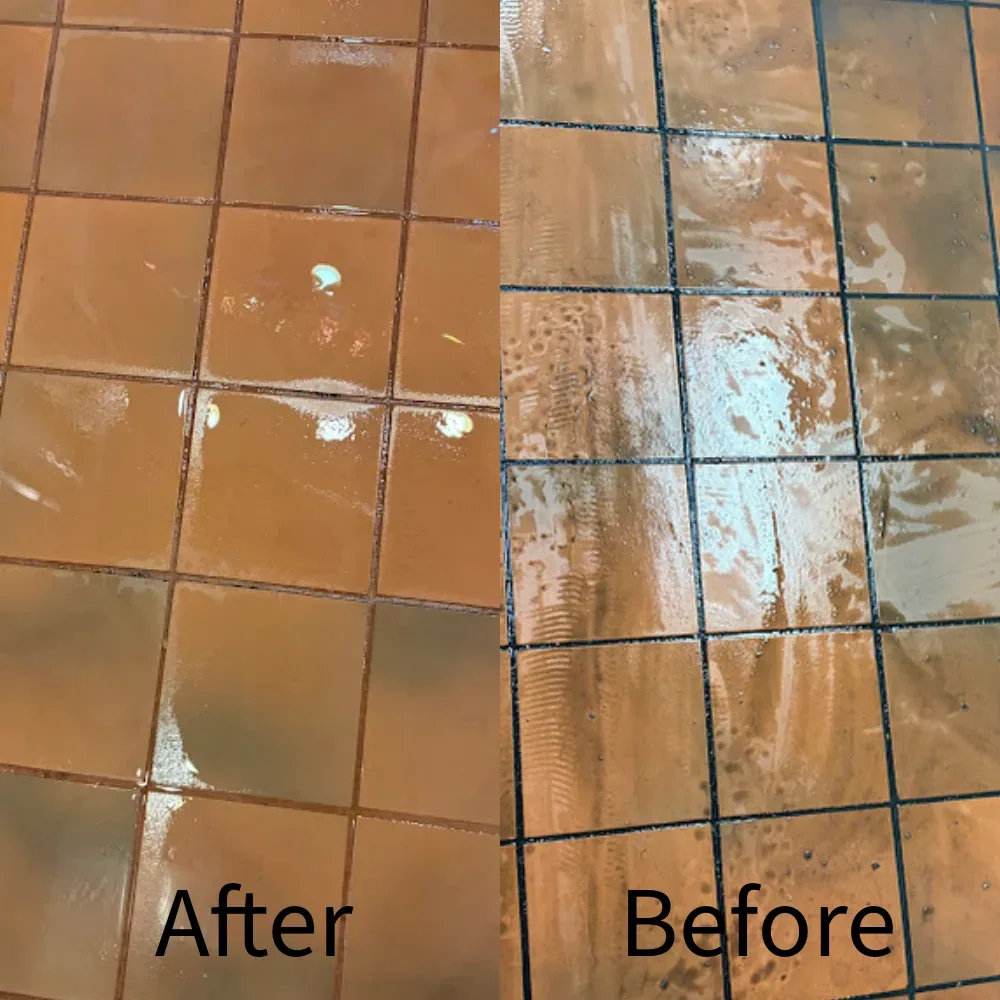 Before / afterCommercial tile cleaning in Gold Canyon, AZFollow the condition, diagnosis, cleaning process, and documented result on a real quarry-tile kitchen floor.Tile cleaning in Gold Canyon
 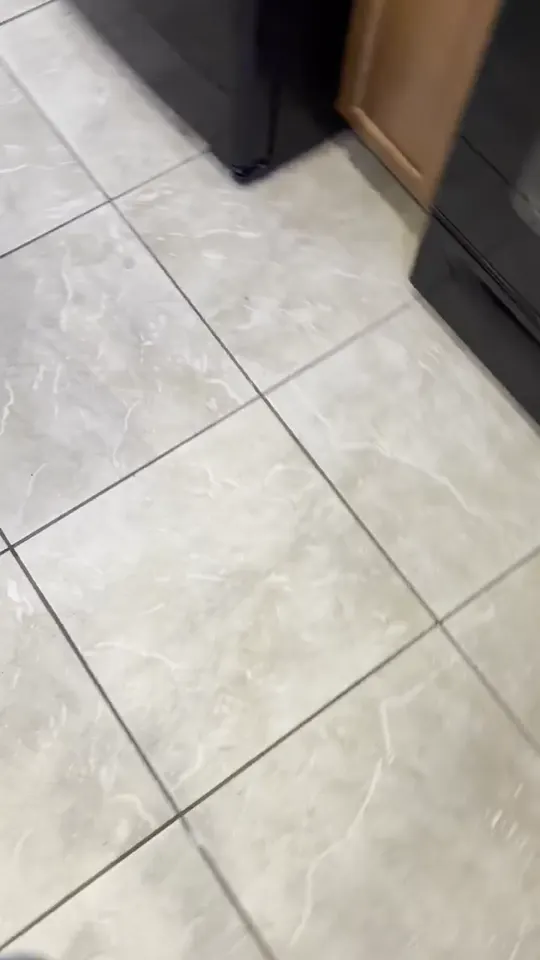 San Tan Valley · residentialKitchen tile cleaning and grout color sealing in Skyline Ranch, San Tan ValleyA 425 sq ft ceramic kitchen where gray grout was cleaned, color sealed white and sealed so it stays that way.Grout color sealing in Skyline Ranch
 Request an assessment.
Tell us about your surface and what you’re seeing. We’ll help you work out the next step for your home or commercial property.
- Stone, tile, floors and countertops
- Residential and commercial, San Tan Valley & the East Valley, AZ
- No charge to have us look at it
Having trouble with the form? Open it in a new tab.