
“Wonderful business. My counters and floors look awesome! Justin is professional and personable.”
Travertine Floor Restoration and Polishing in San Tan Valley and the East Valley
Bring dull, scratched, or uneven travertine floors back to a clean, consistent finish. Stain Wranglers provides travertine floor polishing and restoration for homes throughout San Tan Valley, Queen Creek, Gilbert, Mesa, Chandler, and the rest of the East Valley.
We inspect the stone, identify what caused the change, and explain whether the floor needs cleaning, honing, polishing, filling, or repair. You will understand the recommendation before any work begins.
Travertine restoration is performed as a controlled wet process. That protects your home from airborne stone dust while the worn surface is carefully refined.
Google Reviews
More than 100 reviews with a five-star rating.
“Wonderful service and the customer service is top notch! They got my floors spotless, which with 4 dogs is no easy task! Highly recommend!”
“AMAZING!!! Looks like I got brand new floors! Thank you. Would highly recommend”
“I highly recommend his floor cleaning services! He's reliable, professional, and does an excellent job. My floors looked amazing, and I couldn't be happier with the results.”
“Stain Wranglers are honest, reliable and trustworthy. They have impeccable work ethic and will treat you fairly. Please give them a try.”
“Outstanding customer service! So refreshing to use a company that carries very high standards. Stain Wranglers exceeded our expectations. A+”
“Highly recommend! On time, great service, and very professional. Very meticulous in their work.”
“When you meet someone, with character you know!! This is what my first impression was of Stain Wranglers, will use them over and over and spread the word to everyone. Thank you”
“Justin was quick to show up and get the job scheduled. He worked hard to get our home clean and followed up after he was done to make sure we were happy. Customer service at its finest! Highly recommended”
“Justin is super friendly and explains everything thoroughly. Def would recommend!”
Travertine floor problems we restore
The same floor can have worn traffic lanes, etched spots, loose filler, and an uneven sheen. We inspect the whole surface before deciding where restoration should begin.
Dull traffic lanes
Grit carried through entries and kitchens slowly wears away the finish along the routes people use most.
Etch marks and dull spots
Acidic spills change the stone itself. Honing reaches below the damaged surface so the sheen can be rebuilt.
Scratches and uneven shine
A reflective floor shows every interruption. We refine the full area so one repaired spot does not stand out.
Open holes and loose filler
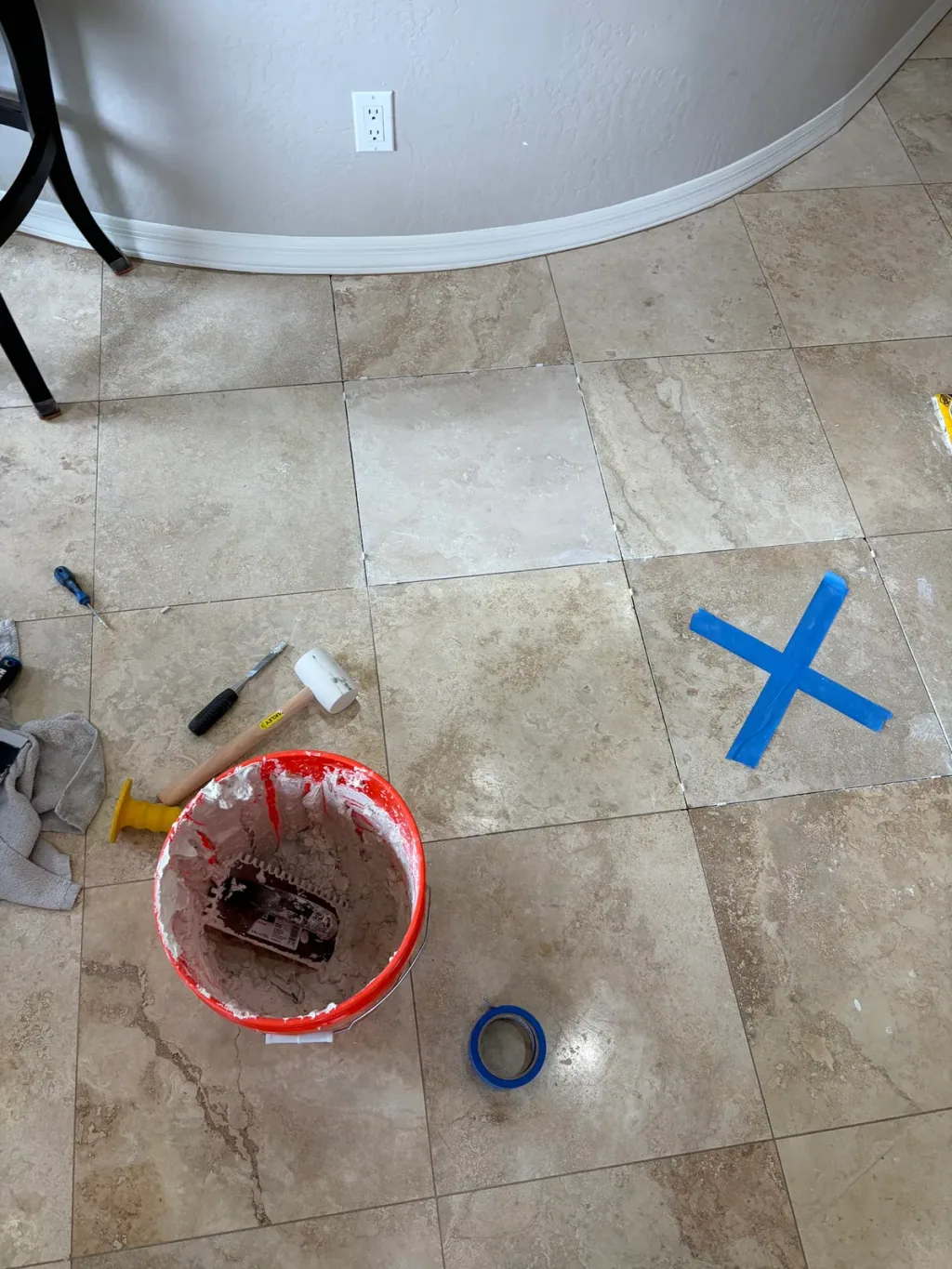
Natural voids can reopen as old filler loosens. Sound repairs are completed before the final finish is created. See how we filled and honed a Pecan Creek South floor where bar stools kept opening new holes.
Raised tile edges
Lippage catches light and foot traffic. We assess whether the high edges can be safely blended into the floor.
Cloudy sealer or coating
A failed layer must be addressed before the travertine underneath can be restored.
Travertine Floor Polishing Results in San Tan Valley and the East Valley
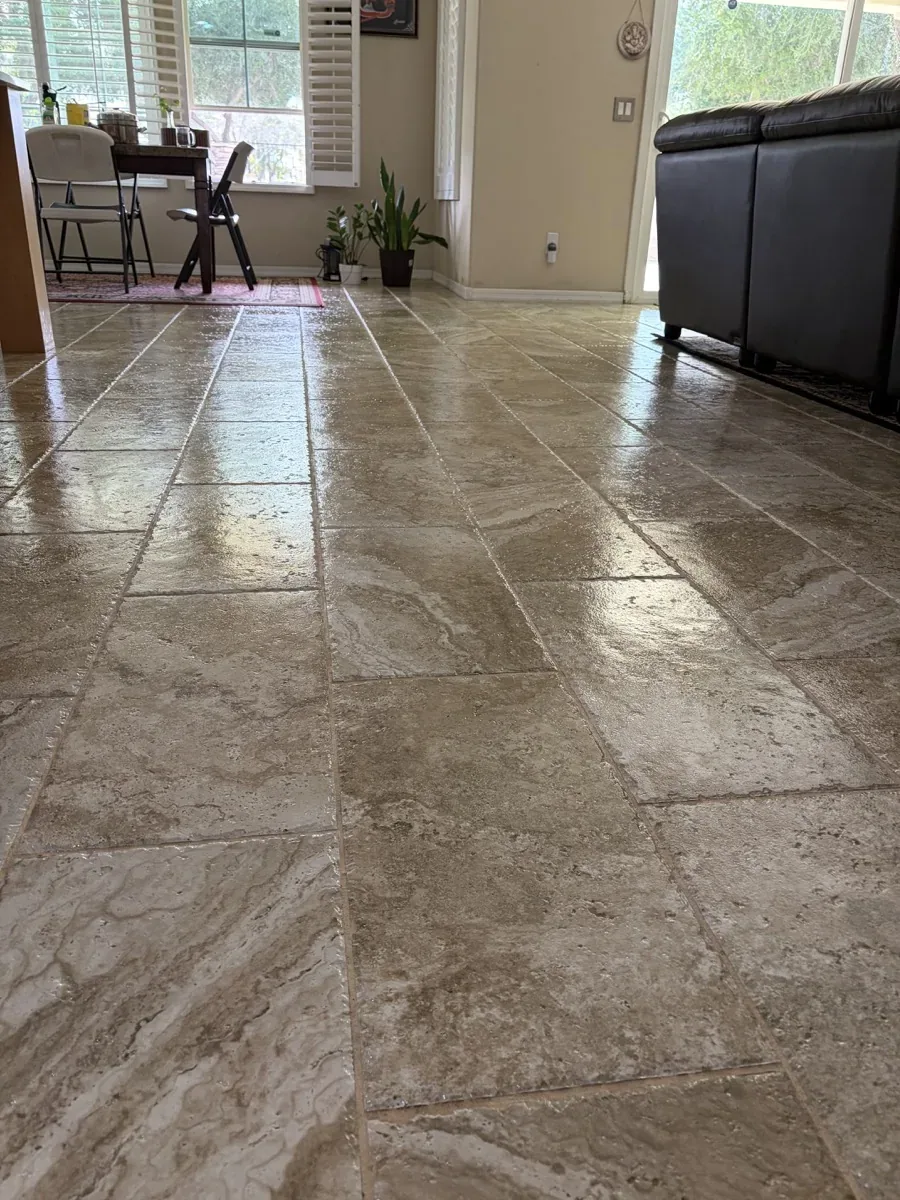
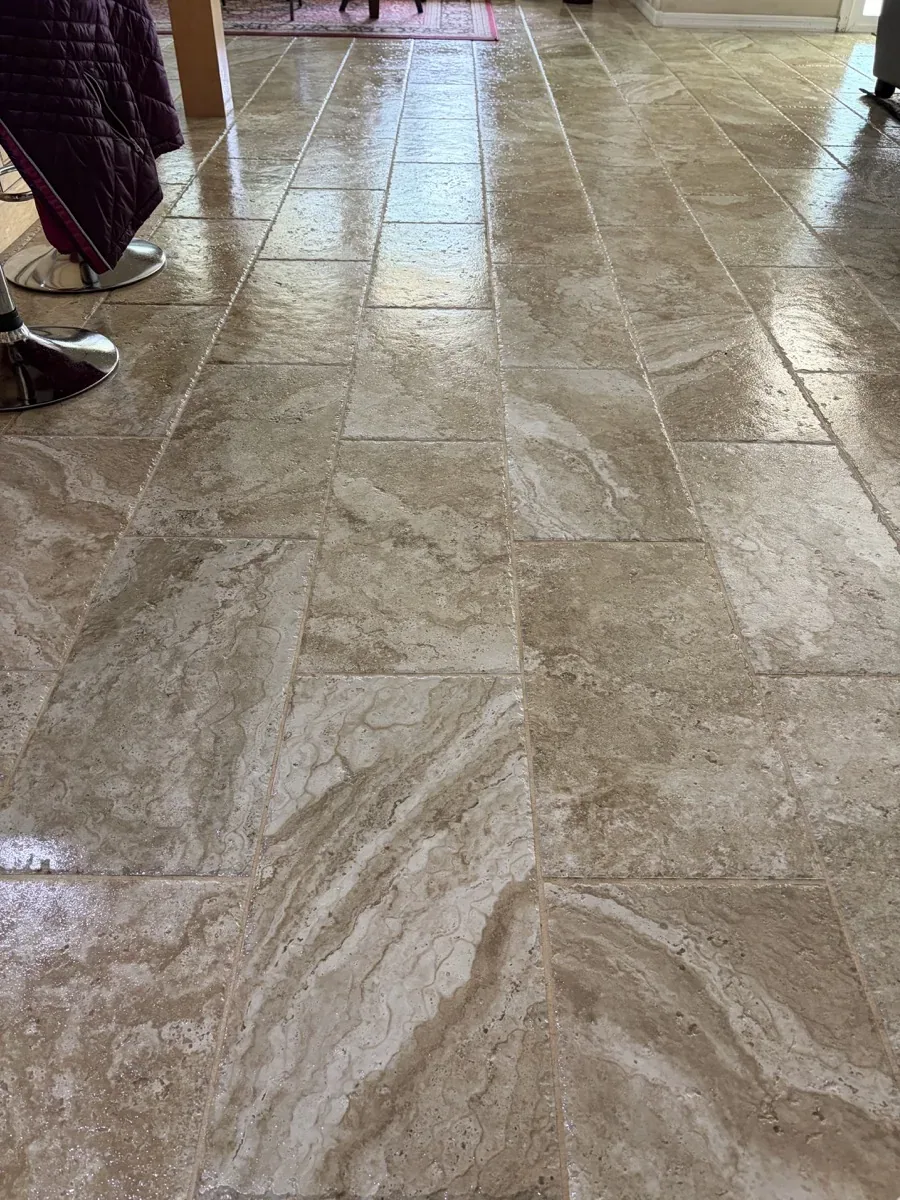
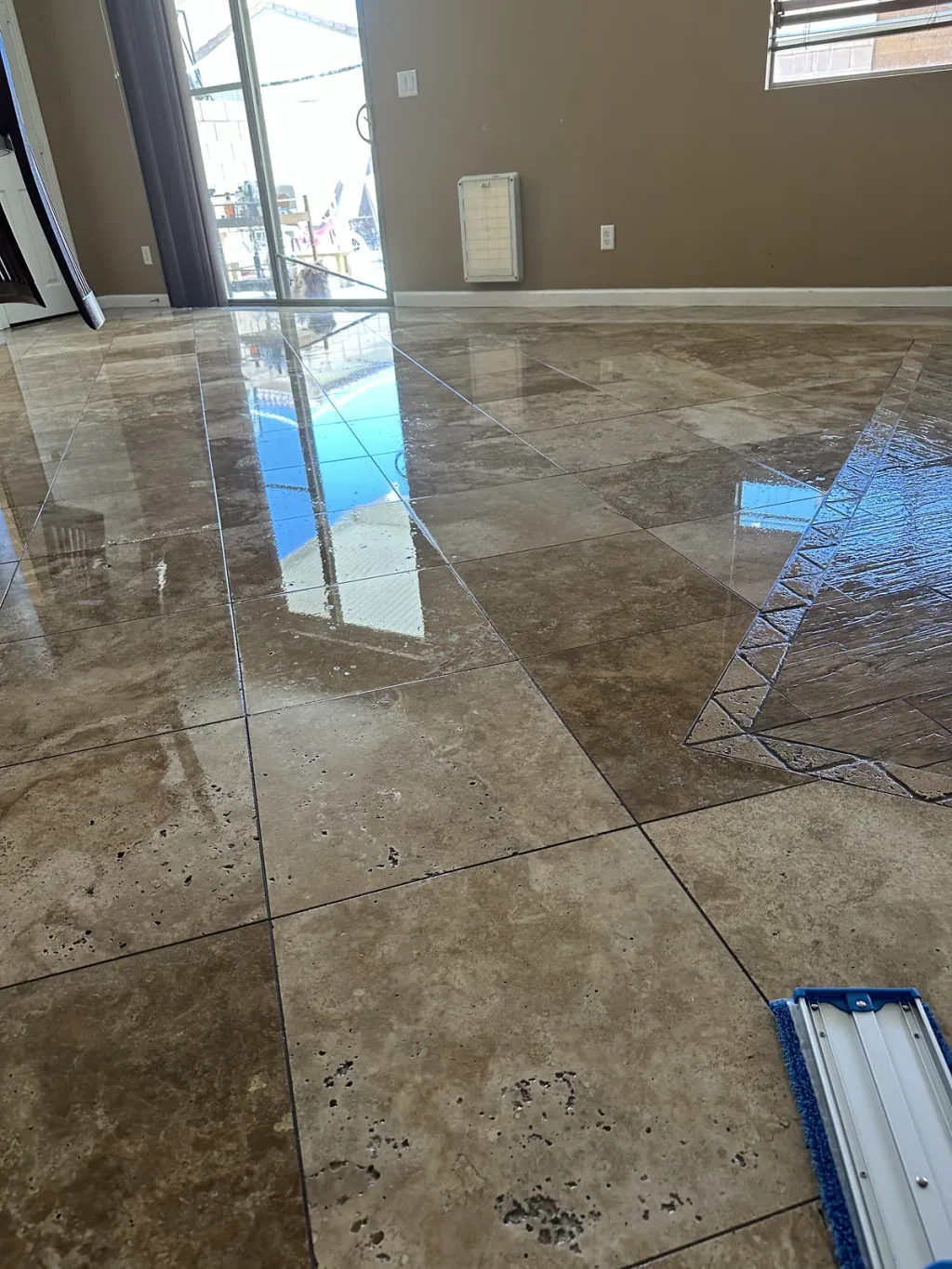
A still photo only shows one angle. This walkthrough shows how a consistent finish carries through hallways, turns, and changing light.
The goal is not simply more shine. It is an even floor that reads as one surface from room to room while the natural character of the stone remains visible.
Even sheenacross the main walking lanes
Consistent reflectionas the viewing angle changes
Natural variationwithout cloudy patches or harsh stopping lines
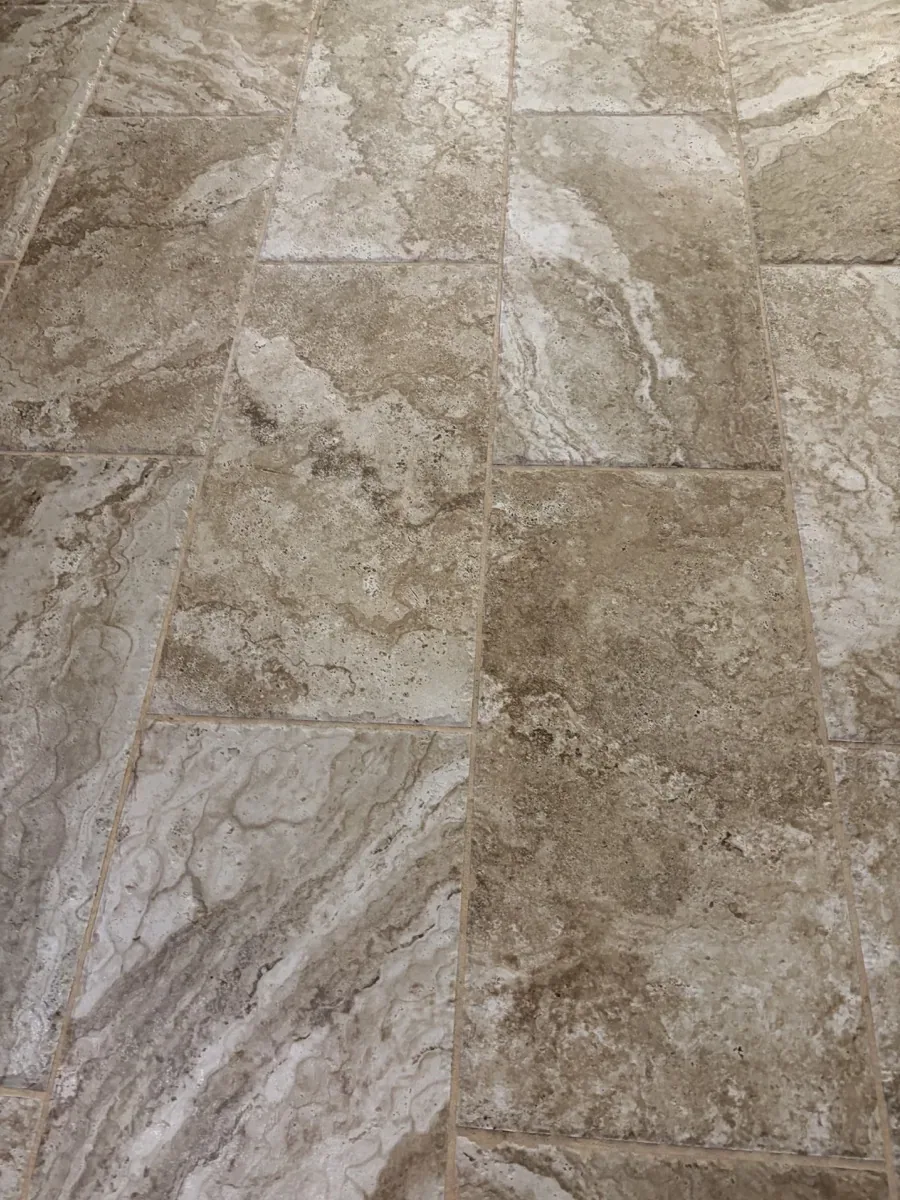
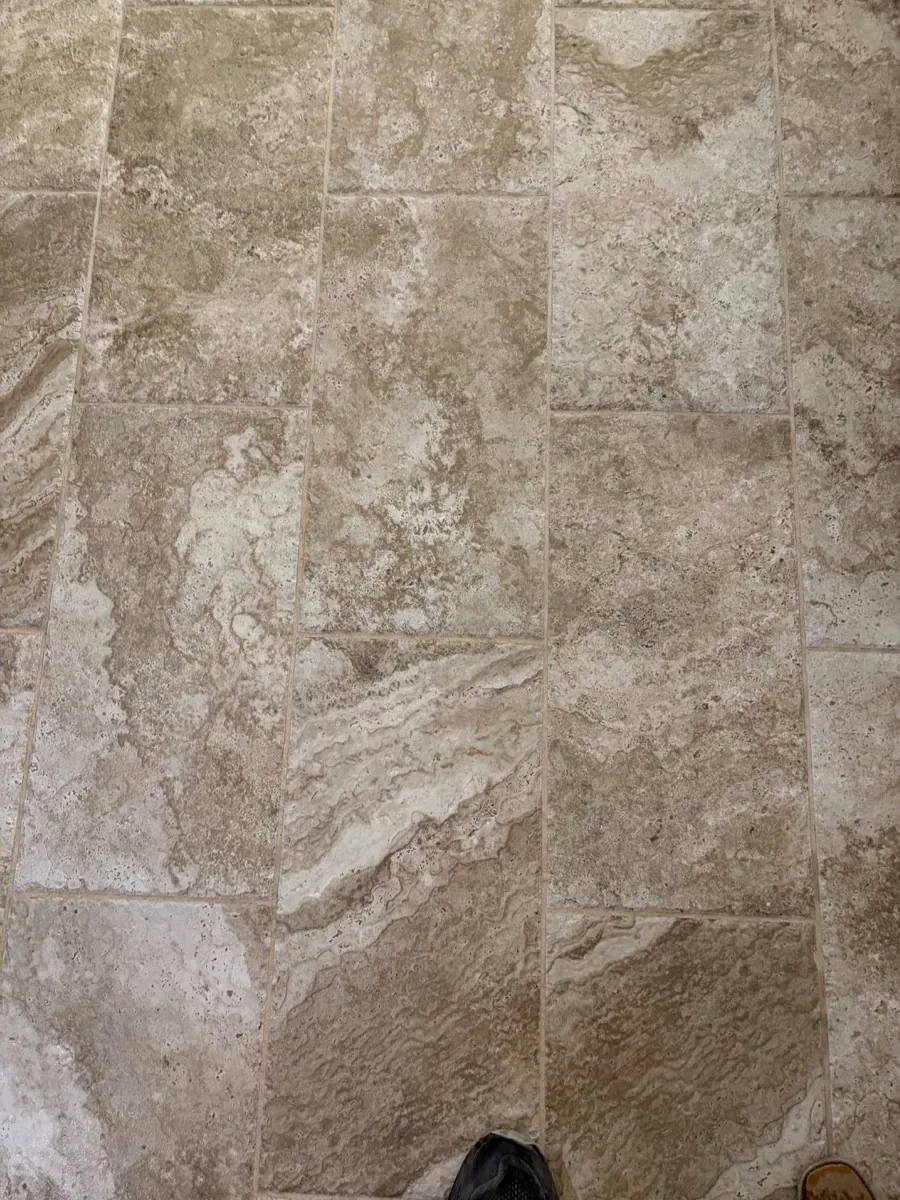
The natural character of filled cross-cut travertine
Cross-cut travertine is recognized by the cloudy, flowing, and circular movement created when the stone is cut across its bedding layers. Restoration brings the surface back without flattening that character.
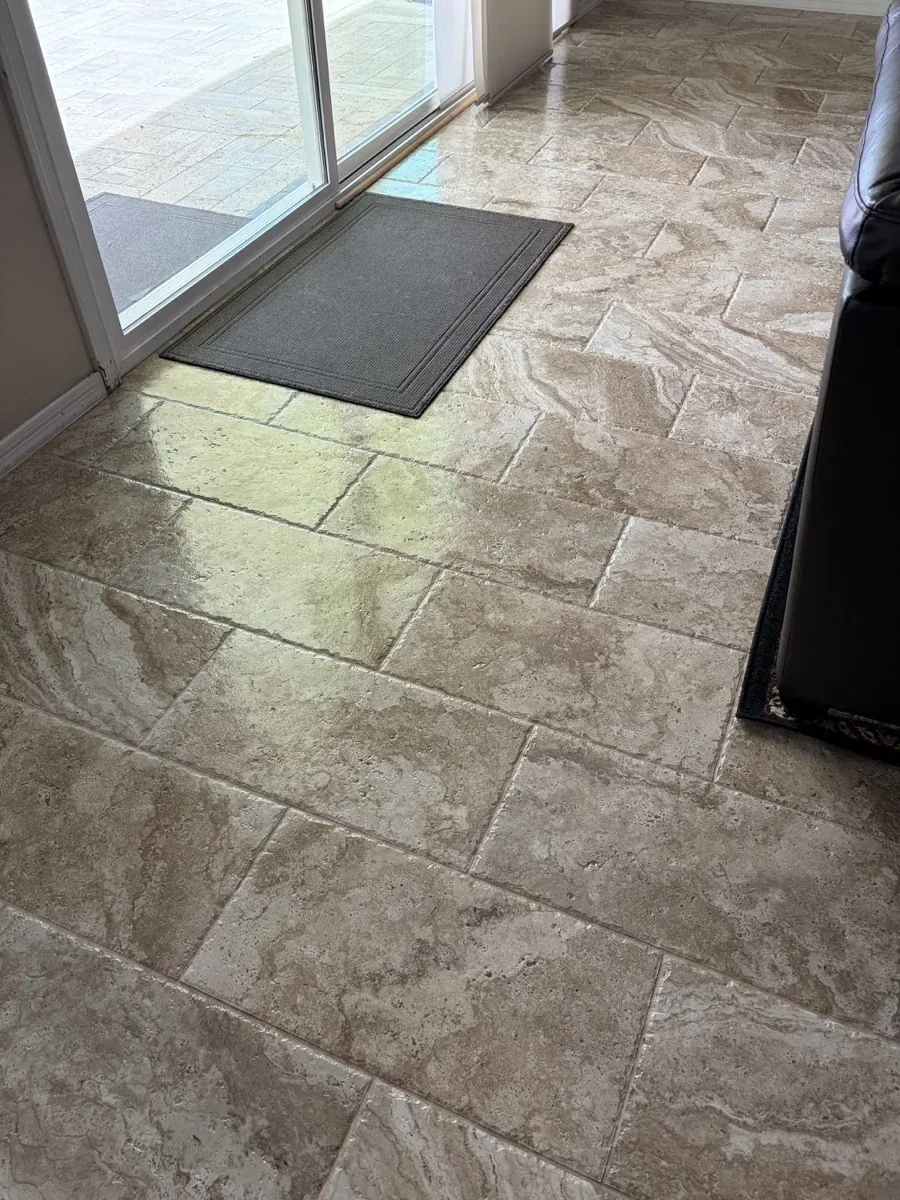
What travertine floor polishing actually does
Cleaning removes material sitting on the floor. Honing and polishing correct the worn surface of the travertine itself.
We use a progressive wet-abrasive process to remove etching, fine scratches, and uneven wear. The floor is refined evenly before the final sheen is created.
If the floor only needs professional cleaning, we will say so. Removing stone that does not need correction is not restoration.
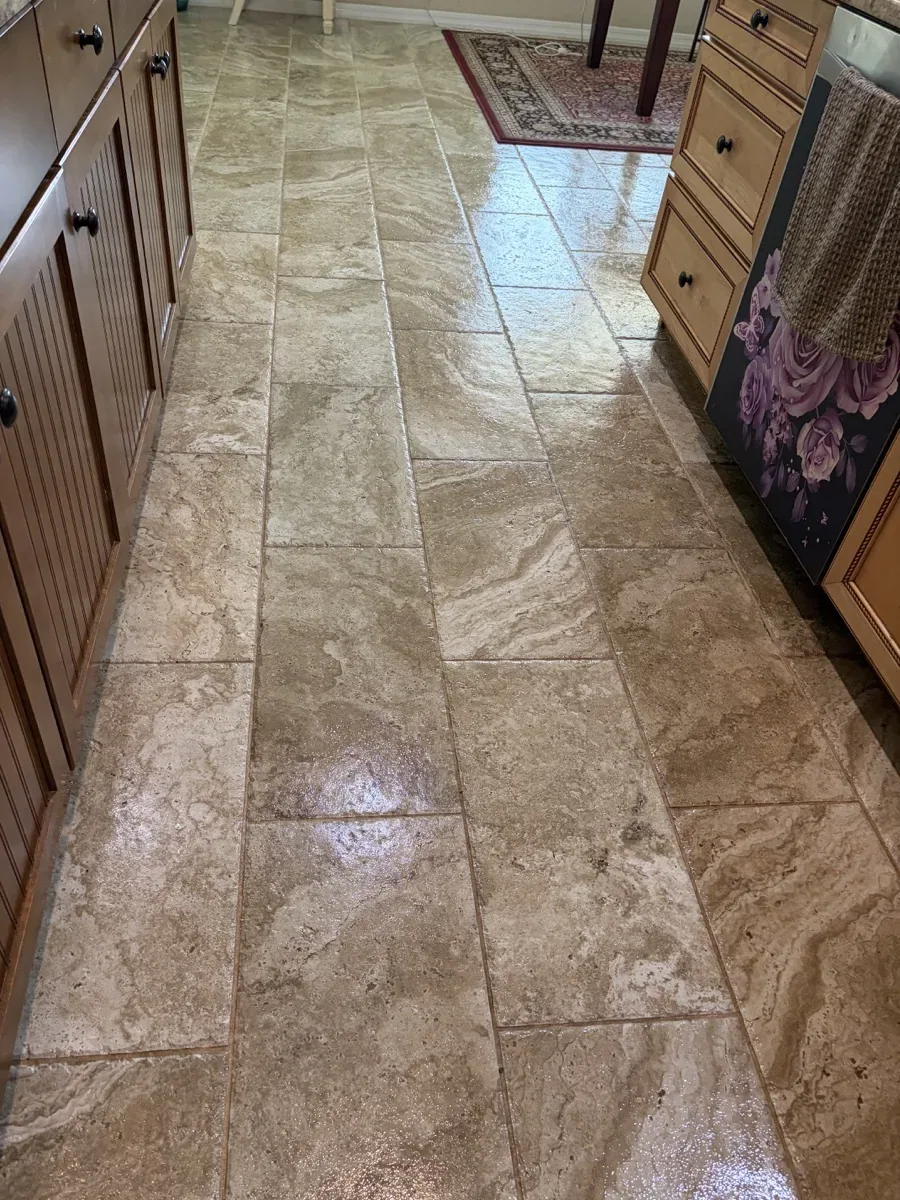
How we restore a travertine floor
We look at the floor as a connected surface. Loose filler, old coatings, traffic wear, and tile edges can change where the work begins. Cleaning comes first so we can see what is residue and what remains in the stone itself.
Where voids can be repaired, the fill is handled before the final refinement. Honing then addresses suitable wear and etching. The abrasive sequence depends on the condition; starting with a finishing product will not correct a surface that still needs repair.
Justin uses MB Stone products and abrasives as part of his stone work. The particular compound must suit the material and the intended finish. We check the result as the floor is refined rather than promising that one product or fixed sequence fits every travertine installation.
Inspect and protect
We check the finish, damage, filler, tile edges, grout, and anything previously applied.
Clean and repair
Soil and residue come off first. Loose filler and repairable voids are handled before abrasives.
Hone and refine
Wet diamond passes remove wear and etching while creating an even surface across the room.
Finish and protect
We create the selected sheen, inspect the dry result, and discuss sealing and care.
Choose a polished or honed travertine finish
Both finishes can look beautiful. The right choice depends on the room, traffic, lighting, and how much shine you want to maintain.
Polished travertine
A reflective finish deepens the stone's color and shows more light. It also reveals new wear and etching sooner.
Honed travertine
A smooth satin finish feels quieter and disguises everyday traffic marks better than a high polish.
Repairs that may happen before polishing
A consistent finish depends on correcting the surface problems that would otherwise remain underneath it.
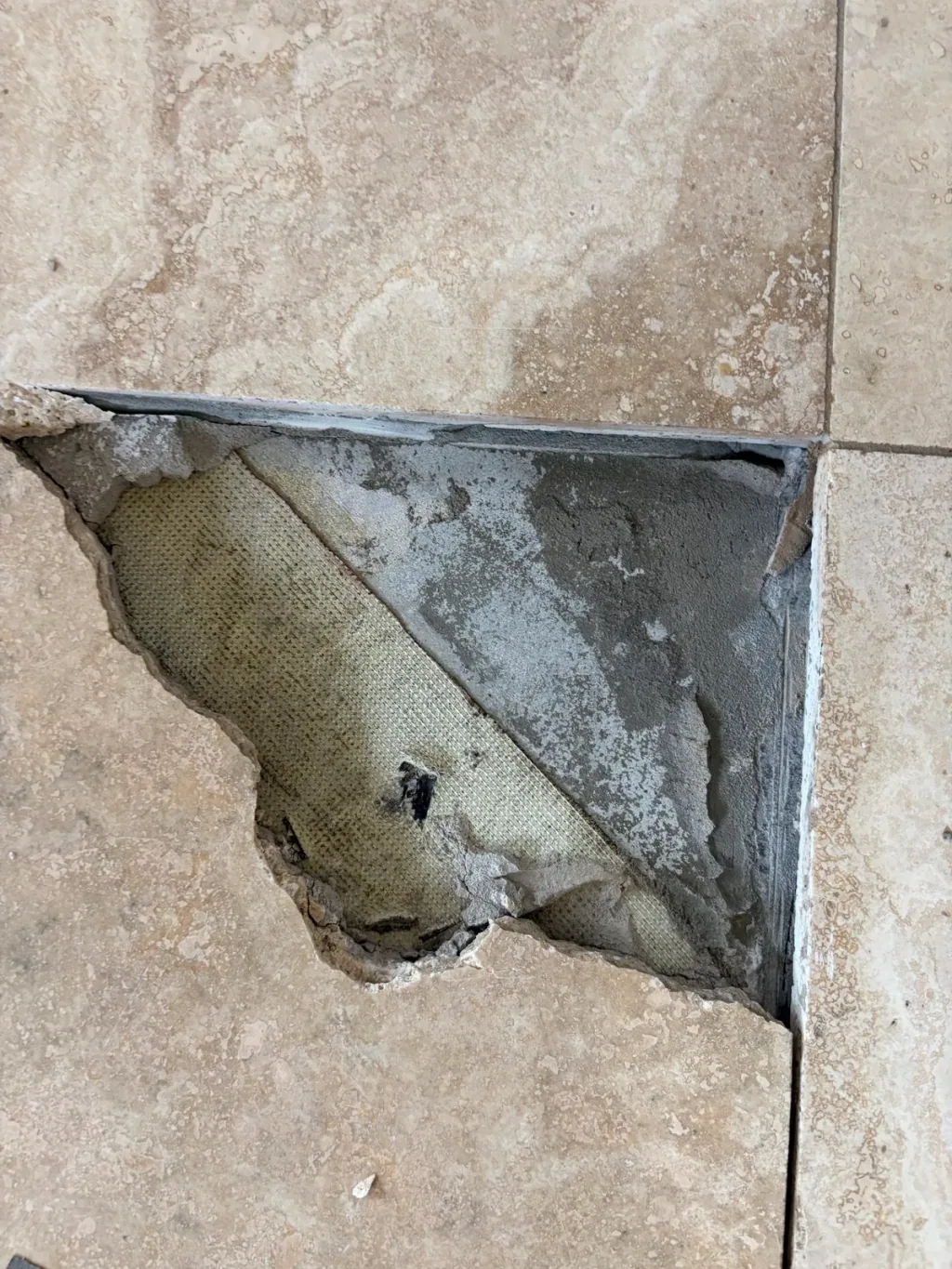
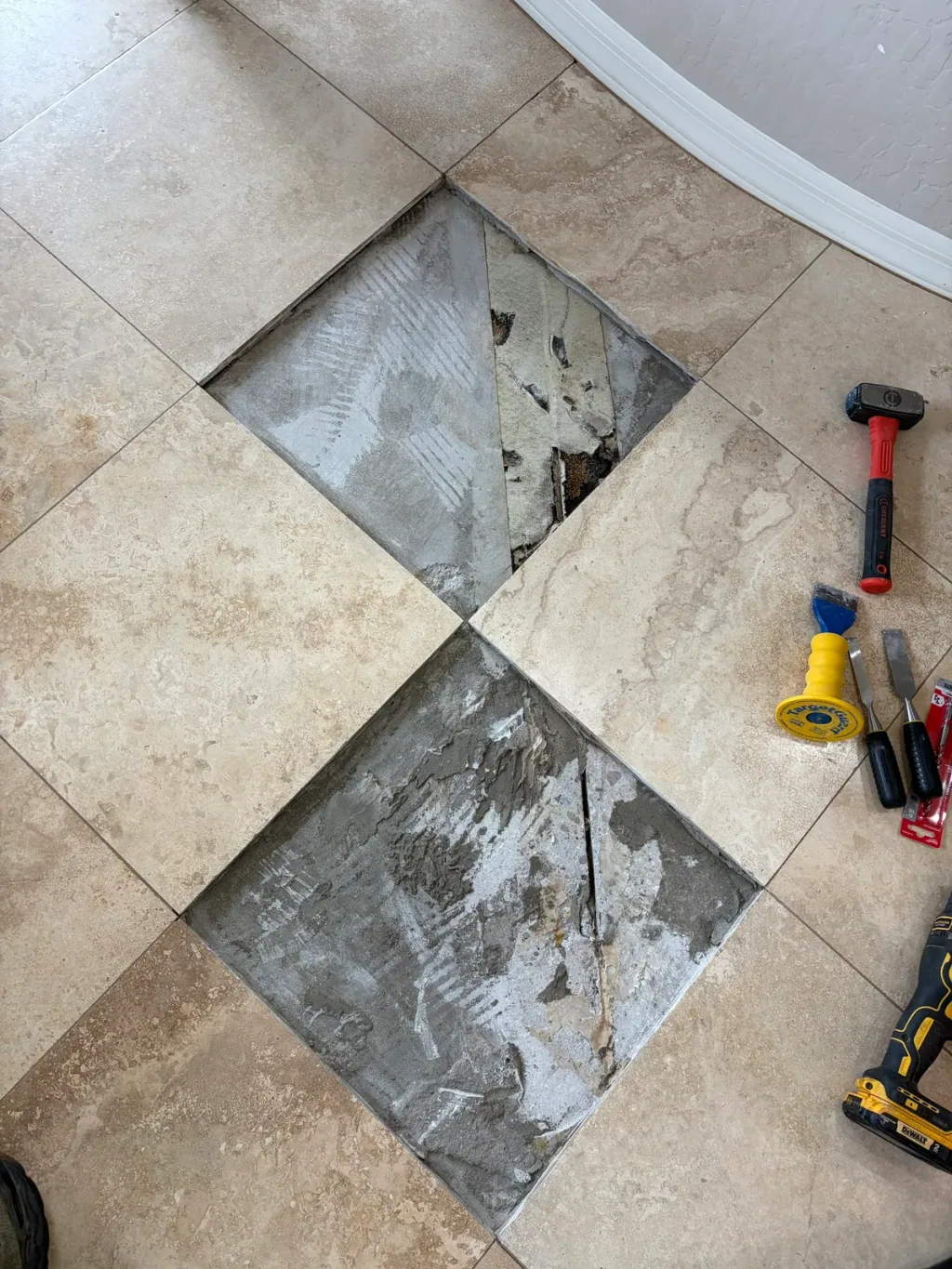
Loose filler and open voids
Failed material is removed, the cavity is cleaned, and the repair is blended into the surrounding finish.
Lippage and raised edges
High tile edges may require a deeper correction sequence than a floor that is already flat.
Cracked or missing grout
Failed joints need grout repair before the finished floor can look complete.
Structural cracks or movement
Surface polishing cannot stop slab movement or repair loose tiles. Those conditions need the appropriate repair first.
Keeping restored travertine looking good
For routine care between professional visits, see how to clean travertine floors. If the finish is sound and the problem is soil in the holes and grout, travertine floor cleaning may be all the floor needs.
Simple habits protect the finish from the grit, spills, and repeated traffic that make travertine look dull again.
Remove grit first
Vacuum or dust-mop before wet cleaning so tracked grit is not pushed across the finish.
Use a stone-safe cleaner
Choose a pH-neutral product. Avoid vinegar, lemon, and acidic hard-water removers.
Protect busy entrances
Use clean walk-off mats and felt pads where traffic and furniture create repeat wear.
Test before resealing
We assess absorption at the stone instead of relying on a fixed calendar.
Start with a free travertine floor assessment
We will inspect the floor, explain what can be restored, and recommend the right finish for your home.
See the work
See documented travertine restoration work
Explore residential travertine floors restored across the East Valley, from a Chandler installation restored instead of replaced to filled cross-cut travertine in Mesa.
 Chandler · documented restorationTravertine floor restoration in Ocotillo, Chandler, AZSee how an existing travertine floor with dullness, scratches, etching, and uneven wear was restored instead of replaced.Travertine restoration in Ocotillo Mesa · documented restorationFilled cross-cut travertine restoration in Mesa, AZSee how natural movement, filled voids, scratches, etching, and uneven wear were addressed while preserving the existing floor.Filled cross-cut travertine restoration in Mesa
 Travertine floor polishing questions we hear most
Can a dull travertine floor be restored without replacing it?
Usually, yes. When the stone is sound, honing removes worn and etched material before the finish is rebuilt across the floor.
What is the difference between honing and polishing?
Honing corrects wear, scratches, and etching by refining the stone. Polishing follows that work when you want a higher, more reflective sheen.
Will polishing make my floor slippery?
A polished finish is smoother than a honed finish. We discuss where the floor is used and whether it gets wet before recommending the right sheen.
Is it messy? Will there be dust through the house?
Honing is performed wet, which controls dust and carries the stone slurry away. We contain the work area and remove slurry as we progress.
New holes keep appearing in my travertine. Is the floor failing?
The stone contains natural voids, and old filler can loosen under foot traffic. These areas can often be cleaned, refilled, and blended during restoration.
How much does travertine floor polishing cost?
Cost depends on the floor area, condition, desired finish, lippage, loose filler, and any coating that must come off. We provide free on-site assessments before recommending the work.
Do you serve my city?
We cover San Tan Valley, Queen Creek, Gilbert, Mesa, Chandler, Tempe, Apache Junction, Ahwatukee, and Scottsdale, along with the rest of the East Valley. If you are not sure whether your address falls inside that, call (480) 259-8178 and ask rather than guessing.
Hear directly from our customers
Real customers describing their experience with Stain Wranglers after the work was finished.
Request an assessment.
Tell us about your surface and what you’re seeing. We’ll help you work out the next step for your home or commercial property.
- Stone, tile, floors and countertops
- Residential and commercial, San Tan Valley & the East Valley, AZ
- No charge to have us look at it
Having trouble with the form? Open it in a new tab.