Stone Tile Cleaning in San Tan Valley and the East Valley

Travertine, marble, limestone, Saltillo, slate, and flagstone each react differently to water, chemistry, and pressure. Stain Wranglers cleans natural stone tile floors, showers, entries, and patios across the East Valley with a method chosen for the stone, its finish, and whatever has already been put on it.

Justin identifies the stone before any cleaner comes out of the van, and tells you on the visit if cleaning is not what your floor needs. On-site estimates are free.

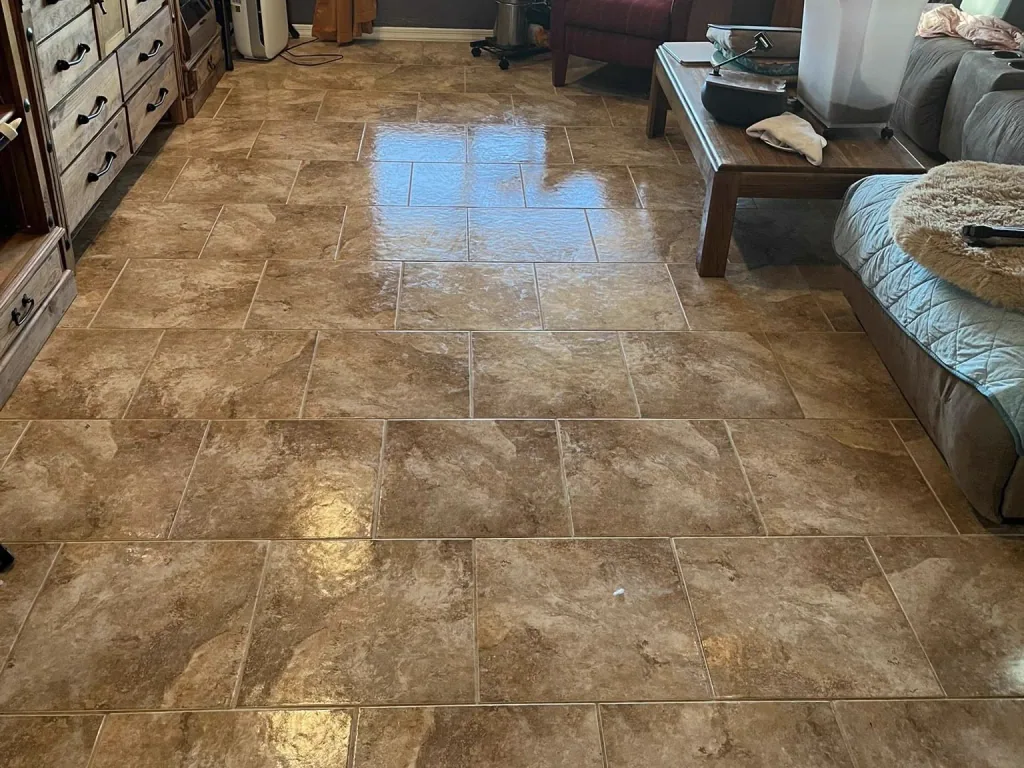
Travertine tile floor in an East Valley living room after cleaning, reflecting window light across even grout joints
A travertine living room floor in the East Valley after cleaning.

Google Reviews

More than 100 reviews with a five-star rating.

5.0100+ Google reviewsWrite a review
Teddy BorkmanVerified on Google
“Stain Wranglers performed miracles! They brought my dirty stained grout back to new condition with their color seal! I was thinking of tearing a perfectly good floor out, but now I don’t have to! Professional team came and did a beautiful job! Highly recommended!”
Brian SerwaVerified on Google
“Needed the tile and grout clean. Flooring looks brand new.”
Peg BlantonVerified on Google
“We had them clean grout on tile floors throughout the house. It had been awhile since we had done so they were pretty dirty. They got them back in shape for us! Good job”
Tami EmmettVerified on Google
“Wonderful business. My counters and floors look awesome! Justin is professional and personable.”
Sharon K DuFordVerified on Google
“Stain Wranglers was great to work with. Justin was on time and easy to communicate with. He was honest and did a great job for reasonable price. He was knowledgible and trustworthy. We will use his services again!”
Chastity HughesVerified on Google
“They were professional and were great with my hyper toddler, very appreciative.”
Chelsey RaneyVerified on Google
“Wonderful service and the customer service is top notch! They got my floors spotless, which with 4 dogs is no easy task! Highly recommend!”
Tracey TomaszewskiVerified on Google
“AMAZING!!! Looks like I got brand new floors! Thank you. Would highly recommend”
Tiffany HarrisVerified on Google
“I highly recommend his floor cleaning services! He's reliable, professional, and does an excellent job. My floors looked amazing, and I couldn't be happier with the results.”
annette cressVerified on Google
“Stain Wranglers are honest, reliable and trustworthy. They have impeccable work ethic and will treat you fairly. Please give them a try.”

Why stone tile is cleaned differently from porcelain

Porcelain and glazed ceramic are fired at high heat. The surface is glass-like, it barely absorbs anything, and it tolerates the acidic descalers sold for hard water. That is why most tile cleaning advice is written for them.

Natural stone has no glaze. The face you walk on is the mineral itself, cut and finished. Marble, travertine, and limestone are calcium carbonate, so vinegar, citrus, and hard-water removers dissolve the surface and leave dull marks called etches. Slate, sandstone, flagstone, and granite are mostly silica-based and stand up to acids better, but they are textured, layered, or porous in ways that hold soil. Saltillo is fired clay, not stone, but it is so absorbent that it is almost always sealed or coated, and the coating is usually what looks dirty.

So the first job on any stone floor is not cleaning. It is working out which stone it is, whether it is polished, honed, or tumbled, and whether a sealer, wax, or coating is sitting on top. The cleaner, the pad, the pressure, and the rinse all follow from that.
The stone tile we clean

Start with your stone. Travertine, marble, and Saltillo have their own pages with the full process.

Calcium-based

Travertine

The most common stone floor in the East Valley. Holes, filler, and wide grout joints hold soil that a mop pushes around.

Travertine floor cleaning

Calcium-based

Marble

Dense and often polished, so film and residue show as cloudy lanes. Acidic cleaners leave etches that look like stains.

Marble floor cleaning

Fired clay

Saltillo

Soft, very absorbent clay tile that almost always carries a sealer or coating. Most dark Saltillo is a worn coating, not dirty clay.

Saltillo tile cleaning and sealing

Calcium-based

Limestone

Quieter than travertine, with fewer holes, but just as sensitive to acid. Usually honed, so dullness is often residue.

Limestone cleaning, below

Layered stone

Slate

A textured, cleft face that traps soil, and thin layers that can flake. Many slate floors wear an old topical coating.

Slate cleaning, below

Outdoor stone

Flagstone & sandstone

Arizona patios, walkways, and pool surrounds. Porous, rough, and exposed to sprinklers, pool water, and sun.

Flagstone cleaning, below

Justin walking through two cracked travertine tiles in Gold Canyon before replacing them.

The person who looks at your stone does the work

Stain Wranglers is owned and run by Justin Brevik and his wife Ayla. Justin is the one who walks your floor, tests the stone, and runs the machine, so the advice on the estimate and the work on the day come from the same person.

In this clip he is standing over two cracked travertine tiles in a Gold Canyon home. No cleaning would have fixed them: the grout joints came out, the old thinset was removed, and new tiles were set. Telling you that before you pay for a cleaning is part of the job.

Read more about Justin and Ayla, or see the finished projects.

Dirty, etched, coated, or damaged?

Six stone tile problems look alike from across the room. Only the first is a straight cleaning job.

Soil and residue

Looks like: grey film, dark texture and grout, a sticky or streaky feel.
Common cause: traffic, dirty mop water, too much cleaner.
Fix: professional stone tile cleaning, covered on this page.

Etching

Looks like: dull, slightly rough spots that stay dull when dry, often by the sink, shower, or bar.
Common cause: acidic spills or cleaners on marble, travertine, or limestone.
Fix: honing and polishing. See floor polishing.

Failing sealer or coating

Looks like: peeling, yellowing, or white patches in traffic lanes, dirt trapped under a shiny layer.
Common cause: wax or topical coatings on Saltillo, slate, and travertine.
Fix: strip, clean, and reseal. See floor refinishing.

White crust or powder

Looks like: white haze on grout or stone, worst near showers, pools, and sprinklers.
Common cause: hard-water minerals, or salts carried up through the stone by moisture.
Fix: stone-safe deposit removal, and finding the water source.

Failed grout

Looks like: cracked, crumbling, low, or missing joints that never look clean.
Common cause: movement, wear, or years of acidic cleaners.
Fix: grout repair, then color sealing if the color stays uneven.

Cracked or hollow tiles

Looks like: a crack across one or more tiles, a tile that rocks or sounds hollow.
Common cause: lost bond underneath, or a slab crack carrying through.
Fix: cut out and replace the tile, like the Gold Canyon job above.

How we clean stone tile

  1. Identify the stone, the finish, and what is on it

    Stone type, polished, honed, tumbled, or cleft, filled or unfilled, and whether a sealer, wax, or coating is on the surface. Cabinets, baseboards, wood transitions, and rugs are protected before any water goes down.

  2. Remove dry grit and test the chemistry

    Loose grit comes off first so it is not scrubbed across the stone. A small test area confirms the cleaner lifts the soil without changing the finish. On marble, travertine, and limestone that means neutral or stone-safe alkaline products, never an acidic descaler.

  3. Agitate and extract

    Brushes or pads matched to the stone loosen soil from the texture, holes, and grout joints. Rotary extraction recovers the dirty solution instead of letting it dry back into the floor. Pressure is eased off on slate, soft limestone, and weak travertine fill.

  4. Rinse, dry, and inspect dry

    A wet floor hides film, etching, and uneven grout, so we judge the result dry. Anything cleaning did not correct is pointed out and explained, with the right next step.

  5. Seal where it helps

    We test how fast the clean stone absorbs water. A penetrating sealer is recommended only when the stone is drinking, and we tell you if a color-enhancing sealer or a topical finish is the better fit.

What comes out of a stone floor

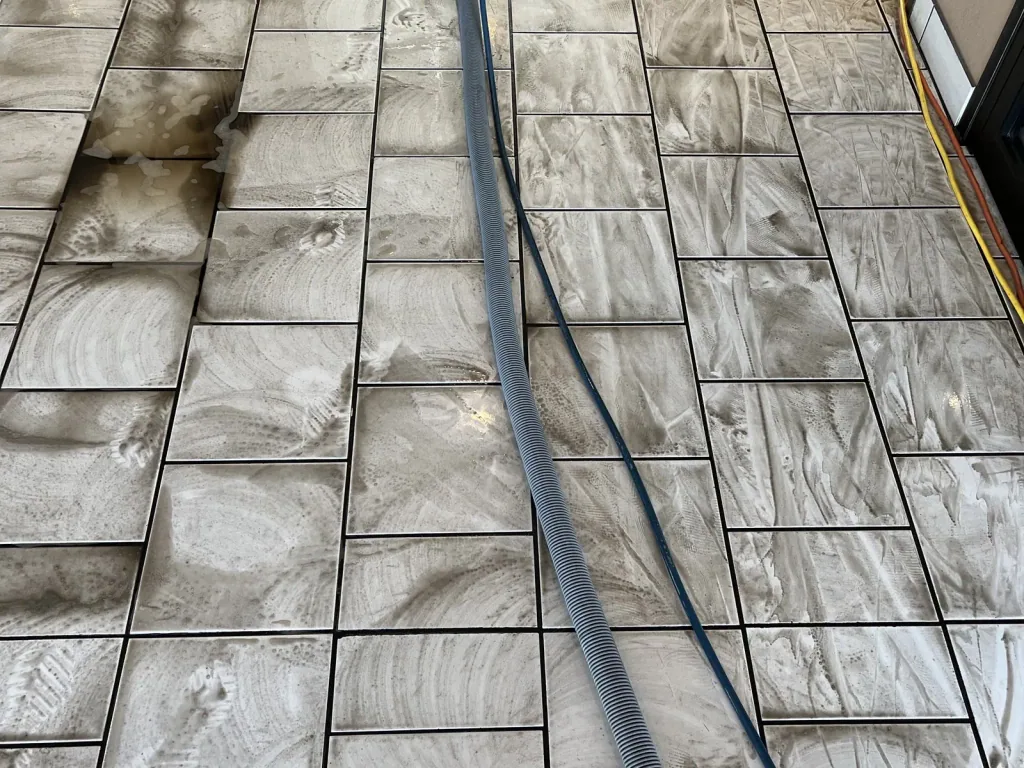
Stone floors that look acceptable from standing height are often holding years of soil in the texture and grout. Partway through a clean, the difference between worked and unworked tiles is hard to miss.

The water we recover tells the same story. It goes into the machine's recovery tank, not back into your grout joints, which is the main difference between extraction and a mop.

Stone tile floor partway through cleaning, with clean tiles beside tiles still dark with soil and the extraction hose running across them
Cleaned and uncleaned tiles side by side, partway through a floor.

Stone tile cleaning on the job

Short clips from Stain Wranglers jobs. Press play to load each one.

Justin running the rotary machine and extraction hoses down a tile hallway.
A stone floor close up while still wet, texture and grout lines visible.
Walking a freshly finished tile floor from room to room.

Limestone tile cleaning

Limestone is a cousin of travertine without most of the holes. It is usually installed honed, with a soft matte face, which means a floor that looks flat may simply be honed, and a floor that looks cloudy is often carrying residue from cleaners or an old sealer.

It is calcium carbonate, so it etches as easily as marble, and many limestones are softer than marble, so heavy pads and aggressive scrubbing can scratch them. We clean limestone with neutral chemistry and soft agitation, test before working the whole floor, and look at it dry before calling it done. Etching and worn traffic lanes need honing, covered on our marble and limestone polishing page.

Slate tile cleaning

Slate splits into thin layers, and most slate tile keeps that split, or cleft, face. The ridges and steps hold soil, and the edges of the layers can flake if they are hit with too much pressure or a stiff brush. Water and salts working in behind loose layers make the flaking worse.

Many slate floors and patios were given a glossy topical sealer that has since scratched, peeled, or gone cloudy, trapping dirt underneath. Cleaning over it does little. We check for a coating first, strip it when it has failed, then clean the slate with brushes that reach into the cleft without levering up the layers. Slate is not as acid-sensitive as marble, but we still keep acidic cleaners off it, because the grout around it is.

Sealing slate afterwards is a choice: a penetrating sealer keeps the natural look, while a color-enhancing sealer deepens the greens, rusts, and charcoals the way water does.

Flagstone, sandstone, and outdoor stone

Arizona flagstone is usually sandstone or quartzite set in mortar on patios, walkways, and pool surrounds. It is rough and porous, and it lives with sprinklers, pool splash, leaf stains, and full sun. White crust is common: hard-water minerals from irrigation and pools, or salts drawn up through the stone as moisture evaporates in the heat.

Pressure washing at close range can erode soft sandstone and blow out mortar joints, so the pressure and tip are set for the stone. Deposits are treated with products the stone and mortar tolerate, and we look for the water source, because white crust that is fed by a sprinkler comes back.

Outdoor travertine pool decks and pavers have their own pages: pool deck resurfacing and paver cleaning and sealing.

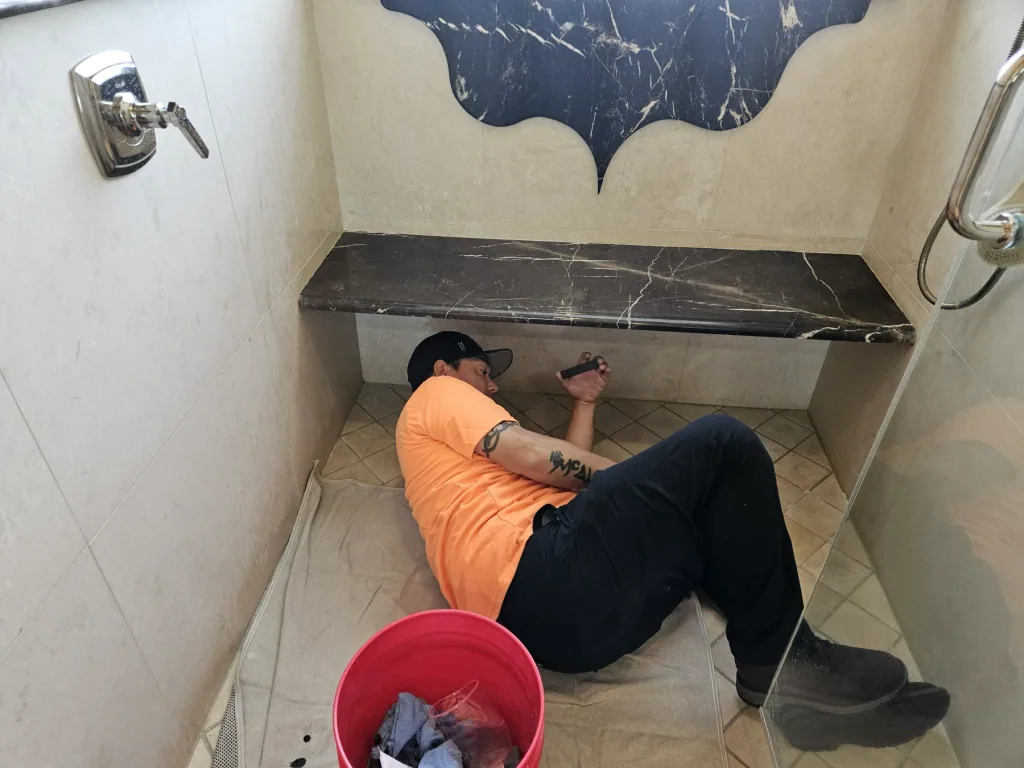
Stain Wranglers technician working at floor level inside a marble shower beside a dark stone bench
Working at floor level in a marble shower.

Stone showers and bathrooms

East Valley water is hard, and stone showers show it: white spots on the walls, soap film on the floor, and dark grout at the base. The bathroom cleaners that cut through it on porcelain are exactly the ones that etch marble, travertine, and limestone.

  • Deposits on topMineral spots and soap film usually come off with careful, stone-safe cleaning.
  • Dull and roughIf acid has already etched the stone, it needs honing, not a stronger cleaner.
  • After cleaningSqueegee the walls, dry standing water, and use a neutral cleaner made for stone.

Sealing stone tile after cleaning

A penetrating sealer soaks into the stone and slows how fast water, oil, and soil get in. It does not form a film or change the sheen, and it lets moisture in the stone escape. For most indoor stone, this is the one to consider.

A color-enhancing sealer also penetrates but darkens the stone, similar to how it looks wet. It suits slate, flagstone, and some travertine, and we test it on a small area first.

Topical coatings sit on top. They belong on some Saltillo and in some commercial settings, but on most natural stone they scuff, yellow, and trap soil. Sealing never fixes etching or wear, and a sealer will not make a dull floor shine.

Get an estimate for your stone tile

Send a photo of the whole room and a close-up of the area that bothers you. Light from the side makes dull spots, coatings, and open holes easier to see. Include your city, a rough square footage, and anything that has been used on the floor, such as cleaners, sealers, or wax.

We clean stone tile throughout the East Valley, including Mesa, Gilbert, Chandler, Queen Creek, and San Tan Valley. For everyday care between visits, see how to clean travertine floors and how to clean marble floors.

Stone tile cleaning questions

Is stone tile cleaning different from regular tile and grout cleaning?

Yes. Porcelain and ceramic have a fired glaze or a dense body that shrugs off most cleaners. Natural stone has no glaze: the surface you see is the mineral itself. Marble, travertine, and limestone react with acids, slate can flake under too much pressure, and Saltillo soaks up whatever is put on it. We identify the stone before choosing any chemistry, pad, or pressure.

What kinds of stone tile do you clean?

Travertine, marble, limestone, Saltillo, slate, flagstone, sandstone, granite tile, and terrazzo, on floors, showers, entries, and patios. If you are not sure what you have, send a photo. Identifying the stone is part of the visit.

Can you clean and seal stone tile on the same visit?

Often. The stone has to be clean and dry enough for the sealer to soak in, and the dry Arizona air helps. Showers and very porous floors sometimes need more drying time. We test how fast the stone absorbs water after cleaning and only recommend sealing when it will make a difference.

Is vinegar safe on stone tile?

Not on marble, travertine, or limestone. They are calcium carbonate, and vinegar, lemon, and most hard-water removers dissolve the surface and leave dull etch marks. It is a bad habit on slate and grout as well. Use a pH-neutral cleaner labeled for natural stone.

Can cleaning remove hard water spots from a stone shower?

If the white marks are mineral deposits sitting on the stone, careful cleaning usually improves them. If an acidic cleaner has already etched the stone, the surface has changed and needs honing and polishing instead. We test a small area to tell which one you have.

How much does stone tile cleaning cost?

It depends on the stone, the square footage, how much soil is in the texture and grout, whether an old coating has to come off, and whether sealing is included. We give a free on-site estimate and explain the scope before any work starts.

How soon can we walk on the floor?

Light foot traffic is usually fine the same day, because we extract the rinse water instead of leaving it on the floor. If a sealer goes down, furniture and rugs wait until it has cured. We tell you the timing for your floor before we leave.

Do you clean stone tile in my part of the East Valley?

We are based in San Tan Valley and serve Queen Creek, Gilbert, Mesa, Chandler, Tempe, Apache Junction, Ahwatukee, and Scottsdale. Send your city and a few photos of the floor so we can talk through the visit.

Hear directly from our customers

Real customers describing their experience with Stain Wranglers after the work was finished.

A customer shares her experience with Stain Wranglers.
A local restaurant owner after a commercial floor-cleaning job.

Request an assessment.

Tell us about your surface and what you’re seeing. We’ll help you work out the next step for your home or commercial property.

  • Stone, tile, floors and countertops
  • Residential and commercial, San Tan Valley & the East Valley, AZ
  • No charge to have us look at it

Having trouble with the form? Open it in a new tab.