
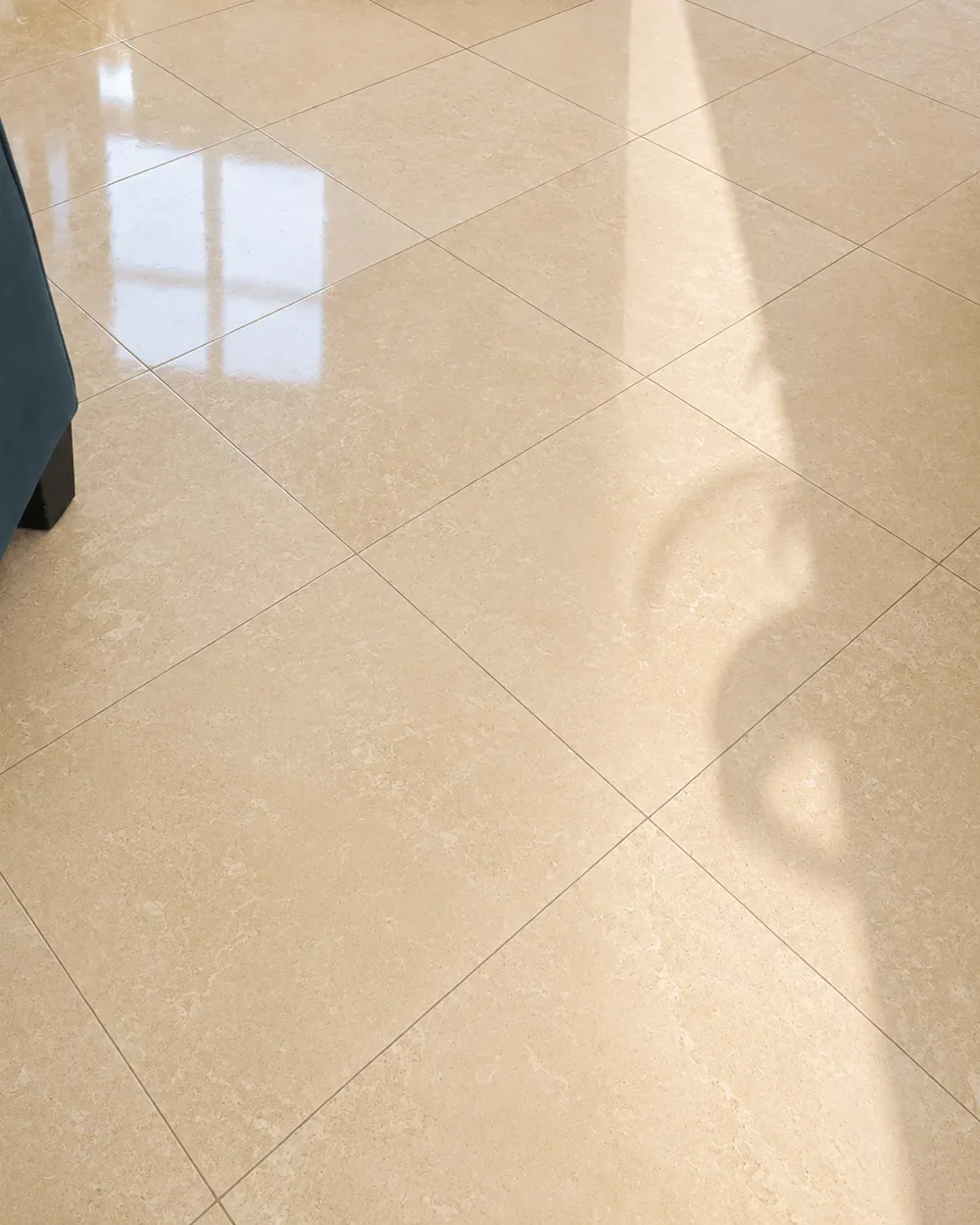
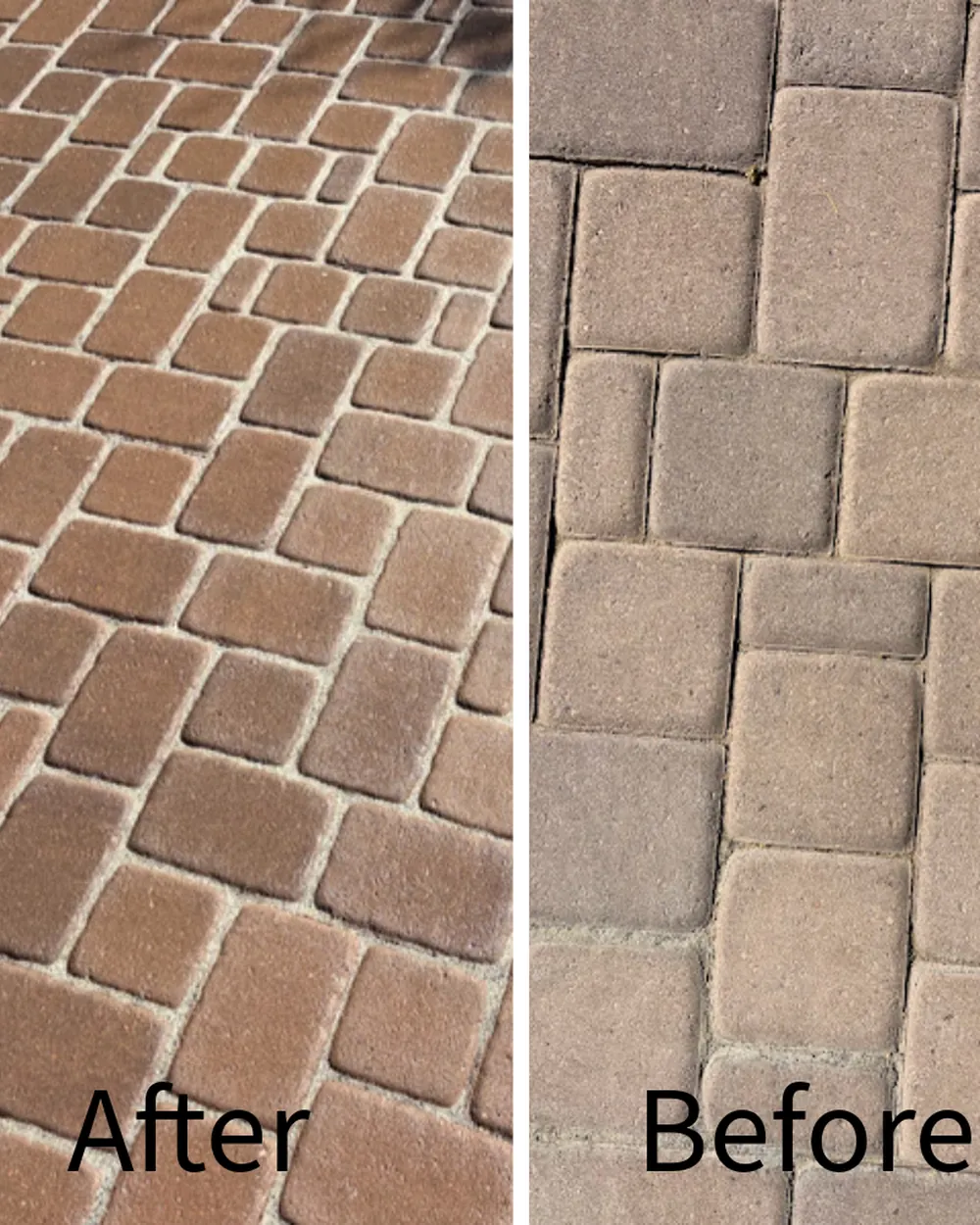
“Stain Wranglers performed miracles! They brought my dirty stained grout back to new condition with their color seal! I was thinking of tearing a perfectly good floor out, but now I don’t have to! Professional team came and did a beautiful job! Highly recommended!”
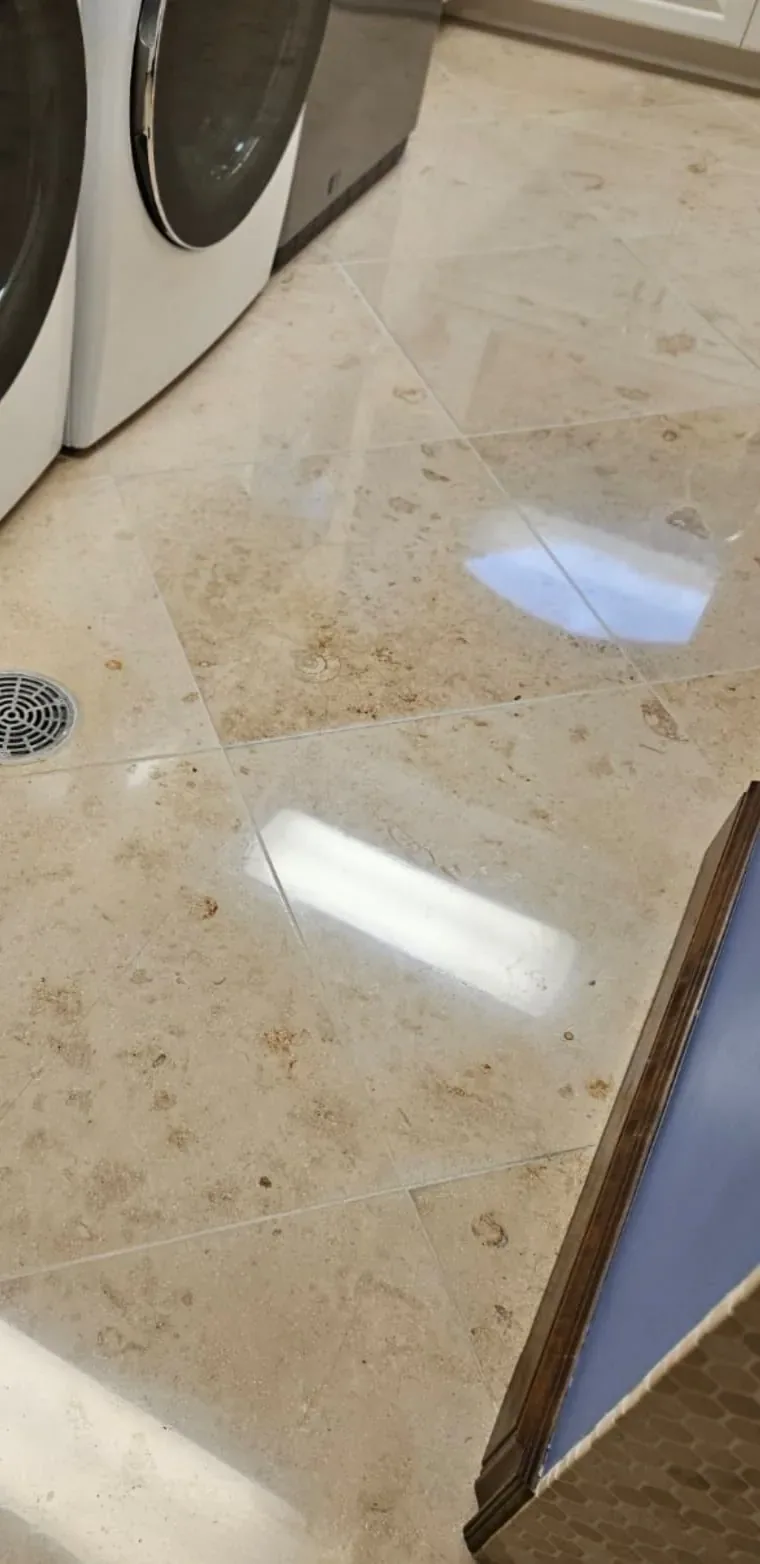
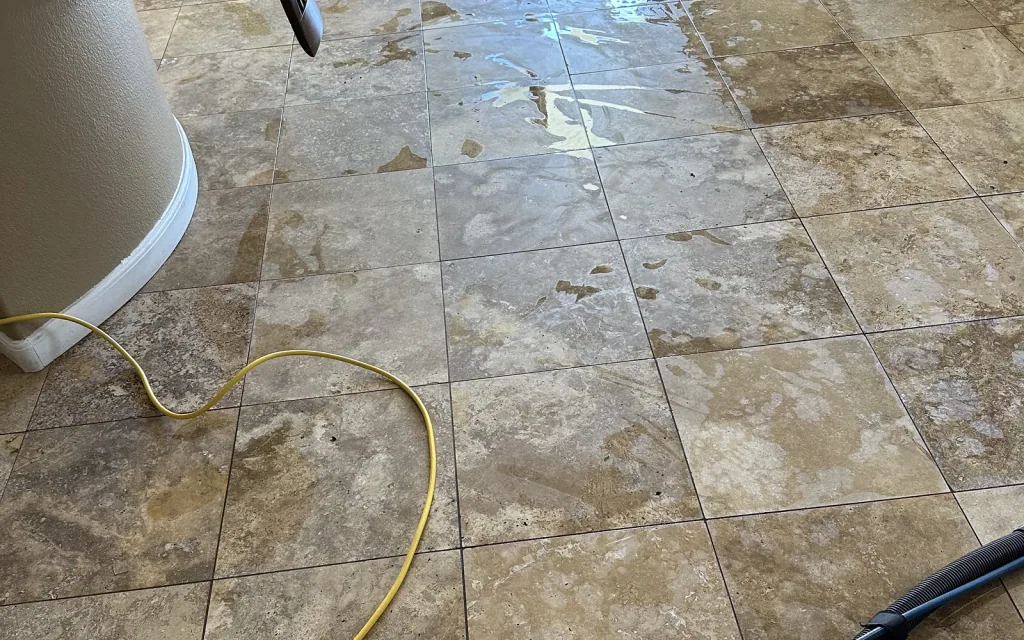
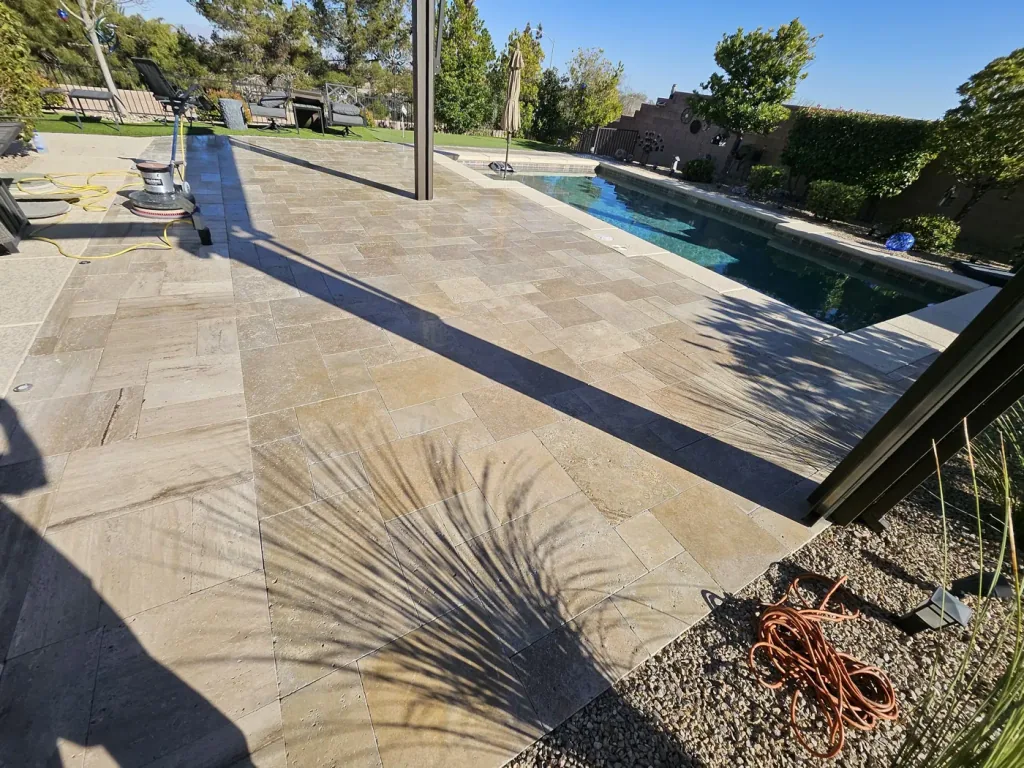
What the desert does to a floor
The City of Phoenix 2025 water quality report puts total hardness across that system at 172 to 302 ppm, roughly 10 to 17.6 grains per gallon, with total dissolved solids between 464 and 716 ppm. East Valley cities run their own utilities and publish their own figures, but the water comes from the same Colorado River and Salt River Project sources and it is hard everywhere in the valley. On a floor that mineral load shows up two ways: as film left behind by mopping, and as the hard crust along a pool deck splash line where water evaporates faster than it can run off.
The most common self-inflicted damage we are called to undo starts with that crust. A homeowner reaches for vinegar or a calcium remover, and the acid does exactly what it is supposed to do. It dissolves the mineral deposit, and then it keeps going into the travertine, marble, or limestone underneath. What is left is a dull, roughened patch that no further cleaning will touch, because the stone in that spot is gone.
Grit is the other one, and it is specific to living in the desert. Sand tracked in from driveways, yards, and gravel is largely quartz, which sits around 7 on the Mohs scale against marble's 3. Every step grinds it into the floor. It is why the wear on a valley stone floor concentrates so visibly in the entry, the hallway, and the path from the garage door, and it is why walk-off mats at every exterior door do more for a polished floor than any product you can buy for it.
Outdoors, UV and heat set the pace. Surface temperatures well above 105°F flash sealers off before they have time to penetrate, so exterior work gets sectioned into small areas and held to the product's cure window rather than the schedule anyone would prefer. Humidity swings from around 5% in early summer to above 80% during the monsoon window between June 15 and September 30, and that movement of moisture through slabs and mortar beds is what carries salts to the surface as efflorescence. It is also why anything we apply outdoors stays vapor-permeable. Trap moisture under a film in this climate and the salt crystals grow beneath the coating instead of on top of it, and that pressure can lift the surface apart.