
How the two stones behave
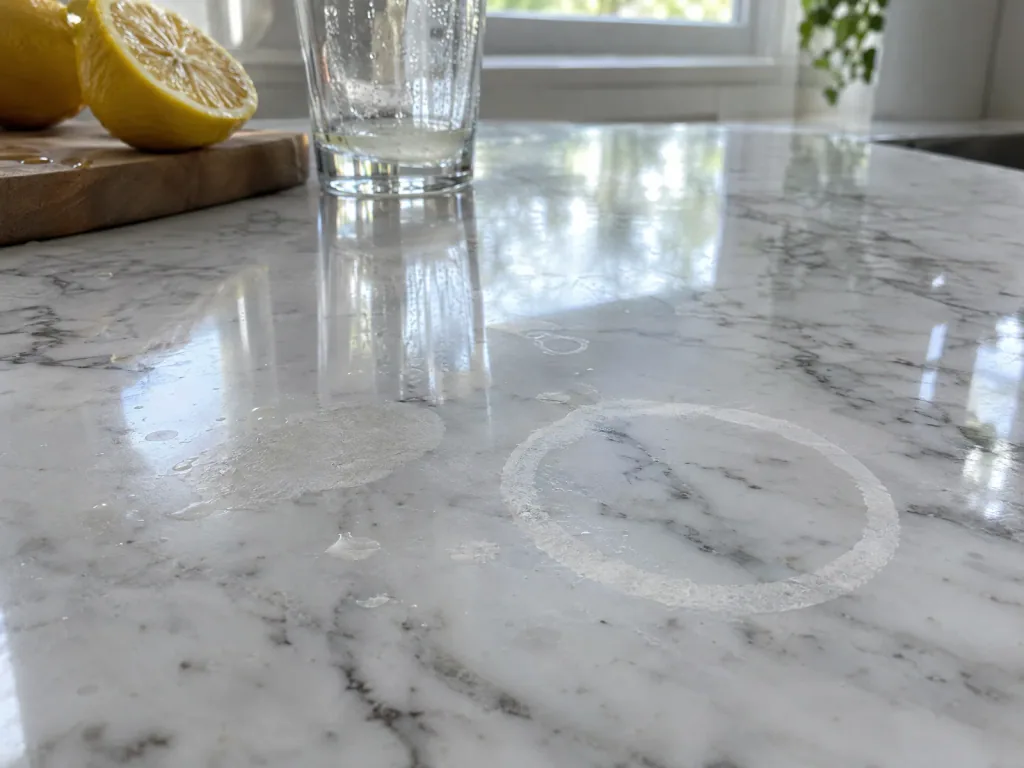
Both are metamorphic stones: rock changed by heat and pressure deep underground. Quartzite began as sandstone, and its quartz grains fused into one solid mass. Marble began as limestone, and its calcite recrystallised. That difference in mineral is what you live with every day.
- Hardness. Quartzite is about 7 on the Mohs scale and scratches glass. Marble is about 3 and a steel knife scratches it.
- Acids. Lemon, wine, vinegar and acidic cleaners do not touch true quartzite. On marble, they dissolve the surface and leave a dull etch.
- Stains. Both can absorb liquids, and both may need sealing. That depends on the slab, not the name.
- Edges. Quartzite is hard but brittle, so it chips at sink rims and corners. Marble scratches far more easily.
It etched. Is it really quartzite?
This is the most common question we get about quartzite. A counter sold as quartzite develops dull rings or splash marks after a few months, and the owner wonders what went wrong.
Usually, nothing went wrong with the stone. It simply is not quartzite. Trade names such as "soft quartzite" and some popular slab names are not geological identifications, and a share of what is sold under them is dolomite or marble. Dolomite etches more slowly than marble, but it still etches. If acid left a mark, the slab contains calcite, and it should be cared for and restored as the stone it is.
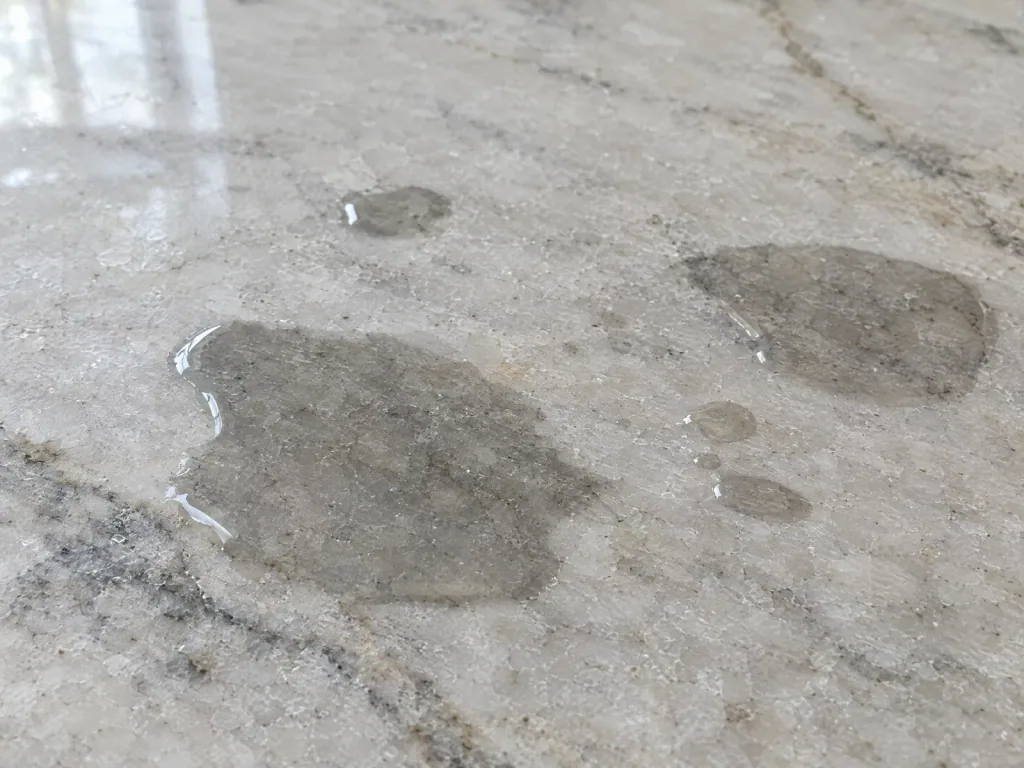
Darkening is a different matter. A darker patch means something soaked in, which can happen to either stone, especially at raw cut edges around a sink.
How to check your own slab
Both tests need an offcut or a remnant from your slab; fabricators often keep the sink cutout. If you have none, ask us to test a hidden spot for you.
- The glass test. Drag a sharp corner of the stone across a glass bottle or tile. True quartzite scratches glass. Marble and dolomite do not.
- The acid test, on the offcut only. Leave a little lemon juice or vinegar on it for 10 to 15 minutes, rinse, and look across the surface at a low angle. A dull spot means calcite. No change points to quartzite.
Never run the acid test on a visible part of an installed counter. If it is marble, you will have made an etch to prove it.
What to ask the supplier
If you are still choosing a slab, ask the supplier what the stone is geologically, not what it is called. Ask whether they have test results or will confirm it in writing, and ask for an offcut you can test at home. A supplier confident in a true quartzite rarely minds.
What changes in care and restoration
Daily care is nearly the same: warm water, a soft cloth and a pH-neutral stone cleaner suit both. The difference is how strict you need to be. On marble or dolomite, keep every acid off the surface. On true quartzite, acids are not a risk to the stone, though they can still affect a resined face or sealer.
Restoration differs more. Marble etches are polished out with compounds that react with calcite, and those do nothing to true quartzite. Worn quartzite needs diamond abrasives worked wet, and its dark edges usually need drawing out rather than polishing. That is why we identify the stone before choosing a method. For slabs that are true quartzite, see our quartzite services. For marble and dolomite, including slabs sold as quartzite, see marble restoration.