
Material
Filled cross-cut travertine with flowing natural movement
The cloudy and circular patterns came from cutting across the stone's bedding layers. The filled voids created a smoother surface without removing the original variation.
Project proof · Mesa, AZ
This Mesa residential project involved the professional restoration of a filled cross-cut travertine natural stone floor. The homeowner wanted to preserve and repair the existing stone rather than replace it.
Cross-cut travertine is cut across the natural bedding layers of the stone, creating the cloudy, flowing, and circular patterns visible throughout this floor. Filling smooths the natural pores and voids while preserving the stone's variation and character.
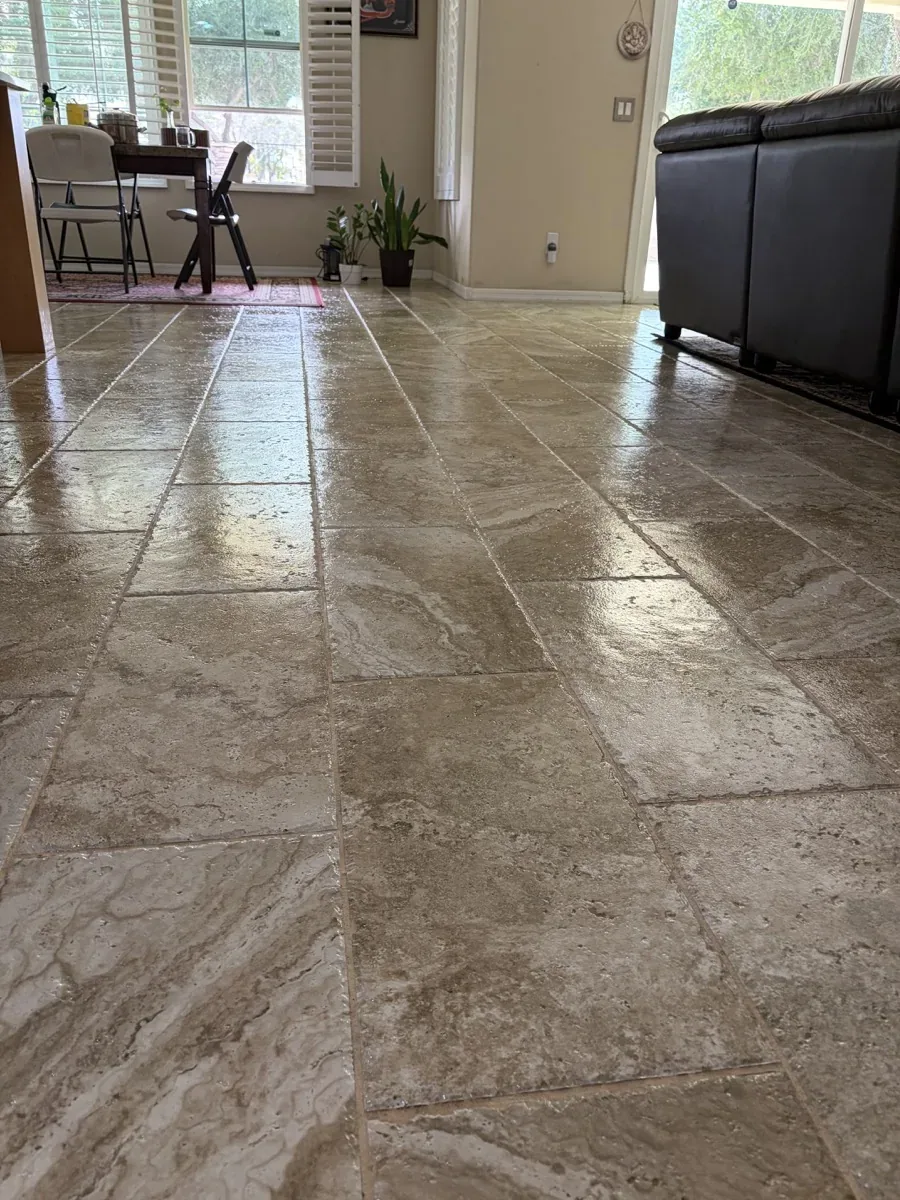
Conventional tile and grout cleaning could not correct the condition because the wear and etching affected the surface of the natural stone itself.
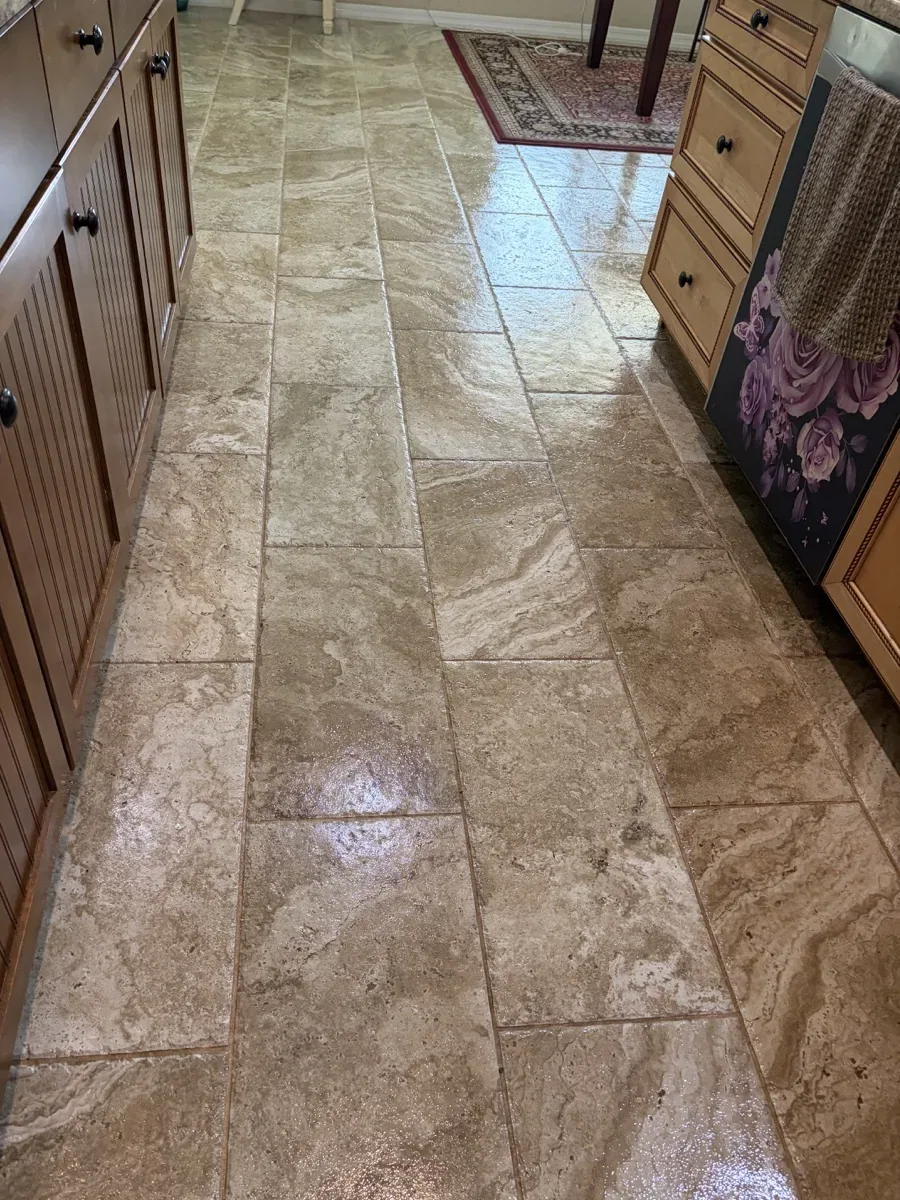
Over time, the floor had developed surface scratches, etch marks, dull traffic areas, and inconsistencies in the finish. Because those issues changed the surface of the stone, stronger cleaning alone would not restore the appearance.
The restoration had to address the filled cross-cut travertine mechanically while preserving the cloudy movement, mineral variation, and natural character that made the floor worth keeping.
The recommendation was based on the material, visible wear, and finish the homeowner wanted—not on a one-size-fits-all floor treatment.
Material
The cloudy and circular patterns came from cutting across the stone's bedding layers. The filled voids created a smoother surface without removing the original variation.
Condition
The visible dullness was more than soil on top of the floor. The worn surface needed to be refined so the damage would not remain beneath a new finish.
Decision
We recommended cleaning and preparation, wet diamond honing, scratch and etch correction, progressive refinement, detail work, and final polishing of the existing floor.
Each stage had a purpose: protect the home, prepare the stone, correct the surface, and inspect the finish before the project was considered complete.
The travertine, grout lines, filler, and areas needing correction were identified while cabinets, walls, and adjacent finishes were protected.
Soil and residue were removed so the condition of the filled cross-cut travertine could be addressed directly.
Wet diamond stages mechanically refined the surface and reduced scratches, etching, dullness, and uneven wear.
Tight areas around cabinets, architectural features, edges, and corners received the hand work larger equipment could not reach.
The stone was brought to the selected finish, cleaned thoroughly, and checked as a completed surface.
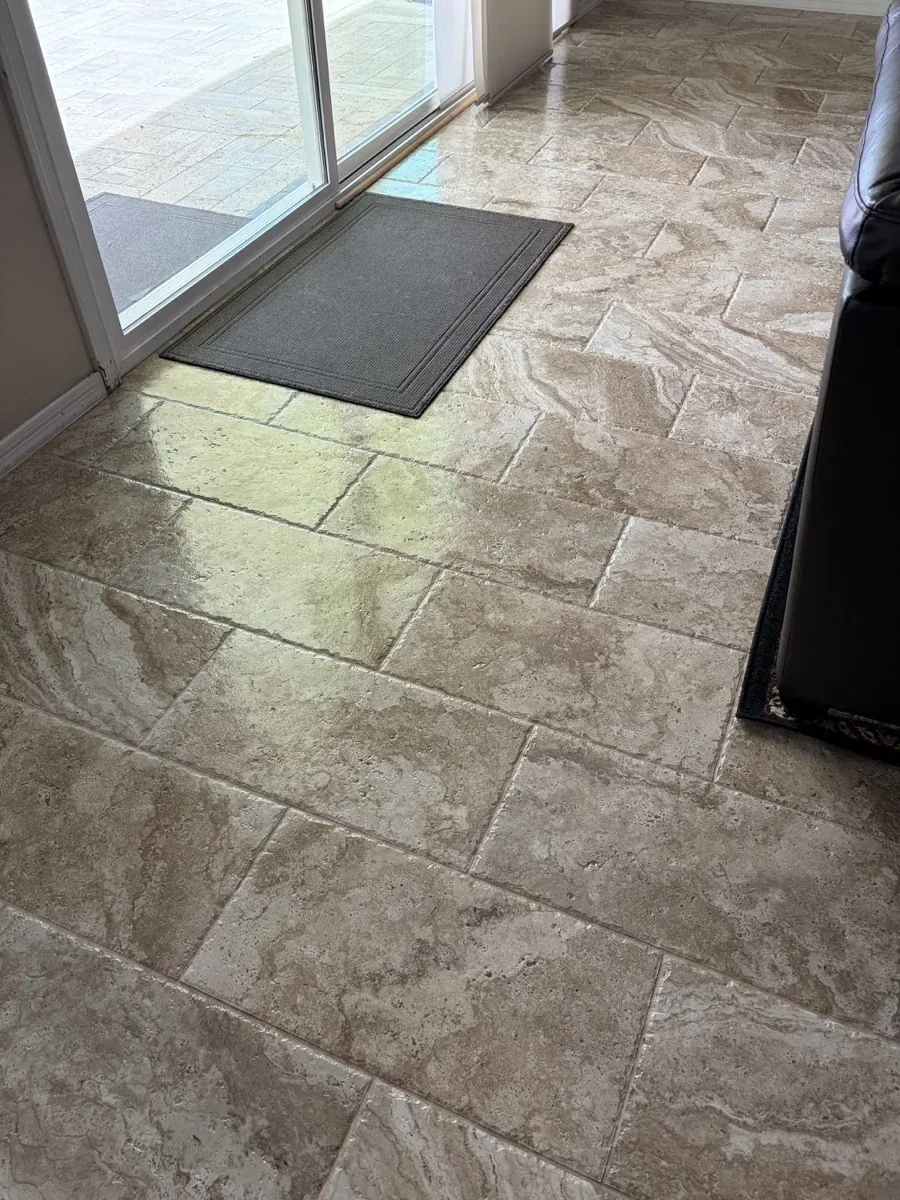
The completed restoration improved the appearance of the floor while keeping the natural movement and character of the filled cross-cut travertine visible.
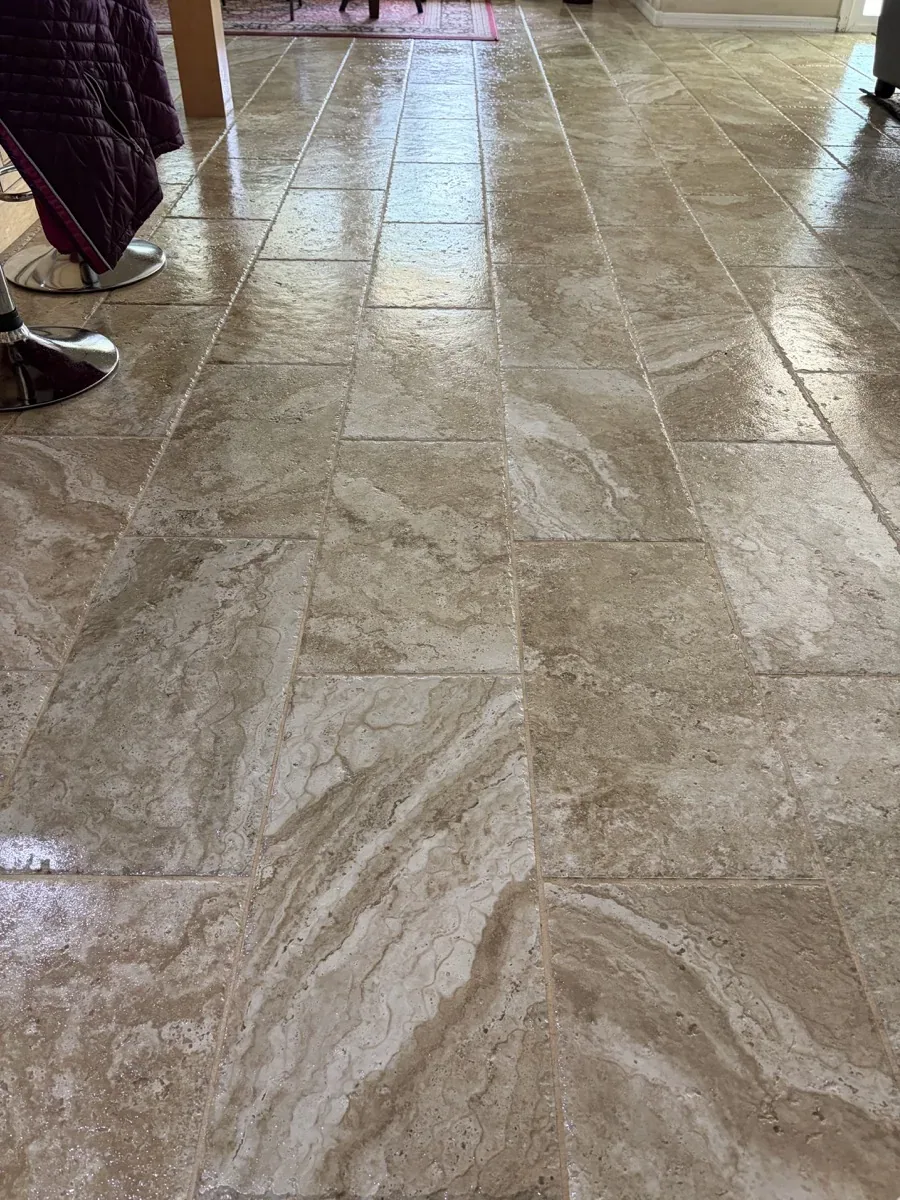
Scratches, etch marks, dullness, and wear were corrected or significantly reduced, and the finish became more consistent across the room. Progressive honing restored clarity without making the natural stone look artificial.
Rather than replacing an extensive natural-stone installation, the homeowner was able to preserve and repair the original flooring while bringing back the refined appearance expected in a high-end Mesa home.
The center of a floor can look improved while edges, corners, grout lines, and cabinet lines still show the old wear. A complete result has to account for those areas too.
Special attention was given to edges, corners, grout lines, areas around cabinets, and other architectural features where larger restoration equipment could not reach.
This is also why the recommendation cannot be based on shine alone. Loose filler, open voids, previous treatments, and the depth of the wear all change the work required before the final finish is set.
Honing addresses damage in the stone instead of covering it with a temporary shine.
Cross-cut movement, mineral variation, and filled voids remain part of the finished floor.
Edges, corners, grout lines, and tight areas receive attention so the restoration does not stop at the machine's reach.
These supplied project photos show the movement and variation that make filled cross-cut travertine different from a manufactured tile.
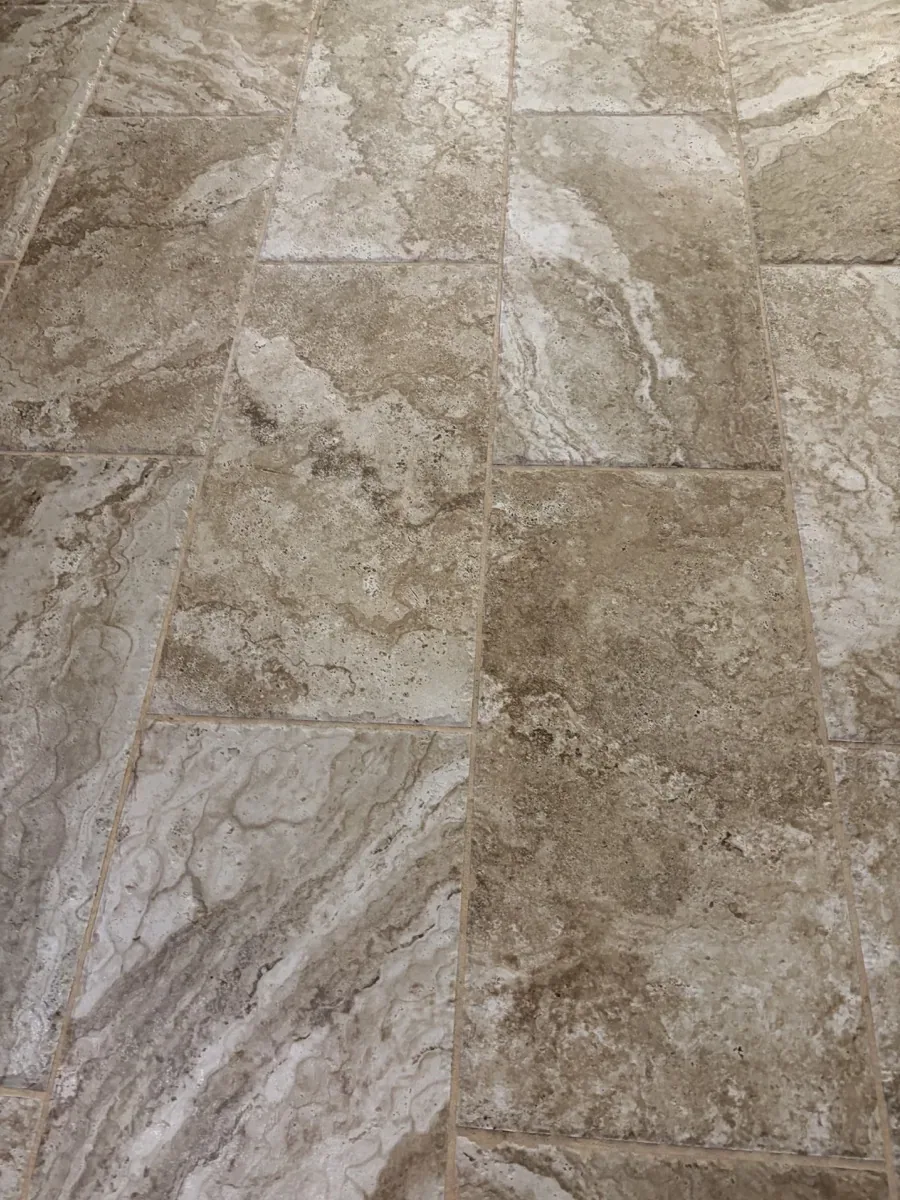
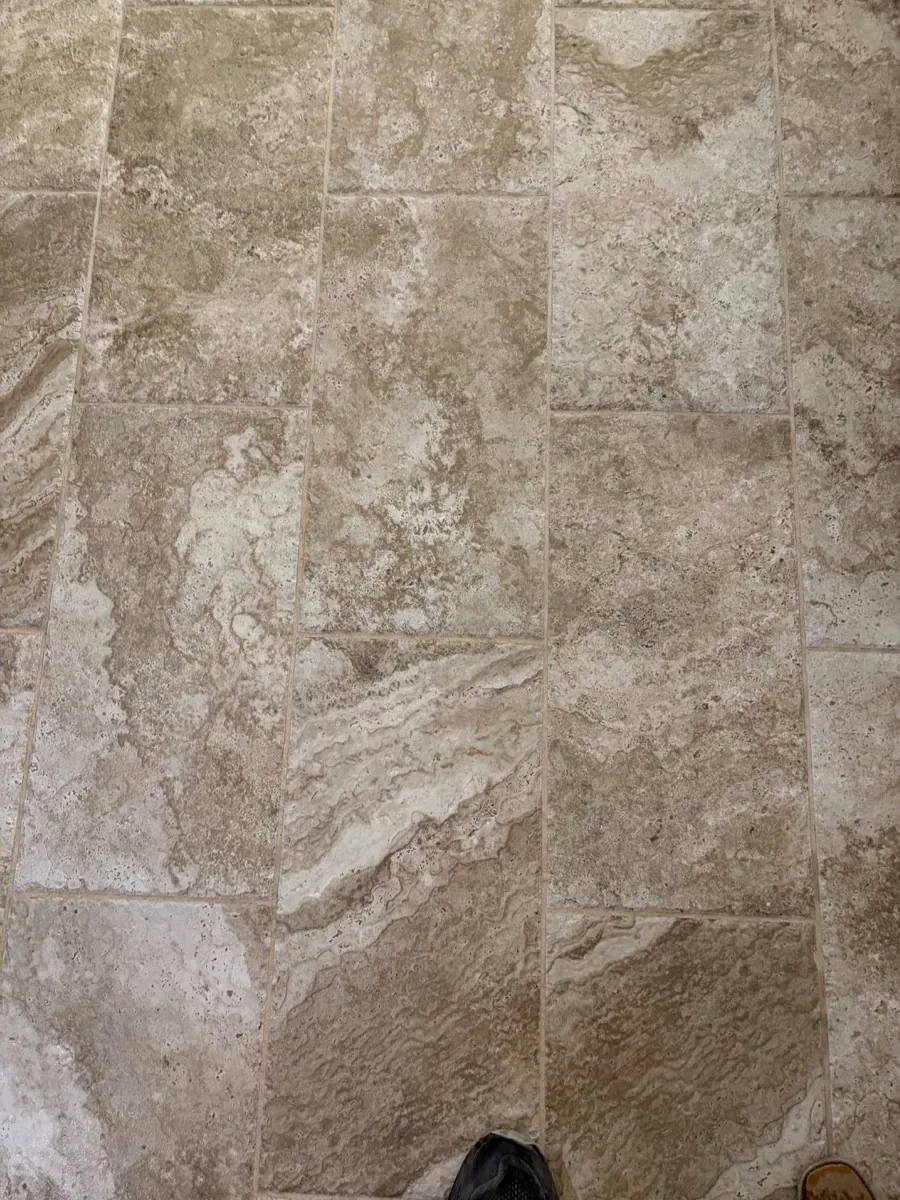
This Mesa project combines diagnosis, cleaning, diamond honing, scratch correction, etch reduction, detail work, and final polishing.
Completed service
Natural-stone restoration for dull, scratched, etched, or uneven filled cross-cut travertine floors when the existing installation is a candidate for mechanical correction.
Stain Wranglers helps Mesa homeowners preserve valuable natural-stone floors instead of replacing them when the existing installation can be restored.
Mesa includes established residential neighborhoods around central Mesa landmarks such as Mesa Country Club, Hohokam Stadium, and the Canal Eight corridor, along with surrounding East Valley communities. The right restoration method depends on the actual stone, finish, damage, and access at the home—not only the city on the service request.
If your travertine floor has a similar problem, call or text a photo. We can explain what appears restorable and which finish makes sense before the work begins.
Have a similar travertine floor?
Tell us about your surface and what you’re seeing. We’ll help you work out the next step for your home or commercial property.
Having trouble with the form? Open it in a new tab.