
“Wonderful business. My counters and floors look awesome! Justin is professional and personable.”
Quartz Countertop Repair in San Tan Valley and the East Valley
Quartz is engineered, not natural stone, so its problems come from the resin holding it together, not the mineral inside it. In the East Valley that mostly means heat scorching, sun-driven yellowing, and a surprisingly common mat-stain mix-up, none of which respond to the fixes people try on granite or marble. Quartz countertop repair starts with knowing which of those you are dealing with.
Google Reviews
More than 100 reviews with a five-star rating.
“Wonderful service and the customer service is top notch! They got my floors spotless, which with 4 dogs is no easy task! Highly recommend!”
“AMAZING!!! Looks like I got brand new floors! Thank you. Would highly recommend”
“I highly recommend his floor cleaning services! He's reliable, professional, and does an excellent job. My floors looked amazing, and I couldn't be happier with the results.”
“Stain Wranglers are honest, reliable and trustworthy. They have impeccable work ethic and will treat you fairly. Please give them a try.”
“Outstanding customer service! So refreshing to use a company that carries very high standards. Stain Wranglers exceeded our expectations. A+”
“Highly recommend! On time, great service, and very professional. Very meticulous in their work.”
“When you meet someone, with character you know!! This is what my first impression was of Stain Wranglers, will use them over and over and spread the word to everyone. Thank you”
“Justin was quick to show up and get the job scheduled. He worked hard to get our home clean and followed up after he was done to make sure we were happy. Customer service at its finest! Highly recommended”
“Justin is super friendly and explains everything thoroughly. Def would recommend!”
What quartz actually is
Engineered quartz is not a natural stone, even though it’s often shelved next to granite and marble in a showroom. It’s manufactured from roughly 90 to 95% crushed quartz aggregate, a very hard natural mineral, bound together with polyester or epoxy resin, typically around 7 to 10% of the mix, plus pigment for color. That resin binder is what makes quartz nearly non-porous and gives it its consistent, engineered look with far less natural variation than a quarried slab.
This composition matters more than it might seem, because it flips the usual logic for stone countertops on its head: with quartz, almost every real-world failure mode traces back to the resin, not the mineral aggregate. The quartz particles themselves are extremely hard and stable. The resin holding them together is a polymer, and polymers have known weaknesses, heat, sustained UV, and certain solvents all affect resin in ways they simply don’t affect a mineral crystal.
Why quartz develops problems in the first place
Because quartz is nearly non-porous, it doesn’t stain or absorb the way granite or marble can, and it doesn’t etch from acidic food the way marble does. Its vulnerabilities are different in kind. Heat above roughly 300°F (150°C) can soften and discolor the resin, permanently. Sustained direct ultraviolet light breaks the polymer resin down through photo-oxidation, a slow chemical change that shows up as yellowing over time and cannot be reversed. Certain chemicals, undiluted bleach, high-alkalinity oven cleaners and heavy degreasers, and solvents like acetone left in contact, can discolor, cloud, or strip the resin’s finish. None of that is about porosity or mineral chemistry; it’s all resin behavior, which is exactly why quartz care instructions look so different from natural stone care instructions.
Common quartz countertop problems we see in the East Valley
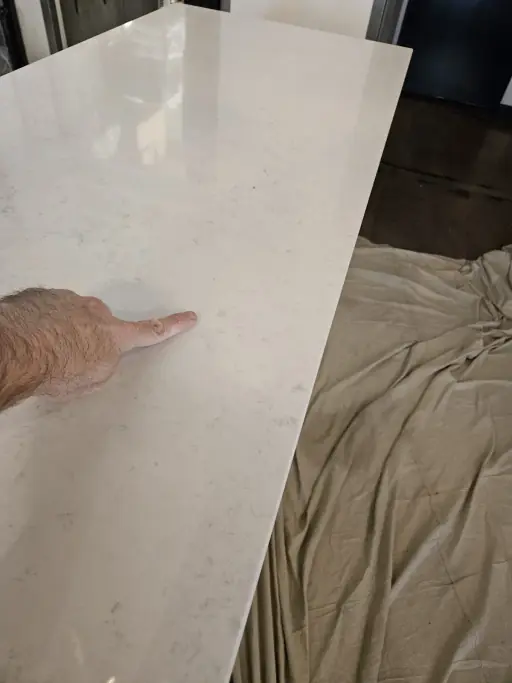
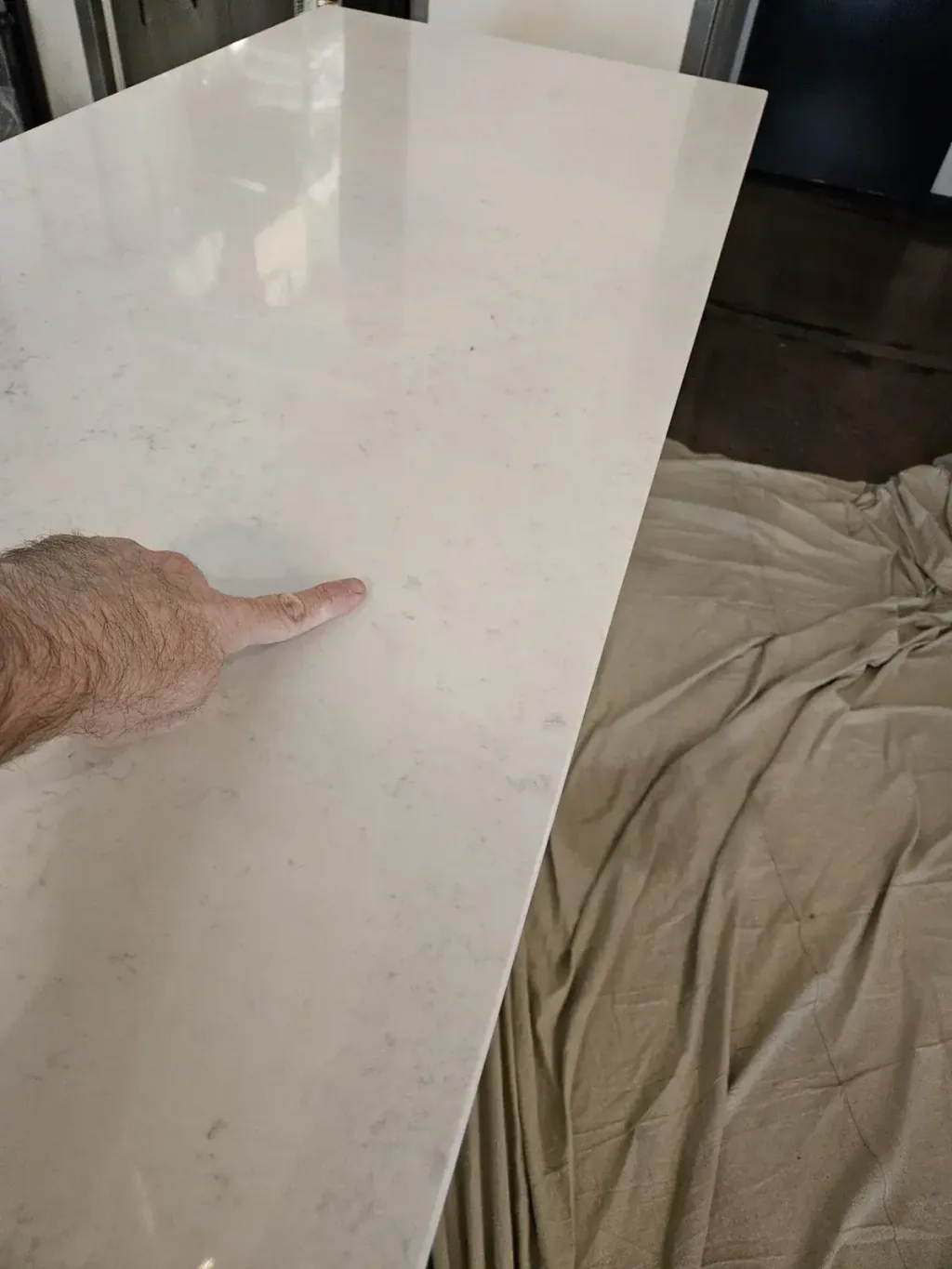
- Heat scorching near cooktops, air fryers, slow cookers, and heat lamps, a permanent white, yellow, or brown mark, sometimes with fine bubbling or crazing, that is not a stain and doesn’t clean off
- UV yellowing on counters near large unshaded south- or west-facing windows or skylights, which is a real risk in Arizona’s sun load even though light through a standard window is usually too weak to matter on most counters
- Chemical sensitivity to undiluted bleach, strong alkaline cleaners, and solvents left in contact with the surface
- Plasticizer migration from silicone or rubber dish mats left in place, producing a yellow, mat-shaped discoloration that’s frequently mistaken for a water stain
- Abrasive dulling from melamine foam scrubbers, which strip factory sheen and leave a permanent dull halo
- Cracking or chipping, mostly from thermal shock at edges and seams or from impact, with slow resin fatigue near a dishwasher that vents steam against the underside over years
Residue, stain, etch, or damage?
Quartz’s near-zero porosity changes how this framework applies compared to natural stone.
- Residue or film, hard-water spotting or cleaner buildup sitting on the surface, is the most common thing that looks like a problem but isn’t. It cleans off with a soft cloth and a pH-neutral cleaner.
- True stains are rare on quartz precisely because it’s non-porous, but the plasticizer migration described above can look exactly like a stain while actually being a resin-level chemical change from a mat left in place too long, worth ruling out before assuming it’s a spill.
- Etching doesn’t apply to quartz the way it does to marble, since there’s no calcium carbonate to react with acid. What can look similar is chemical clouding from bleach or a strong alkaline cleaner, which is a different mechanism entirely and needs to be identified as such.
- Damage covers heat scorching, UV yellowing, chips, and cracks, all resin- or impact-related, not absorption-related, and all need the specific cause identified before choosing a repair approach.
How a professional diagnoses quartz
- Identify the material and manufacturer where possible, since quartz brands vary in their approved chemicals and resin formulations, and that affects what’s safe to use in a repair.
- Document the symptom under raking light, and ask what’s been near that spot: a hot pan, a rubber mat, direct sun through a nearby window, a cleaning product. Quartz problems usually trace to a specific cause rather than gradual wear.
- Inspect for cracking near edges, seams, and appliance vents, since thermal-shock cracks and dishwasher-steam-related resin fatigue both concentrate in predictable spots.
- Test conservatively, pH-neutral clean first, reinspect, and only consider a resin fill or professional refinishing once the cause is confirmed, since applying the wrong product to quartz resin can make a small problem more visible.
Repair and restoration options
- Small chips can be filled with a color-matched UV-cured or two-part acrylic resin, shaved flush, a solid, often close-to-invisible fix on a minor defect
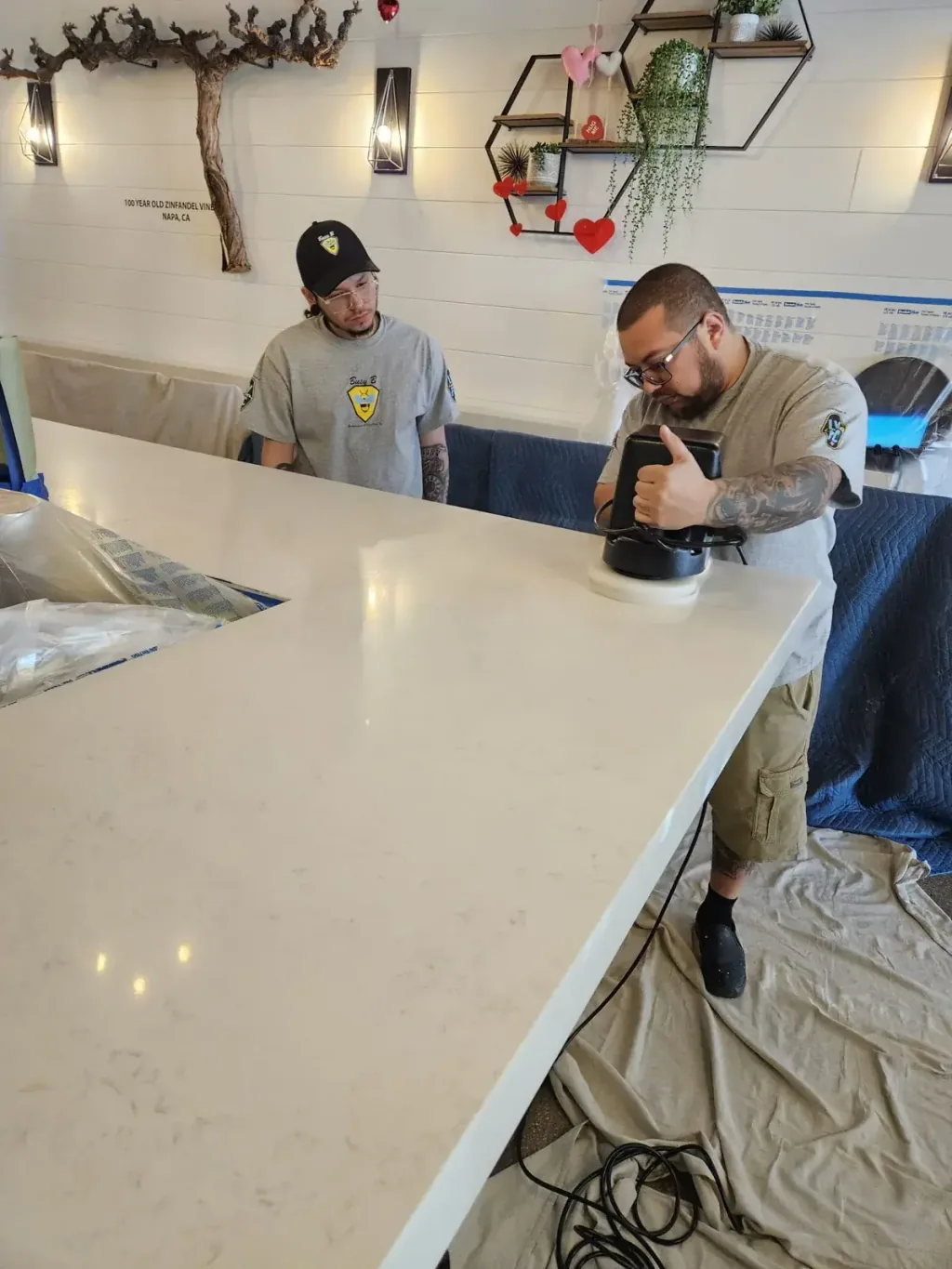
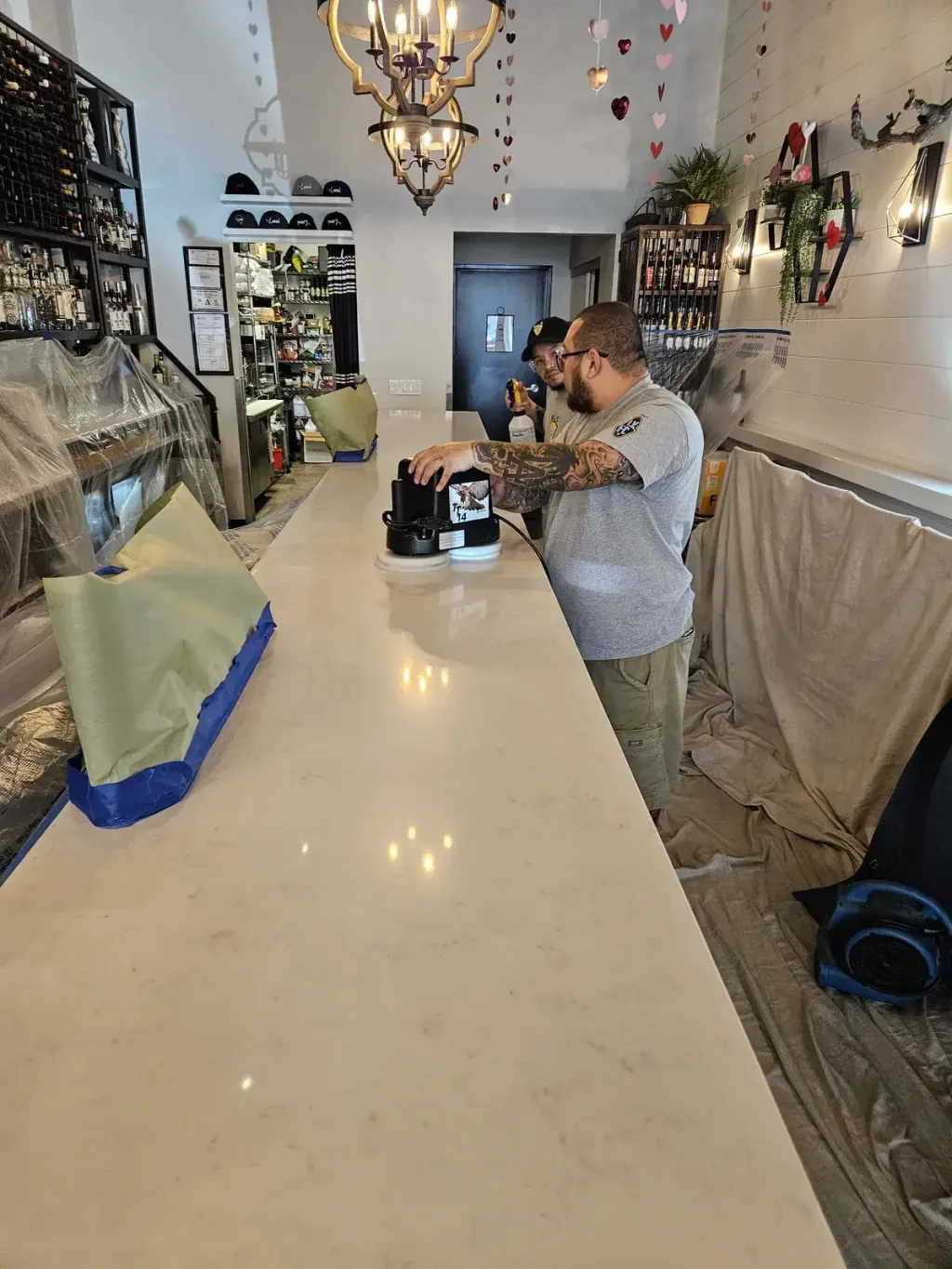
- Mild dulling from abrasive cleaners sometimes improves with professional buffing, though a full match to the surrounding factory sheen isn’t guaranteed
- Cleaning-product residue and hard-water film clear up with a straightforward pH-neutral clean
- Plasticizer discoloration is addressed primarily through prevention going forward, removing the mat and not reintroducing it, since the discoloration itself is inside the resin
What may not be repairable
This is where honesty matters most with quartz, because the marketing often oversells its resilience. Heat scorching is generally permanent and typically excluded from manufacturer warranties as misuse, it cannot be honed out the way a granite scorch mark might be, because there’s no separate finish layer to grind back to, and standard diamond stone pads risk burning the resin further. UV yellowing is also irreversible; once the resin has photo-oxidized, there’s no polish or coating that restores the original color. Quartz simply cannot be honed or repolished the way natural stone can, any attempt to sand or grind the surface disrupts the resin-and-aggregate finish rather than restoring it. Past a certain size, heat, chemical, or UV damage on quartz is a replacement conversation, not a repair conversation, because matching factory gloss and aggregate pattern on a large repaired area is extremely difficult to do invisibly.
Quartz and East Valley hard water
Because quartz is essentially non-porous, the valley’s hard water, 172–302 ppm, roughly 10 to 17.6 grains per gallon per the City of Phoenix water quality report, isn’t absorbed into it the way it would affect granite or marble. What you’ll see instead is surface mineral deposit, and because the dry desert air makes water evaporate fast, that deposit forms and reforms quickly, especially near a sink or coffee station. It’s purely cosmetic residue and wipes off with normal cleaning; it does not indicate any underlying damage to the quartz itself.
Heat, sun, and monsoon considerations
Quartz is the material most directly threatened by the desert’s combination of intense sun and sustained heat. The UV sensitivity of the resin binder, paired with Arizona’s sun load, is exactly why quartz is generally kept away from unshaded outdoor kitchens and large, unfiltered south- or west-facing windows in this market specifically, indirect light through a normal window is typically too weak to matter, but a skylight or a big unshaded window that puts direct sun on the counter for hours a day is a real, cumulative risk. On the heat side, East Valley kitchens see plenty of use of air fryers, slow cookers, and other small appliances that generate sustained heat right at counter level, always use a trivet or hot pad, since quartz’s roughly 300°F scorch threshold is easier to hit than people expect from a small appliance base.
The monsoon window, June 15 through September 30, isn’t a major factor for quartz specifically since the material is non-porous and doesn’t absorb moisture, but general household leak pathways still apply the same as with any counter, and a crack near a seam is worth having checked regardless of season.
Daily care and prevention
- Clean with a mild pH-neutral cleaner and a soft cloth, this is genuinely sufficient for quartz day to day
- Never seal it, under any circumstances
- Use a trivet or hot pad under all heat sources, including small countertop appliances
- Don’t leave silicone or rubber mats sitting on the surface for extended periods
- Avoid undiluted bleach, heavy alkaline cleaners, and melamine foam scrubbers
- Check with the specific brand’s care page for approved chemicals, since manufacturers differ
When to call a professional
Call a professional when you see a heat mark, an unexplained yellow discoloration, a chip near an edge or seam, or any crack, quartz damage is rarely a DIY cleaning fix once it’s past the residue stage, and using the wrong product on it can make the repair harder later. A photo showing the mark’s shape and location, along with what’s typically kept near that spot (a mat, an appliance, a sunny window), usually gives us enough to identify the cause before we recommend anything.
Common quartz questions
Can I seal my quartz countertop like I would granite?
No, and you shouldn't try. Quartz is engineered to be essentially non-porous, so a sealer has nothing to soak into, it just sits on top as a film. Cambria, one of the major quartz manufacturers, states outright on its own product-care guidance that sealers, penetrants, and topical treatments should not be applied to their product under any circumstances. If a fabricator or product tells you to seal quartz, that's a red flag.
Can a heat scorch mark on quartz be polished out?
Generally no. Scorching happens when the resin itself softens and discolors, typically starting around 300°F, and once that's happened the damage is chemical, not just cosmetic, it's not sitting on the surface, it's a change to the material itself. Quartz can't be honed with standard stone diamond pads the way granite or marble can, because that risks burning the resin further or creating an optical swirl distortion around the repair. Small scorch marks are sometimes addressed with a color-matched resin fill; larger ones are often not repairable to invisible, and replacement of that section becomes the honest recommendation.
There's a yellow shape on my quartz that looks like a stain but won't clean off. What is it?
This is a frequently misdiagnosed problem worth knowing about specifically: silicone or rubber dish-drying mats and trivets left in place for extended periods can leach plasticizers directly into the quartz resin, leaving a stubborn yellow shape that matches the outline of the mat. It is not a surface stain, so cleaning products and poulticing won't touch it, the discoloration is inside the resin, not on top of it. The fix is prevention (don't leave rubber or silicone mats sitting on quartz for weeks at a time) rather than removal after the fact.
Is quartz really "indestructible" the way it's often marketed?
No, and the manufacturers themselves say so. Cambria's own care guidance states plainly that its product is not heat-proof, chemical-proof, or fracture-proof in any form. Quartz is genuinely low-maintenance and non-porous, which is a real advantage, but it has clear limits around heat, undiluted bleach and strong alkaline cleaners, and sustained direct sun, it's durable within those limits, not immune to damage.
Is a Magic Eraser safe to use on quartz?
We'd avoid it for routine cleaning. Melamine foam is a fine abrasive, something like 3000-grit, and while it does remove marks, it also strips the factory sheen wherever it's used, which leaves a permanent dull patch that doesn't match the surrounding gloss. A mild pH-neutral cleaner and a soft cloth handle almost everything quartz encounters day to day.
Can chips or cracks in quartz be repaired?
Small chips are commonly filled with a color-matched UV-cured or two-part acrylic resin, shaved flush to the surface, and this can look quite good on a small defect. Larger chips, cracking from thermal shock, or significant heat and UV damage are a different story, matching the factory gloss, the aggregate pattern, and the exact color is genuinely difficult, and past a certain size, an honest repair recommendation is often replacement of the affected section rather than a repair that ends up looking worse than the original damage.
Video responses from clients we've served across the East Valley.
Hear what our customers have to say once the work is finished. You can expect the same care and attention when you invite Stain Wranglers into your home or business.
Request an assessment.
Tell us about your surface and what you’re seeing. We’ll help you work out the next step for your home or commercial property.
- Stone, tile, floors and countertops
- Residential and commercial, San Tan Valley & the East Valley, AZ
- No charge to have us look at it
Having trouble with the form? Open it in a new tab.