
“Stain Wranglers performed miracles! They brought my dirty stained grout back to new condition with their color seal! I was thinking of tearing a perfectly good floor out, but now I don’t have to! Professional team came and did a beautiful job! Highly recommended!”
Tile & grout restoration · East Valley
Grout Color Sealing in San Tan Valley and the East Valley
There is a point where a floor is genuinely clean and still does not look right. The joints are sanitary, the soil is gone, and the grout is simply not the color it used to be, blotchy in the traffic lane, lighter under the window, patched in three places by somebody with a different bag of product. That is where grout color sealing comes in, bringing every joint back to one even color.
Color sealing answers that specific problem. A pigmented resin locks into the top of the joint, standardizes the color across the entire field, and leaves a surface that repels water and oil rather than drinking them in. It is not regrouting, and it is not a substitute for repair.
Google Reviews
More than 100 reviews with a five-star rating.
“Needed the tile and grout clean. Flooring looks brand new.”
“We had them clean grout on tile floors throughout the house. It had been awhile since we had done so they were pretty dirty. They got them back in shape for us! Good job”
“Stain Wranglers was great to work with. Justin was on time and easy to communicate with. He was honest and did a great job for reasonable price. He was knowledgible and trustworthy. We will use his services again!”
“They were professional and were great with my hyper toddler, very appreciative.”
“Wonderful service and the customer service is top notch! They got my floors spotless, which with 4 dogs is no easy task! Highly recommend!”
“AMAZING!!! Looks like I got brand new floors! Thank you. Would highly recommend”
“I highly recommend his floor cleaning services! He's reliable, professional, and does an excellent job. My floors looked amazing, and I couldn't be happier with the results.”
“Stain Wranglers are honest, reliable and trustworthy. They have impeccable work ethic and will treat you fairly. Please give them a try.”
“Outstanding customer service! So refreshing to use a company that carries very high standards. Stain Wranglers exceeded our expectations. A+”
What color sealing actually is
A color seal adds pigment and protection to suitable grout joints. It can bring mismatched or uneven grout toward a consistent color after the surface has been cleaned and assessed. It does not replace missing grout or repair a moving joint.
The preparation matters as much as the color. Soil, incompatible treatments, and unresolved moisture can affect the result, so we check the floor before recommending a color seal.
Why we use Turbo-Seal for grout color sealing
Justin uses Turbo-Seal for color sealing and has a local supplier relationship with the company. The product gives us a way to discuss the grout color you want after the joints have been prepared, rather than leaving you to accept a patchwork of old and repaired grout.
Turbo-Seal's product guidance describes the sealer as a recolorant and protective treatment. It also warns that phone and monitor colors differ from physical samples. We use the color discussion to set expectations before the work, including how the selected shade looks alongside your tile.
Ask to see the appropriate physical swatch rather than choosing solely from a screen. Suitability, preparation, and the finished color should be agreed before the whole floor is treated.
What the clean floor reveals
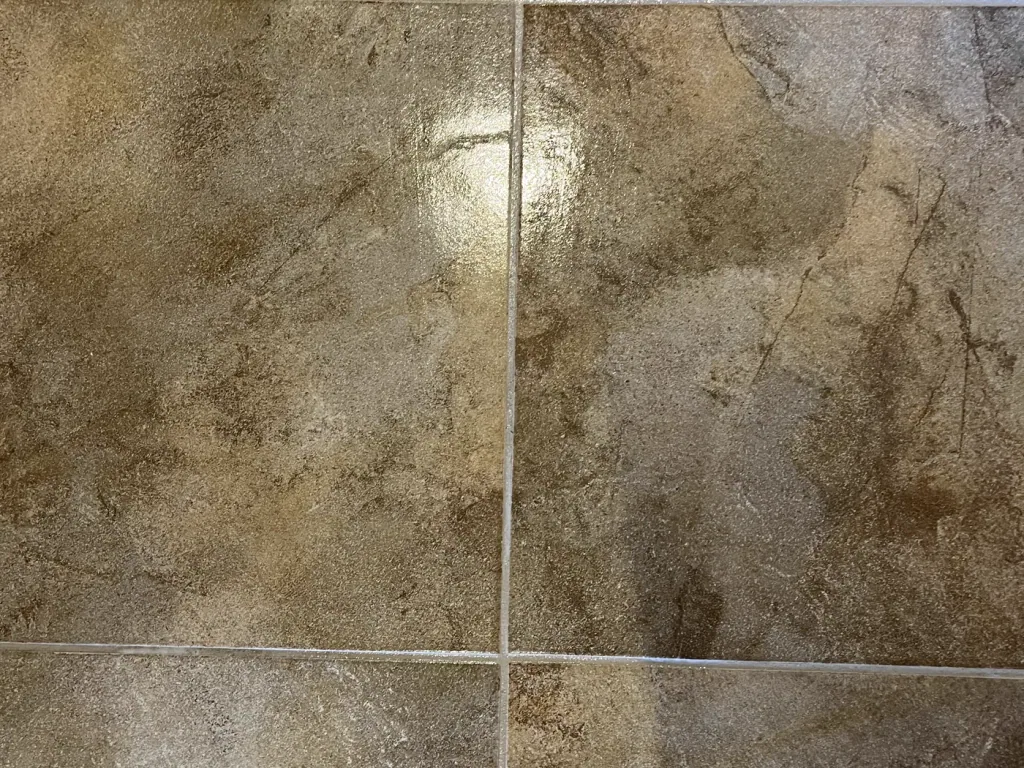
Once a floor is clean and dry, the variation still visible in the joints is the grout's real color. That is the point where color sealing can standardize the field instead of hiding soil underneath a finish.
What it fixes that cleaning could not
- Permanently altered pigment, where the grout's own color has changed rather than been covered by soil
- Blotchy, mottled joints that came out of the original installation uneven and have only diverged since
- Mismatched repairs, where different bags, different ages, or different installers left visible patches
- Traffic lanes that read as a different tone from the rest of the room after a clean
- Ongoing stain vulnerability in a joint that keeps absorbing everything spilled on it
- A color you never liked, since going darker across the whole field is a straightforward change
Preparation is most of the job
Our tile and grout cleaning process addresses soil and residue before we assess whether the joints are suitable for color sealing.
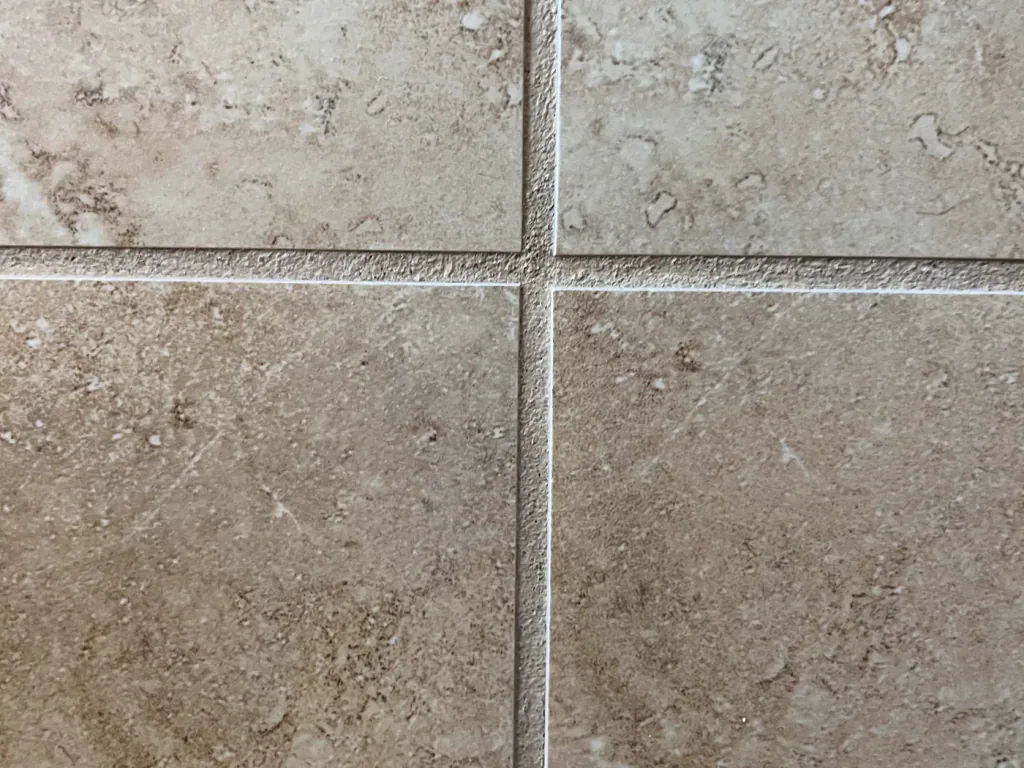
Almost every failed color seal we are asked to look at failed for the same reason: it was applied to a joint that could not bond to it. The colorant needs grout that is structurally sound, thoroughly cleaned, free of grease, oil-soap, wax, detergent film, and any incompatible old sealer, and completely dry.
So the sequence is fixed. A restorative clean first, then any cracked or missing sections repaired and cured, then a full dry, then an adhesion test in an inconspicuous spot. Where the surface calls for it, a light acid wash and dry gives the joint a profile to key into, though that step depends entirely on what the tile and grout will tolerate.
We also check that the surrounding tile will release the colorant cleanly. Highly textured, tumbled, and beveled tile makes that harder, and porous unglazed tile can hold pigment where you do not want it. That is a reason to test, not a reason to refuse, but you should hear about it before the job rather than after.
Moisture gets ruled out first
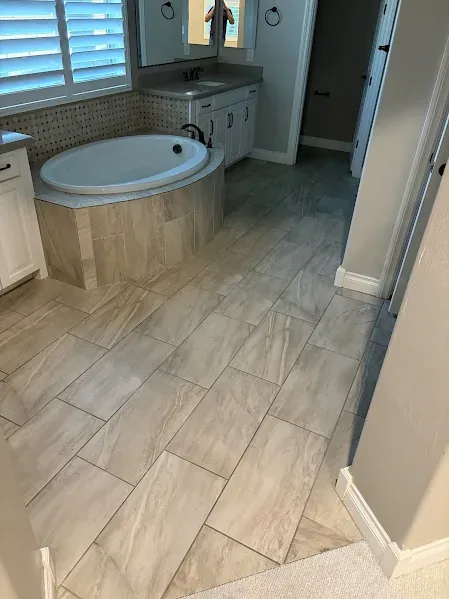
If a floor or a shower is producing white powder that brushes away and comes back, that is efflorescence: soluble salts being carried to the surface by moisture moving through the assembly. Sealing over it does not stop it. It gives the salts somewhere to crystallize underneath instead, and the pressure that generates can lift the finish and damage the surface it is sitting on.
A hard white crust that will not brush off is usually something else entirely, most often latex migration from polymer in the grout or thinset carried up by excess water during mixing or curing. It looks similar from standing height and it needs a different response, which is why we ask you to run a finger across it before we quote anything.
In this climate the question is not academic. Monsoon humidity between June 15 and September 30 drives moisture through slabs, and a non-breathable coating applied over a damp joint is one of the most reliable ways to create a problem that did not exist before.
How it goes on
- Clean and, if needed, repair. The joint has to be sound and sanitary before there is any point coloring it.
- Dry and test. A full dry, then an adhesion test and a color check against the dry joint rather than a wet one.
- Micro-apply. The colorant goes on joint by joint with an applicator bottle and a detail brush, worked into the joint rather than brushed across the floor.
- Chamfer the excess. Overflow is chamois-wiped off the tile face before it sets, which is the part that takes the time and is why this is slow, deliberate work.
- Cure. Turbo-Seal lists a 72-hour cure. Surface drying is not the same as full cure. We explain the applicable traffic, water, and cleaning restrictions for the work performed.
What color sealing is not
Color sealing changes appearance and helps protect suitable grout, but it is not a substitute for the following work:
- Regrouting. It changes the top of a joint. It adds no structural material and it will not fill a joint that is low or missing.
- A structural repair. Cracked or crumbling joints need grout repair before color sealing.
- Shower waterproofing. That is the membrane and pan behind the tile, and nothing applied to a surface reaches it.
- A fix for a moving joint. Changes of plane need flexible sealant. A colorant in that joint will split exactly where the grout did.
- A cure for efflorescence. The moisture source has to be found. Sealing over salts makes the eventual problem worse, not smaller.
- Permanently stain-proof. It substantially improves stain resistance and buys you reaction time. Nothing applied to grout makes it immune.
- The same as a penetrating sealer. A clear sealer changes absorption. A color seal changes appearance and absorption. They are not interchangeable.
How this differs from a grout touch-up pen
A small touch-up and a whole-floor color seal have different scopes. For a floor-wide result, we assess the joints, remove contamination, address repairs, test adhesion, and apply the chosen color across the agreed area.
If you have already used a grout pen or another colorant, tell us the product name. The existing treatment may affect preparation and adhesion. We assess it rather than applying another layer and hoping the two products work together.
Keeping the grout looking clean afterwards
Color sealing is part of a care plan, not the end of cleaning. It gives suitable grout a more consistent color and added stain resistance. Dust, tracked-in soil and spills still need to be removed.
We recommend maintenance products compatible with your tile and the color seal, and explain the dilution, cleaning method and cure time. Sweep or vacuum loose grit before washing, use clean tools, and follow the product’s rinsing instructions. Avoid adding extra cleaner in the hope of a better result; residue can leave the floor looking dirty.
The aim is to help you maintain that clean appearance over the months ahead. Traffic, spills, moisture and your routine affect the result. If a joint changes color or gets damaged, call us so we can discuss the cause and whether a local touch-up is appropriate.
See the work
See a grout color sealing project in San Tan Valley
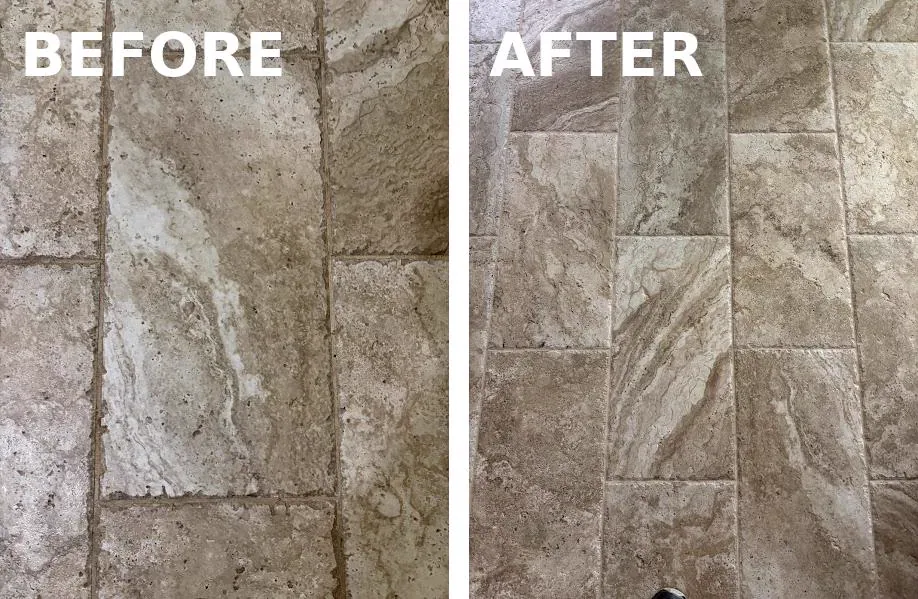
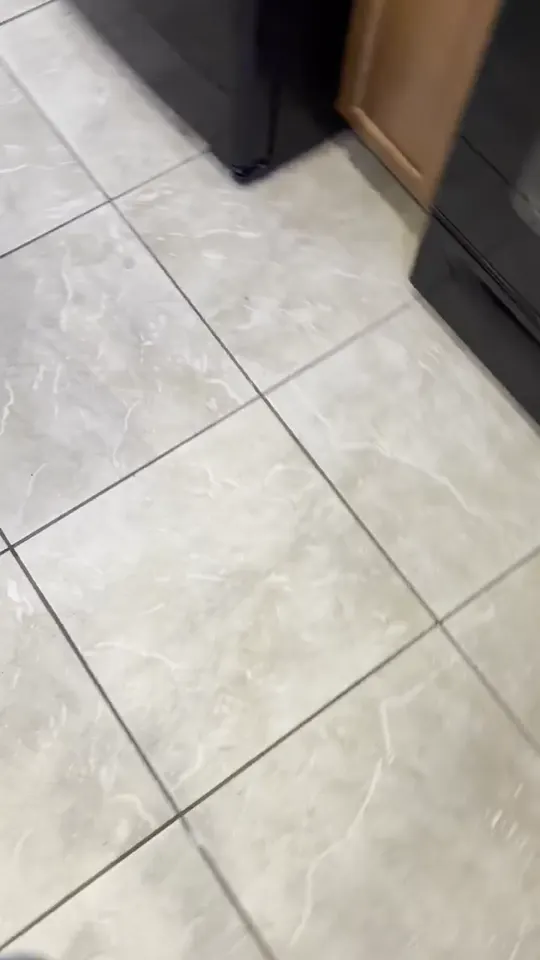
A Skyline Ranch kitchen where years of soil had turned white grout gray. We cleaned it, color sealed it white and sealed the floor.
Grout color sealing questions we hear most
My grout is clean but it still looks blotchy. Is that what this fixes?
That is exactly what it fixes. Once a floor has been cleaned properly and looked at dry, whatever variation is left is the grout's actual color, and no further cleaning changes it. Color sealing puts a pigmented resin into the top of the joint so the whole field reads as one tone, which also hides old patch repairs and the difference between joints that aged in sunlight and joints that did not.
Can I change the grout color, or only restore what is there?
Either. Most customers want the original color evened out, but going darker is straightforward and is often the practical choice on a light floor that has had a hard life. Going lighter than the existing grout is harder and depends on the current color and the condition of the joint, so it is a conversation on site rather than a promise on a web page.
Why did the last color seal peel off?
Nearly always inadequate preparation. A colorant needs to bond to clean, sound, fully dry grout. Grease, oil-soap residue, wax, an incompatible old sealer, or a joint that was still holding moisture will all prevent that bond, and the product releases in sheets or flakes some weeks later. It can also fail where it was applied over grout that was structurally unsound to begin with, because the joint itself is what let go.
Is this the same thing as a grout sealer?
No, and the names cause a lot of confusion. A penetrating grout sealer is clear. It lines the pore walls to reduce absorption and it changes nothing about appearance. A color seal is pigmented and it changes appearance, while also leaving a barrier that resists water and oil. They solve different problems, and where grout has permanently changed color, the clear sealer will not help.
Will it make my grout waterproof?
It will not, and anyone who tells you otherwise is overselling it. What it gives you is a non-porous, hydrophobic and oleophobic surface at the top of the joint, so spills bead and sit rather than soaking straight in, which makes routine cleaning much easier and improves stain resistance. Waterproofing in a wet area is the membrane behind the tile, not anything applied to the surface.
Can it go in a shower?
It depends on the product and the shower. Some color sealants are rated for intermittent wet areas and some are not, so the manufacturer's data sheet decides it rather than a general rule. A shower also has to pass the moisture test first: if the assembly is holding water or producing efflorescence, sealing the surface traps the problem rather than solving it.
How long does it last, and how do I clean it afterwards?
Durability depends on the product, preparation, traffic and ongoing care. We explain the expectations for your floor and recommend compatible maintenance products, including how to dilute and use them after the color seal has cured. Sweep up loose grit before washing, clean up spills promptly, and avoid cleaners or abrasive tools that are unsuitable for the tile or color seal. Protection helps with maintenance; it does not make the floor immune to dirt or wear.
Video responses from clients we've served across the East Valley.
Hear what our customers have to say once the work is finished. You can expect the same care and attention when you invite Stain Wranglers into your home or business.
Request an assessment.
Tell us about your surface and what you’re seeing. We’ll help you work out the next step for your home or commercial property.
- Stone, tile, floors and countertops
- Residential and commercial, San Tan Valley & the East Valley, AZ
- No charge to have us look at it
Having trouble with the form? Open it in a new tab.