
“Stain Wranglers performed miracles! They brought my dirty stained grout back to new condition with their color seal! I was thinking of tearing a perfectly good floor out, but now I don’t have to! Professional team came and did a beautiful job! Highly recommended!”
Tile & grout restoration · East Valley
Grout Repair and Regrouting in San Tan Valley and the East Valley
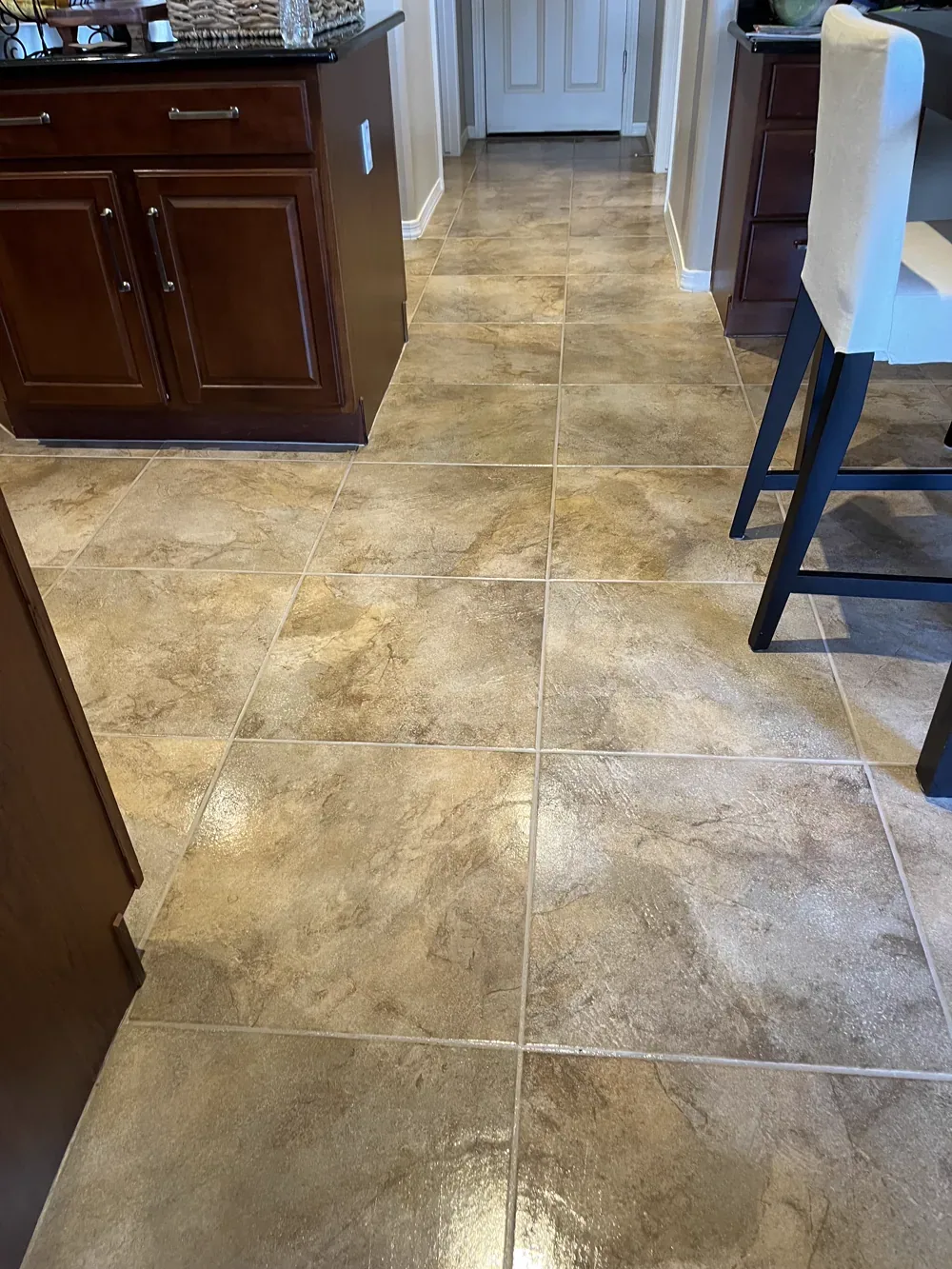
A joint that is cracked, low, powdery, or missing is not a cleaning problem, and no amount of scrubbing or sealing will bring it back. It has to be cut out and repacked, and before that happens someone should work out why it failed, because most grout failures are a symptom of something underneath. Grout repair and regrouting means finding that cause, then raking out and repacking the failed joints.
We repair and regrout floors, showers, tub surrounds, backsplashes, and the transitions between them, replace rigid grout with flexible sealant where the tile changes plane, and tell you plainly when the real problem is not the grout at all.
Google Reviews
More than 100 reviews with a five-star rating.
“Needed the tile and grout clean. Flooring looks brand new.”
“We had them clean grout on tile floors throughout the house. It had been awhile since we had done so they were pretty dirty. They got them back in shape for us! Good job”
“Stain Wranglers was great to work with. Justin was on time and easy to communicate with. He was honest and did a great job for reasonable price. He was knowledgible and trustworthy. We will use his services again!”
“They were professional and were great with my hyper toddler, very appreciative.”
“Wonderful service and the customer service is top notch! They got my floors spotless, which with 4 dogs is no easy task! Highly recommend!”
“AMAZING!!! Looks like I got brand new floors! Thank you. Would highly recommend”
“I highly recommend his floor cleaning services! He's reliable, professional, and does an excellent job. My floors looked amazing, and I couldn't be happier with the results.”
“Stain Wranglers are honest, reliable and trustworthy. They have impeccable work ethic and will treat you fairly. Please give them a try.”
“Outstanding customer service! So refreshing to use a company that carries very high standards. Stain Wranglers exceeded our expectations. A+”
Grout does not fail at random
When a joint cracks, crumbles, or disappears, the grout is usually the last thing that went wrong rather than the first. Something moved, something was mixed too wet, or something was installed where a rigid material was never going to survive. Repacking the joint without asking which of those happened produces a repair that fails again in the same place, which is why the first part of any grout job here is an inspection rather than a bag of product.
That inspection is quick and it is not invasive. We look at where the cracking runs, what the floor does underfoot, whether the joints sound hollow, and whether there is a plane change, a fixture, or a span involved. The pattern of the failure usually names the cause on its own.
The causes we find most often
- Substrate deflection. Tile assemblies need a floor stiff enough to hold still under load, generally L/360, and natural stone tile wants L/720. A floor that flexes more than that puts shear directly into rigid joints, and the grout is what gives.
- Too much water in the mix. Excess water during mixing or early clean-up weakens the cement hydration bond, and the result is grout that cures soft, powders under a fingernail, and wears out of the joint years before it should.
- Missing movement joints. Where the installation skipped flexible perimeter or field joints, ordinary expansion has nowhere to go, so it concentrates in whatever rigid grout is nearest.
- Grout used past its pot life. Product worked long after it began to set never develops full strength, and the joints it fills fail early and unevenly.
- Wear and chemical degradation. Traffic, harsh cleaners, and acidic products all take material out of a cement joint over time. In this region, repeated attacks on hard-water scale with vinegar or calcium remover do exactly that.
What a repair actually involves
- Remove the unsound material. The joint is raked with a diamond-tipped oscillating blade to at least two thirds of its depth, and to half the tile thickness or an eighth of an inch where that is greater. New grout has to key into something.
- Clean the joint out. Vacuum the dust, remove any old sealer, wax, or colorant residue, and check that the tile edges are sound rather than chipped along the run.
- Dampen and repack. Latex-modified cementitious grout for most work, 100% epoxy where chemical resistance or a wet commercial environment calls for it, packed full rather than skimmed.
- Tool and clean the face. The joint is struck to match the profile of the surrounding grout, and the tile face cleaned before the haze sets, which matters more on textured and unglazed tile.
- Sealant at the plane changes. Wall to floor, wall to wall, and tile to tub get color-matched 100% silicone rather than grout, because those joints move.
- Cure, then protect. Once the new grout has cured properly, sealing or color sealing can go on. Neither should be rushed onto fresh grout.
Corners get sealant, not grout
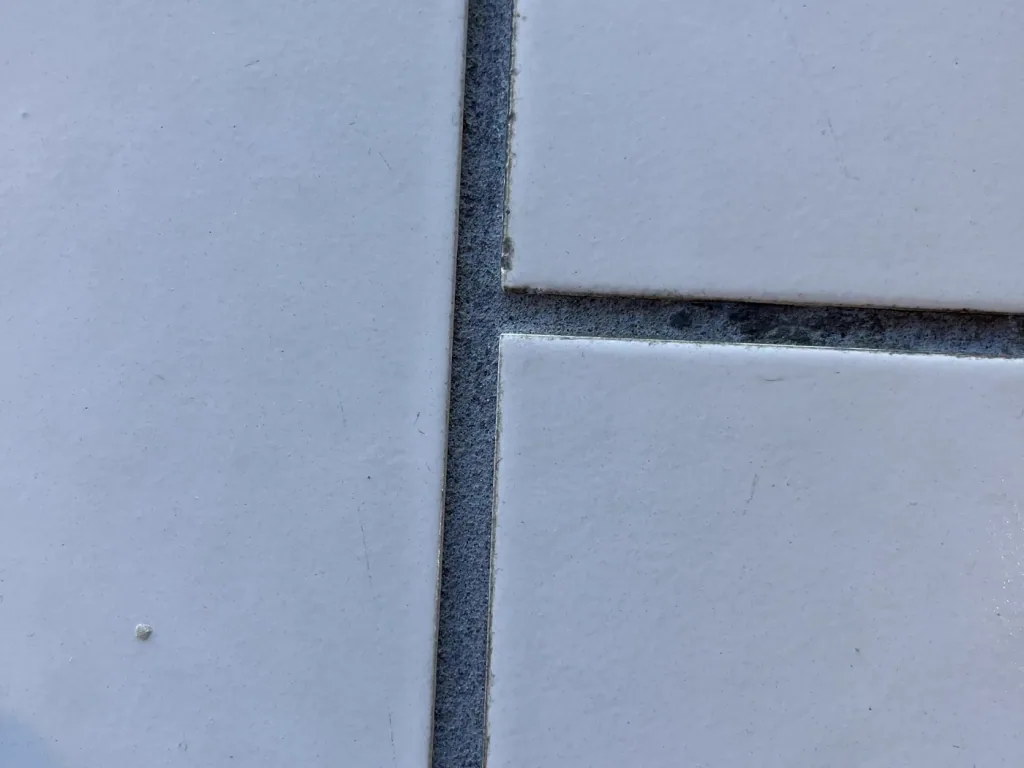
This is the most useful thing on the page for anyone whose shower corner keeps splitting. Where a floor meets a wall, or two walls meet, or tile meets a tub, the two planes move independently. Timber framing takes on and gives up moisture, the back wall pushes in from one direction and the side walls from another, and all of that force lands in the joint between them.
Cement grout is rigid by design. It has no capacity to absorb that movement, so it cracks, and regrouting it simply resets the countdown. The correct material is a 100% silicone sealant with mildewcide, color matched to the grout, which flexes with the movement instead of resisting it.
When we find rigid grout in one of those joints, replacing it with the right material is part of the repair rather than an upsell. It is also usually the difference between a repair that lasts and one you call us back about.
Grout is not the shower's waterproofing
Trade guidance is unambiguous about this, and it is worth repeating because so much marketing implies otherwise. Grout joints are not waterproof. The waterproofing in a shower is the membrane behind and beneath the tile, the pan, and the drainage assembly. Grout fills the space between tiles, resists wear, and keeps water from finding an easy path. That is the whole of its job.
The practical consequence is that a grout repair on a shower with a failed membrane, a bad pan, or a concealed leak is cosmetic only. It will look right and the water will keep going where it was going. We set that expectation before quoting, and where the symptoms point at the assembly rather than the surface we will tell you that you need a tile contractor rather than us.
Spot repair, section regrout, or the whole room
The right scope comes from how much of the field is unsound, not from how bad the worst joint looks. A run of failure along a shower floor, a traffic path, or the perimeter of a fixture is normally a section repair. Grout that powders across the whole room, or joints that have been repaired repeatedly in different places, points at a full regrout.
There is a third answer that is sometimes the right one: fix what is moving first. If the floor deflects, or a movement joint was never installed, regrouting the room buys a season rather than a decade. We would rather tell you that up front than take the work twice.
Matching the color
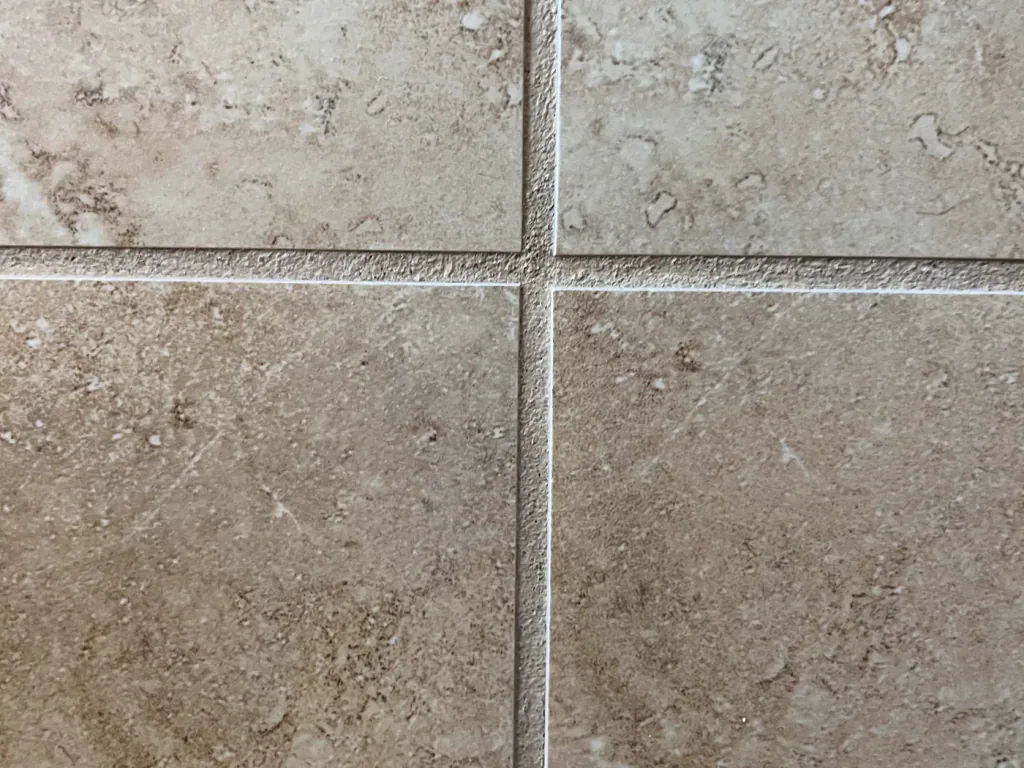
Grout is matched dry, against the cured color of what is already down, not against a wet joint that reads several shades darker than it will end up. Texture matters too, since sanded and unsanded grout read differently even in the same color, and joint width usually decides which one belongs there.
Where the field has aged unevenly, or the original product is no longer available, a close match will still be visible from close range. That is often the moment where grout color sealing across the whole field is the better decision, because it standardizes old and new joints to one tone instead of highlighting the repair.
What we cannot fix with grout
- Substrate movement itself. We repair the joint, not the deflection that broke it. Where the cause is structural, it has to be addressed by the trade that owns it.
- Failed waterproofing. Membranes, pans, and drainage are behind the tile, and no surface work reaches them.
- Loose or hollow tile. Tile that has released from the substrate needs to be reset, and grouting around it hides the problem for a while.
- Efflorescence with a live moisture source. Repacking a joint that salts are travelling through means the new joint will do the same thing.
- Etched or worn stone tile. That is a mechanical problem in the stone, and it is answered by honing rather than by anything done to the joint.
After the repair
New grout wants to cure before anything goes over it. Once it has, sealing reduces absorption in the fresh joints and color sealing evens the appearance across old and new together. Day to day, the things that shorten a joint's life here are acidic cleaners, standing water, and grit ground underfoot, and all three are avoidable with a neutral cleaner and a mat by the door.
Grout repair questions we hear most
Why does the grout in the same corner keep cracking no matter how often it is repaired?
Because grout should never have been in that corner. Where a floor meets a wall, or one wall meets another, the two surfaces move independently, and framing that expands and contracts pushes them against each other. Rigid cement grout cannot absorb that movement, so it shears. The correct material at any change of plane is a flexible sealant, color matched to the grout and loaded with mildewcide. Replace the grout with grout and it will crack again on roughly the same schedule.
Can you just apply new grout over the old grout?
No, and this is the single most common DIY failure we are called in behind. New grout needs depth to key into. Trade guidance is to remove at least two thirds of the existing joint depth before repacking, and in practice we take it to half the tile thickness or an eighth of an inch, whichever is greater. A thin skim over sound grout has nothing to hold onto and it powders out within months.
Will a grout repair stop my shower from leaking?
Almost certainly not, and we would rather say that before the work than after it. Grout joints are not waterproof and were never intended to be. Waterproofing in a shower is the membrane, the pan, and the drainage system underneath the tile. If water is getting into the structure, a grout repair is cosmetic, and the leak continues behind a joint that now looks tidy. What a repair does do is stop water finding an easy path and stop the joint deteriorating further.
Can you match my existing grout color?
In most cases we can get very close, and we match against a dry joint rather than a wet one, because wet grout reads several shades darker than it will cure. Where a floor has aged unevenly, or where the original color is no longer made, the honest answer is that a repair will be visible up close. That is often the point at which color sealing the whole field makes more sense than chasing a match joint by joint.
Do I need a full regrout or just a repair?
It depends how much of the field is unsound, not how bad the worst joint looks. If failure is confined to a traffic path, a shower floor, or a run of joints near a fixture, a section repair is the right answer. If joints are powdery across the whole room, or if the same cause is still acting on the assembly, a full regrout is the honest recommendation, and sometimes the honest recommendation is to fix what is moving underneath first.
How long before we can use the shower or walk on the floor?
Cementitious grout is generally walkable within a day and wants a few days before heavy wetting, and flexible sealant needs its own cure time before a shower goes back into service. We give you the actual figures for the products used on your job rather than a general rule, because they vary by manufacturer and by how warm and dry the room is.
Should the grout be sealed or color sealed after a repair?
After the new grout has fully cured, yes, usually. A penetrating sealer reduces absorption in the fresh joints. Color sealing is a different decision: it evens out the appearance across old and new grout together, which is often exactly what you want when a repair has left a visible patch in an otherwise consistent field.
Tile and grout work in progress
Real jobs across the East Valley, filmed while the work was happening, and a homeowner on the result.
Request an assessment.
Tell us about your surface and what you’re seeing. We’ll help you work out the next step for your home or commercial property.
- Stone, tile, floors and countertops
- Residential and commercial, San Tan Valley & the East Valley, AZ
- No charge to have us look at it
Having trouble with the form? Open it in a new tab.