
Start with the finish and the product label
Find out whether your floor is natural marble and whether it has a polished, honed, or coated surface. A tile that looks like marble may be porcelain. A cleaner approved for porcelain is not automatically suitable for marble, and an old coating can have its own care requirements.
For routine cleaning, choose a pH-neutral cleaner labeled for marble floors. Read the dilution and rinsing directions on that bottle. Adding extra concentrate can leave more residue without solving the original problem. The Natural Stone Institute's care guidance recommends neutral cleaners and warns that too much cleaning solution can leave film and streaks.
Keep vinegar, lemon-based cleaners, acidic bathroom descalers, and abrasive scouring powders off the floor. Marble can etch when acid reacts with the stone. A sealer does not make that reaction impossible.
Remove grit before you use water
Use a clean, soft dust mop or a vacuum attachment suited to hard stone floors. Check the wheels and attachment for trapped grit, and avoid dragging a worn attachment across the surface. Pay attention to entrances and the route between the kitchen and living area, where dirt gets carried through repeatedly.
Clean the mop head when it becomes dirty. A pad full of grit keeps moving that grit across the same finish. This step is especially useful after a windy day or work in the house, when a floor can look fairly clean while still holding fine dust.
Damp-mop in small sections
- Mix the cleaner at the label's routine-cleaning dilution. Use a clean bucket and mop rather than leftover solution from another room.
- Work with a damp mop, keeping water controlled around wood trim, cabinets, and transitions. Avoid leaving puddles along joints and edges.
- Change dirty water or pads as you work. A clean section should not be washed again with the soil from the entry.
- Follow the cleaner's rinsing instructions, then remove remaining water with a clean, soft cloth or mop. Let the floor dry before judging the result.
If the floor feels sticky or shows streaks, check the dilution, the condition of the mop, and whether cleaning solution was left behind. Repeating the same heavy application can build up the very film you are trying to remove.
Deal with spills without scrubbing the finish
Blot a spill promptly instead of spreading it across a larger area. Clean the remaining residue with a compatible product and dry the area. Avoid trying a series of unrelated stain removers on the same spot, and never mix cleaning chemicals.
A dark mark and a pale, dull ring can need different treatment. One may involve material absorbed into the stone; the other may be a change in the surface. Note what spilled, how long it sat, and what you have already used. Those details are more useful during an assessment than another round of hard scrubbing.
Why marble can look dull after cleaning
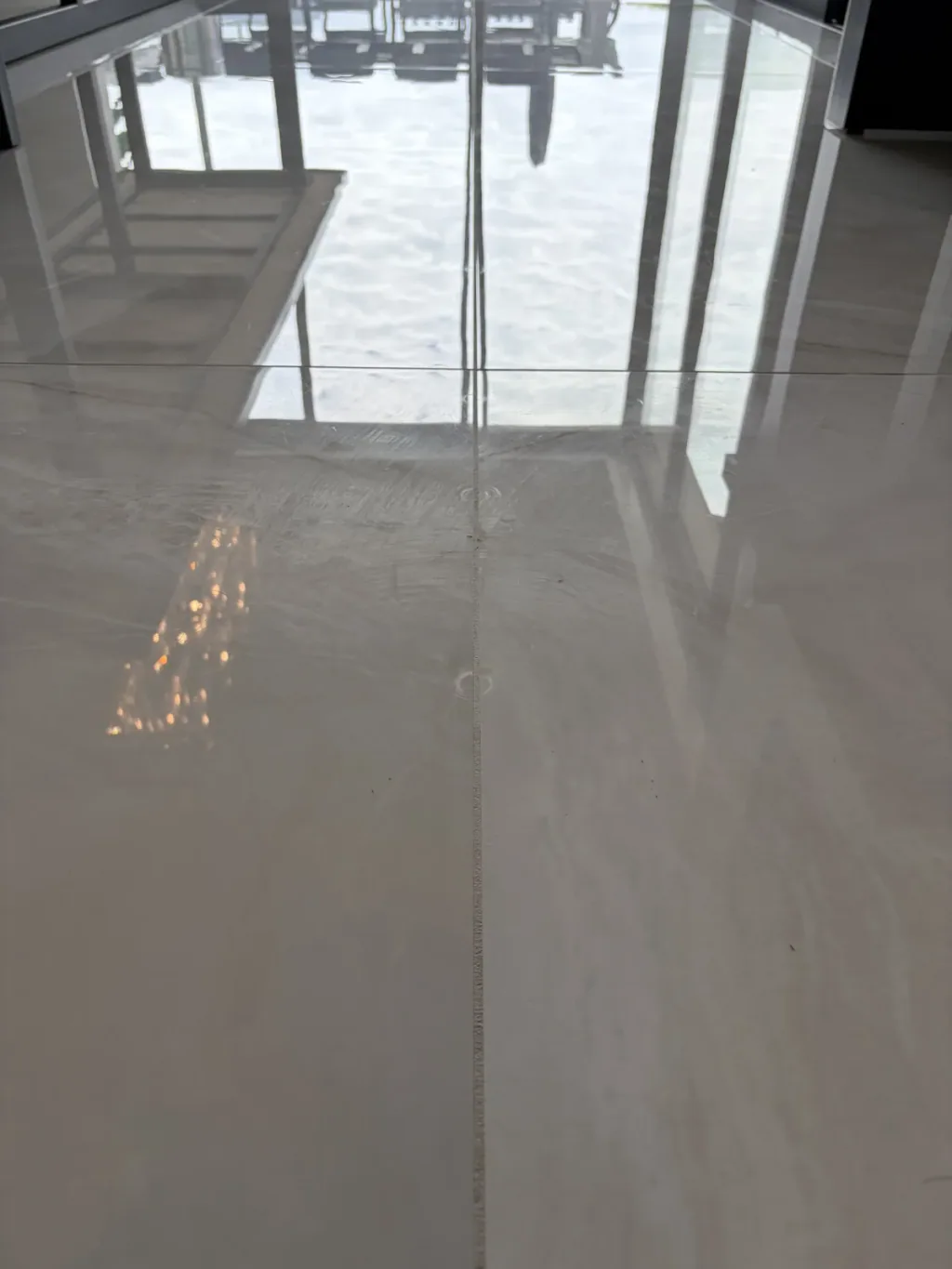
Look at the dry floor from standing height and then toward a window. Smears that change after gentle cleaning suggest surface residue. A dull area in the walking path can be wear. A splash-shaped patch after an acidic spill may be etching. These observations help describe the problem, but they are not a reliable diagnosis on their own.
Cleaning removes material from the surface; it does not rebuild a finish that has been scratched or etched. Stop if the spot gets larger, lighter, or rougher as you work. More pressure or a stronger cleaner can turn a small problem into a larger correction.
When professional cleaning or restoration makes sense
For persistent soil or residue, our professional marble floor cleaning service starts with an assessment of the stone and finish. Tell us whether the problem covers the whole floor, follows a traffic lane, or appeared after a particular product was used.
When the surface itself is worn or etched, marble floor restoration may be needed to correct the finish. A photo of the room and a close view in side lighting help us understand the concern before an on-site assessment.