
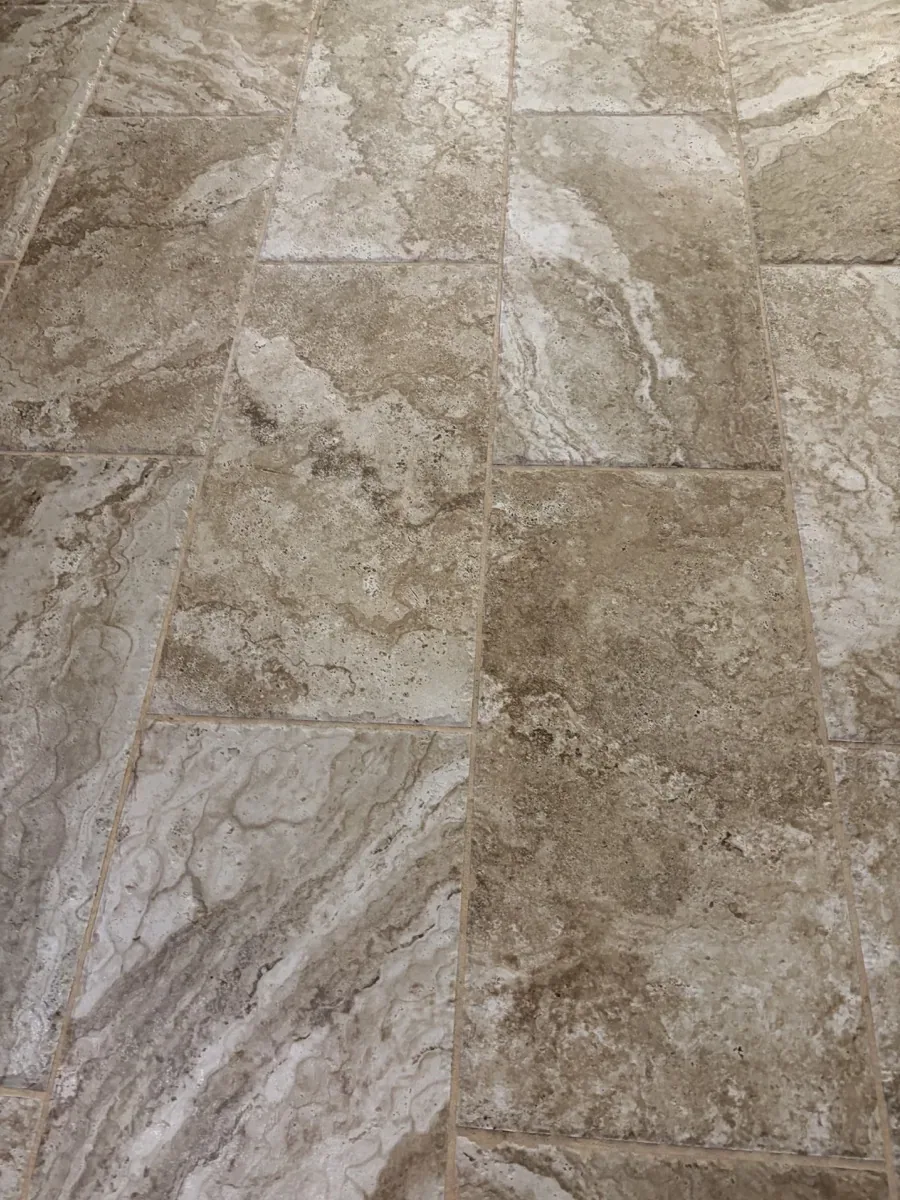
Check the finish, filler, and cleaner first
Look for loose filler, open holes, cracked joints, and areas that catch the mop. Those conditions need different attention from ordinary dust. Do not dig at an opening with a metal tool to get it clean; you may loosen more of the repair around it.
Choose a pH-neutral cleaner labeled for travertine or compatible natural stone floors. Follow the product's dilution and rinse directions, including any instructions for an existing sealer or coating. A routine-care cleaner and a professional restoration chemical have different jobs. Justin selects the treatment after checking the floor, rather than using the same chemistry on every surface.
Lift dry grit before mopping
Use a clean dust mop or a hard-floor vacuum attachment that will not scratch. Work around the edges and along busy routes, where shoes bring dirt into the room. Keep the tool free of grit and take care near loose filler.
Wet cleaning is easier after loose soil is removed. Otherwise, the first pass makes dirty water that collects in the low joints and texture. If construction dust is present, ask the installer or contractor how to remove that specific material before spreading it across the stone.
Clean without leaving a film
Measure the cleaner instead of pouring in an extra splash. Work in manageable sections with a damp mop, replace dirty water or pads, and remove the solution according to the label. Avoid leaving water pooled around baseboards or in open holes.
Let a test section dry fully. A floor can look more even while wet, so a wet shine is not proof that the finish has been restored. If a sticky or smeared layer remains, check for excess detergent and dirty equipment before increasing the cleaner's strength.
For routine upkeep, the Natural Stone Institute recommends neutral cleaning products and regular dry dust mopping. Its advice is a useful starting point; the label on your particular cleaner still determines the mixture and cleanup method.
Treat spills and mineral deposits differently
Blot spills promptly and clean the remaining residue with a compatible product. Keep vinegar and acidic hard-water removers off travertine. The stone contains calcium carbonate, so a product that attacks a mineral deposit can also etch the surface beneath it.
A white mark is not automatically hard water. It could be residue, a mineral deposit, or a surface change. Powder that returns after removal can involve moisture carrying salts through the installation. Repeatedly washing or sealing over a returning deposit does not establish its cause.
Note where the mark appears and whether it changes when dry. Around a door, plumbing fixture, or wet area, that location may help explain why it keeps coming back. Avoid experimenting with stronger chemistry when the material is uncertain.
What cleaning cannot fix
A traffic lane can stay dull after the dirt has been removed because the stone has worn. Etching and scratches also change the surface. Open holes may be places where filler has loosened. These conditions are not evidence that you have failed to find a powerful enough cleaner.
During restoration, we assess the fill and surface together. Repairable openings are addressed before the finish is refined so the repair and surrounding stone can be worked as one area. Cleaning alone cannot replace missing filler or level a raised tile edge.
Keep the floor easier to maintain
Use clean mats at entrances, remove grit regularly, and fit suitable protective pads under furniture. Lift heavy furniture instead of dragging it. Clean the mats themselves; a loaded mat can become another source of dirt.
Do not add sealer simply to make a dull floor shiny. Sealing and polishing serve different purposes. The need for resealing depends on the stone, its existing treatment, and absorption, so it is better assessed than guessed from a fixed calendar.
When to have the travertine assessed
If the floor stays grimy in the holes and grout no matter how you mop, our travertine floor cleaning service pulls that soil out of the texture. If cleaning leaves dull spots, scratches, or open filler holes, our travertine restoration and polishing service explains the corrections we assess. Include your city, a room-wide photo, and a close-up of the problem when you contact us.
Keep the name of the cleaner or sealer you last used. Knowing what is already on the floor helps us plan the test and explain whether you need cleaning, repair, or surface refinement.