
“Wonderful business. My counters and floors look awesome! Justin is professional and personable.”
Floor polishing · East Valley
Paver Cleaning, Sealing, and Restoration in San Tan Valley and the East Valley
Concrete, brick, travertine, and flagstone all get called “pavers” around here. But each material needs a different cleaning and sealing plan. Our paver cleaning, sealing and restoration starts by identifying which one you have.
Stain Wranglers restores these surfaces with the right chemistry, careful cleaning, joint-sand replacement, and a sealer chosen for how the area is used. We do more than power wash: we help your stone look better, last longer, and avoid damage from the wrong process.
Google Reviews
More than 100 reviews with a five-star rating.
“Wonderful service and the customer service is top notch! They got my floors spotless, which with 4 dogs is no easy task! Highly recommend!”
“AMAZING!!! Looks like I got brand new floors! Thank you. Would highly recommend”
“I highly recommend his floor cleaning services! He's reliable, professional, and does an excellent job. My floors looked amazing, and I couldn't be happier with the results.”
“Stain Wranglers are honest, reliable and trustworthy. They have impeccable work ethic and will treat you fairly. Please give them a try.”
“Outstanding customer service! So refreshing to use a company that carries very high standards. Stain Wranglers exceeded our expectations. A+”
“Highly recommend! On time, great service, and very professional. Very meticulous in their work.”
“When you meet someone, with character you know!! This is what my first impression was of Stain Wranglers, will use them over and over and spread the word to everyone. Thank you”
“Justin was quick to show up and get the job scheduled. He worked hard to get our home clean and followed up after he was done to make sure we were happy. Customer service at its finest! Highly recommended”
“Justin is super friendly and explains everything thoroughly. Def would recommend!”
The pavers we work on
The material decides the cleaning method, the sealer, and the result.
Concrete pavers
Common on East Valley driveways and patios. We clean the surface, address white mineral bloom, refill the joints, and seal when it will improve protection or color.
Clay brick pavers
Fired clay keeps its color through the body. We test the cleaning chemistry first so the brick is cleaned without shifting its tone.
Travertine
Natural stone needs pH-neutral chemistry and a breathable penetrating sealer. Standard concrete-paver cleaners can permanently etch it.
Flagstone and Saltillo
These surfaces often have an old or failing coating. We test a small area before recommending cleaning, stripping, or sealing.
That material-first approach follows industry cleaning guidance and the product label: natural stone is not treated like concrete pavers.
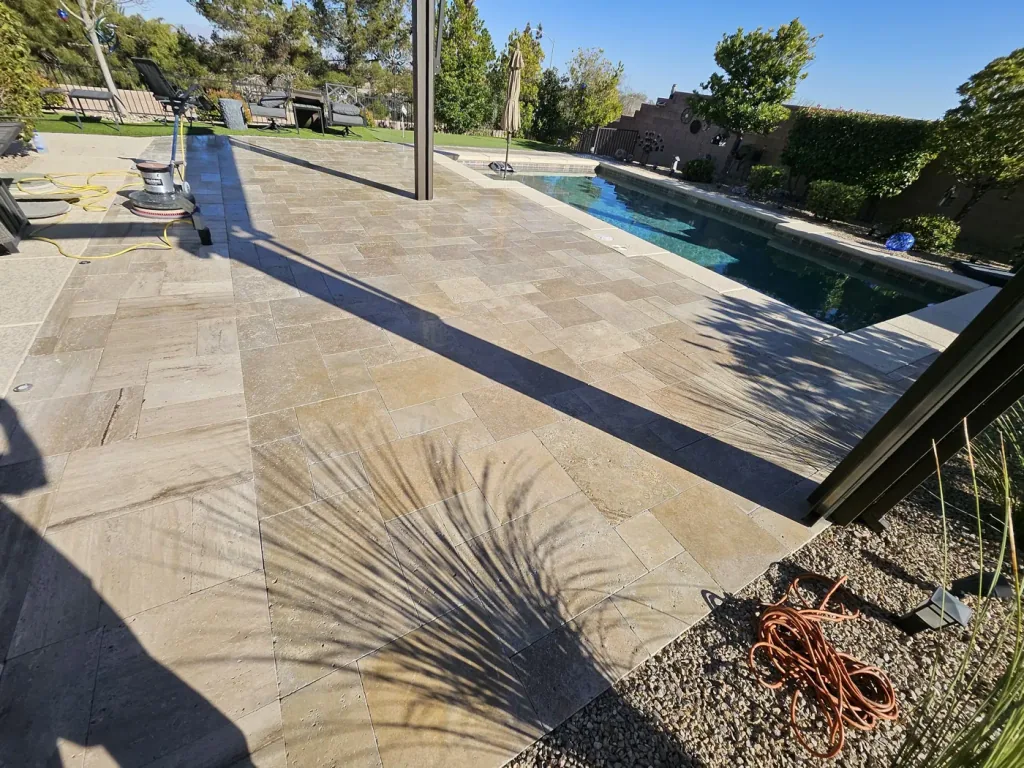
Travertine pool decks, and the same stone indoors
Travertine pool decks need a stone-safe process, not a concrete-paver wash. For deeper polishing or damage repair, see our pool deck restoration service.
The paver problems we get called for
You do not need to diagnose the surface before calling. These are the signs we look at first.
White powder or hard-water crust
Efflorescence and hard-water scale can look alike but need different products. We identify the cause before cleaning.
Dull or faded color
Ground-in soil and worn sealer can flatten the whole surface. Cleaning often creates the biggest visible change.
Cloudy, peeling, or white sealer
Another coat will not repair a failed finish. The old sealer and the moisture problem have to be addressed first.
Missing joint sand, weeds, or ants
These signs point to empty joints, not dirty pavers. We refill the sand after cleaning and discuss stabilization where it helps.
Oil, rust, and irrigation stains
Each stain needs its own treatment before the larger area is cleaned. That keeps the contamination from spreading.
How paver cleaning and sealing works
We inspect the material and any old finish before choosing a cleaner. That first step protects the surface and keeps us from sealing over an existing problem.
- Inspect and test. We identify the paver, old sealer, stains, and joint condition.
- Pre-treat stains. Oil, rust, hard water, and white mineral deposits do not use the same treatment.
- Clean the surface. We work in controlled sections and keep the cleaning solution from drying on the pavers.
- Restore the joints. Cleaning removes loose sand, so we refill it instead of leaving the joints low.
- Dry, test, and seal. If sealing is right for the surface, we wait for dry conditions and confirm the finish in a test area first.
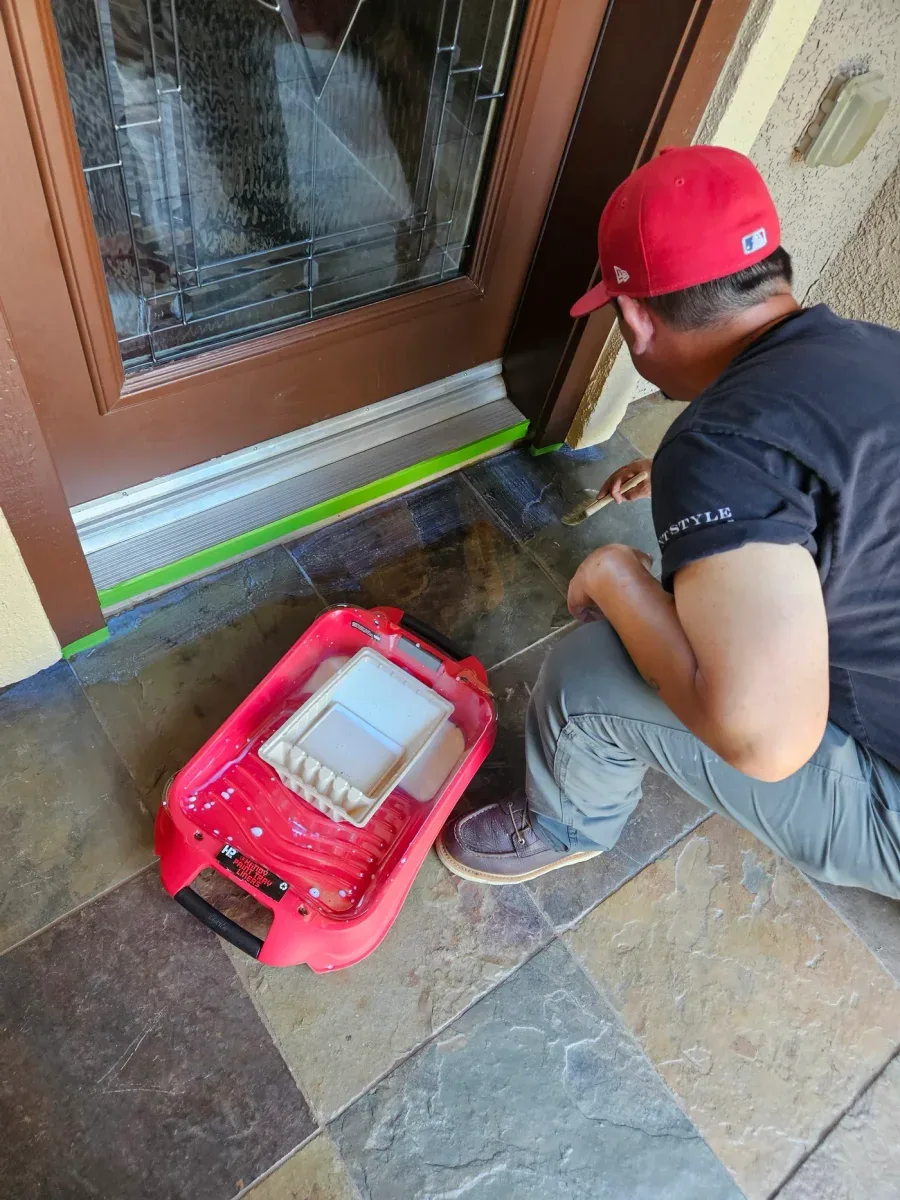
Joint sand: what comes out, what goes back
Thorough paver cleaning removes some joint sand. We put it back so the finished surface does not have deep, empty gaps.
Standard joint sand is often enough for a flat, protected patio. Stabilized sand can help on slopes, in windy areas, or beneath roof drainage where sand keeps washing out.
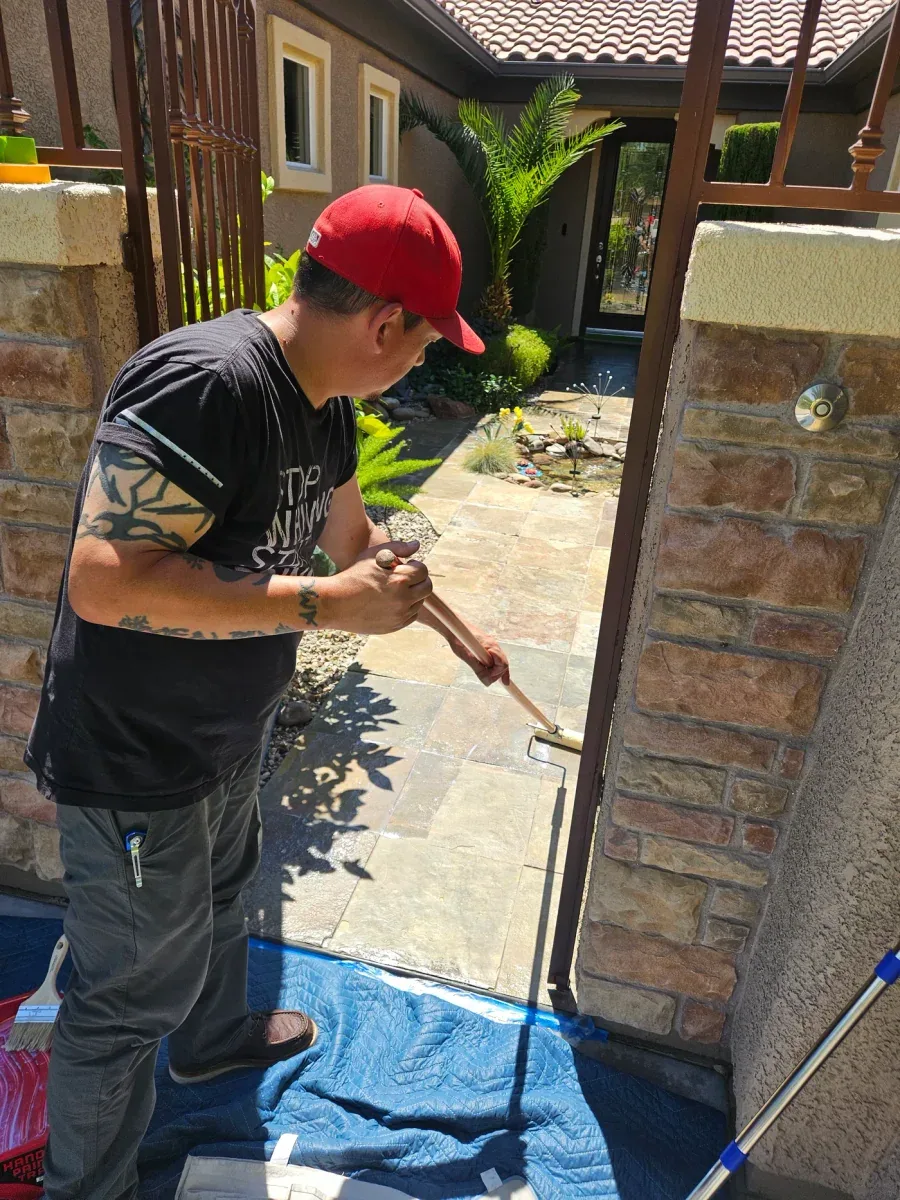
Choosing a paver sealer: wet look or natural
The right finish depends on the material, moisture, traffic, and how you want it to look.
Wet-look sealers deepen color and add sheen. They can also become slippery when wet or trap moisture when the surface is not ready.
Natural-look sealers soak in, repel water, and leave little visible finish. They are often the better choice for travertine and pool areas.
We do not seal over haze, blotches, or active moisture. Those problems must be corrected first or the sealer can lock them in.
When pavers can be sealed in Arizona
Arizona heat changes the schedule. Most sealers need moderate surface temperatures and a dry weather window to cure correctly.
Cleaning can happen through most of the year. Sealing is usually best from fall through spring, with the exact day based on shade, surface temperature, irrigation, and rain.
We check those conditions before we schedule the sealer—not after it has already gone cloudy or failed.
Do your pavers actually need sealing?
- Cleaning may be enough. If the pavers are sound and simply dirty, cleaning creates most of the visible improvement.
- Sealer does not fix damage. Rocking, settled, or lifted pavers need a hardscape installer.
- Sealer does not replace joint sand. Empty joints, weeds, and ants need the joints restored.
- Sealer must match the surface. A glossy film and a natural penetrating finish protect and look different.
How often pavers need resealing in Arizona
Check the surface instead of relying on a fixed calendar. If water beads, the sealer is still working; if it soaks in and darkens the paver, it may be time for an assessment.
Sun, vehicle traffic, pool water, and sprinkler overspray all change how quickly a finish wears. Regular sweeping and material-safe cleaning help it last.
Send us a photo if the surface looks patchy, chalky, or dull. We can help you decide whether it needs cleaning, stripping, resealing, or no sealer at all.
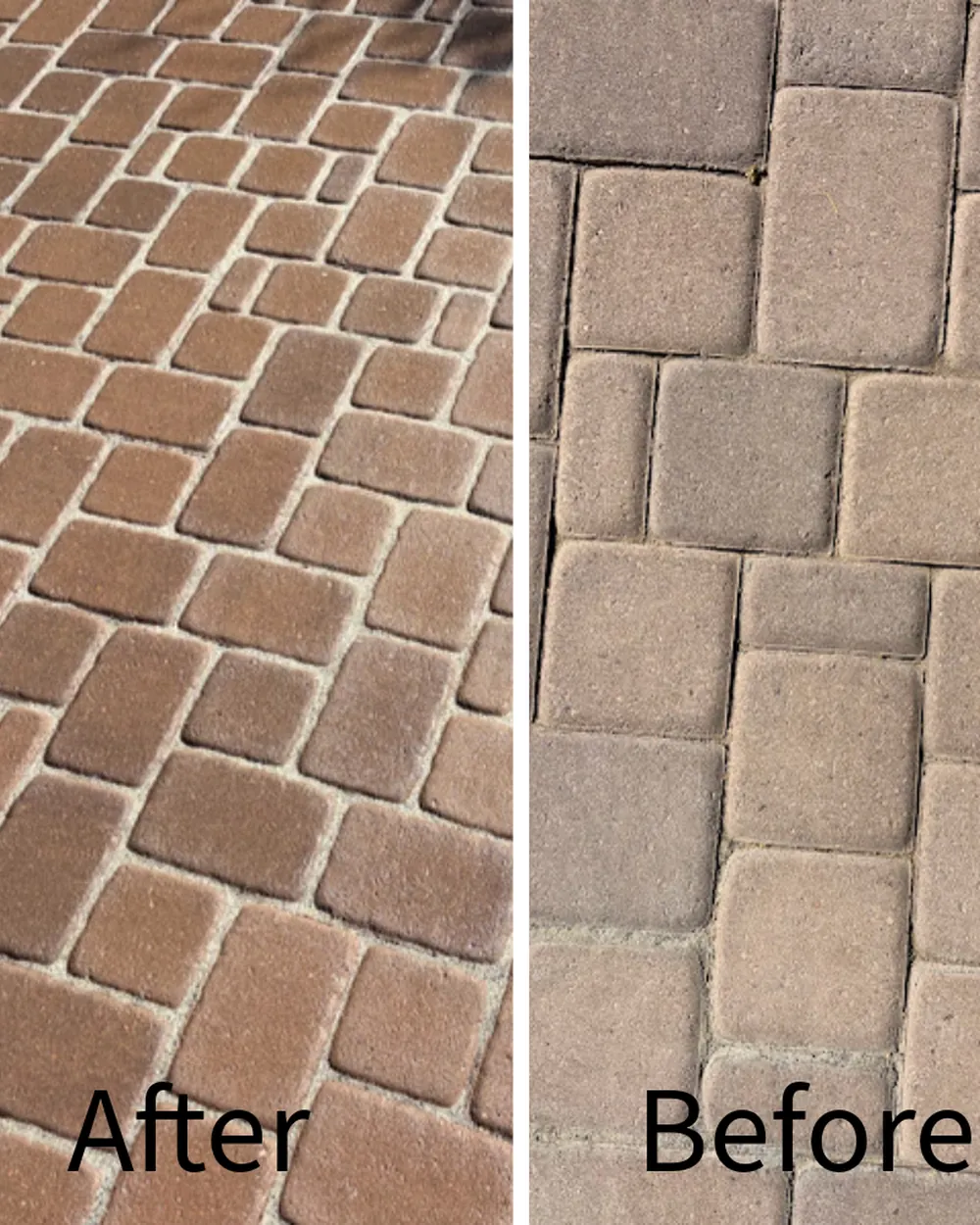
Paver sealing before and after
The same walkway, from the same spot, before and after. Nothing was replaced and nothing was coated. The stone was cleaned, the joints put back, and a sealer chosen to bring the color up rather than lay gloss over it.
Before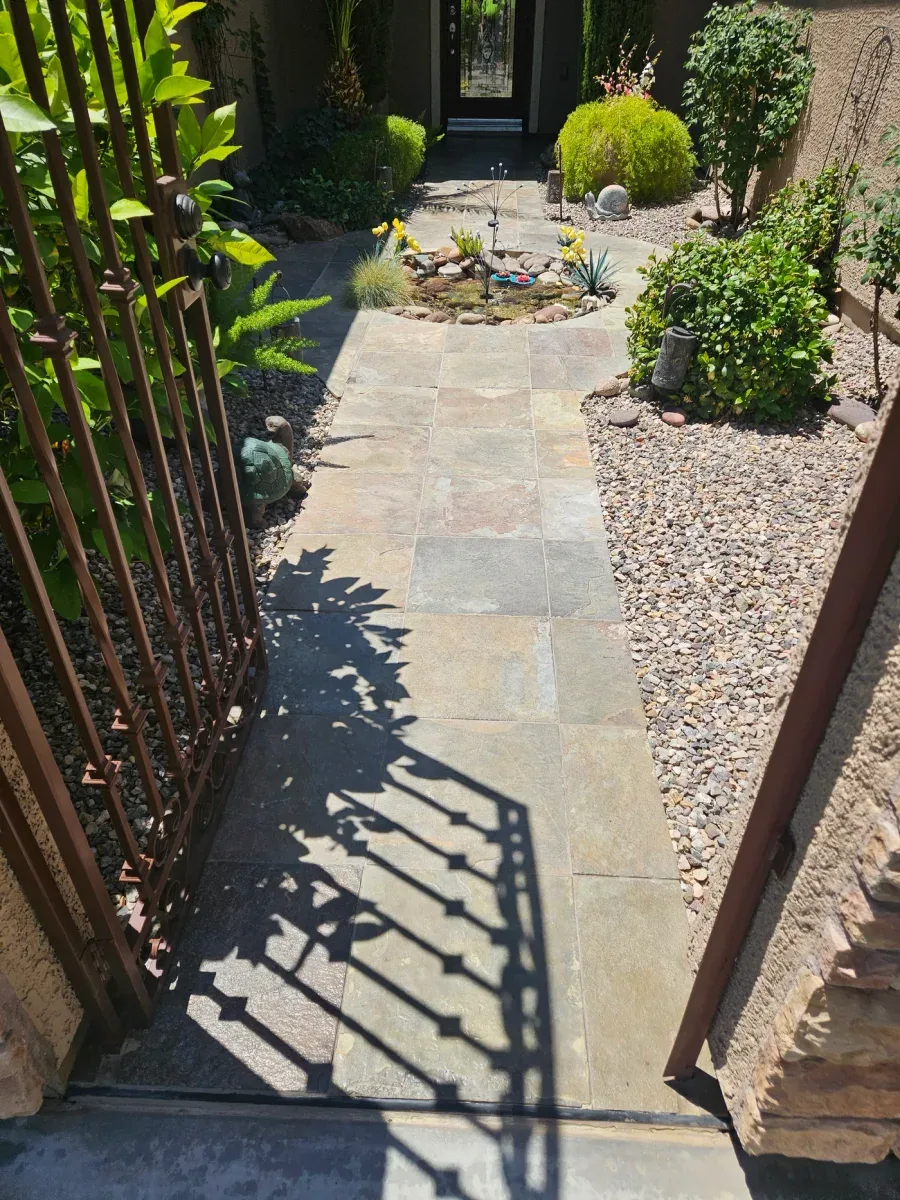
After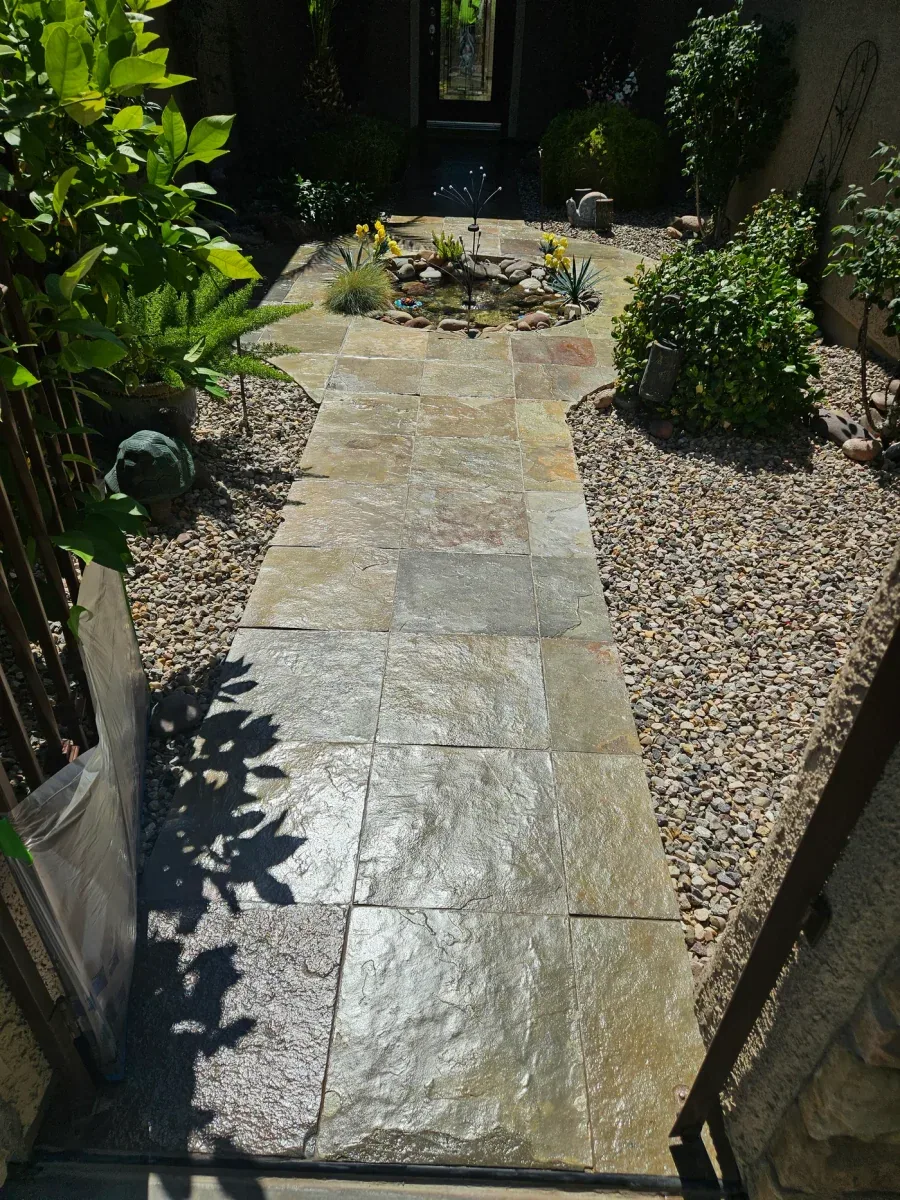
What to expect if you call
Send a photo of the surface and tell us what changed. If your driveway and pool deck are different materials, send one photo of each.
We will inspect the material, explain what we see, and recommend the least aggressive process that can get the result. If cleaning is all it needs, we will tell you.
Paver cleaning and sealing questions we hear most
Do I actually need sealing, or would cleaning be enough?
Often cleaning is enough, and we will say so. Sealing earns its cost in three situations: the pavers are absorbing stains you keep having to deal with, you want the color deepened rather than just cleaned, or the joints keep washing out and a stabilizer is going in anyway. If the surface is simply dirty and the pavers underneath are sound, a proper clean does most of the visible work on its own. Worth knowing that sealing a surface that was not cleaned properly locks the problem in, so the order never reverses.
There is white on my pavers. Is that efflorescence or hard water?
Run a finger across it. Soft powder that brushes off and returns is efflorescence, mineral salts inside the paver being carried to the surface by moisture and left behind as it evaporates. A hard crust that will not brush away, usually near pool coping or in a fan shape in front of a sprinkler head, is deposit from the water itself; Phoenix supply runs 10 to 17.6 grains per gallon, so it builds fast here. They look the same from standing height and take different products, which is why we want to see it before quoting.
Can you clean my travertine pool deck the same way as my paver driveway?
No, and this is the one that does permanent damage when it is got wrong. Travertine is calcium carbonate, and the buffered-acid cleaners used to strip efflorescence off concrete pavers dissolve it. The label on a standard paver efflorescence cleaner says do not use on natural stone, in as many words. A travertine deck gets pH-neutral chemistry and a penetrating sealer. Two surfaces, one property, two entirely separate plans.
Will pressure washing damage my pavers?
The pressure is not usually what causes trouble; the technique is. The professional range for applying cleaner and water to concrete pavers is 1,000 to 4,000 psi, and the risk sits in holding a narrow tip in one place, working an unsuitable material at concrete-paver settings, or letting cleaner dry on the surface. What pressure washing definitely does is remove joint sand, which is why refilling the joints is part of the job rather than an afterthought.
Wet look or natural finish, and is wet look slippery?
Wet look is a film that deepens the color and adds gloss. A natural finish is a penetrating sealer that repels water and leaves the appearance alone. And yes: the manufacturer of one of the most widely used wet-look sealers states in its own cautions that the product makes the surface more slippery when wet. An anti-slip additive can be blended in, or a non-gloss product used instead. Around a pool we would rather have that conversation before the job than after it.
What happens to the sand in my joints?
Cleaning takes some of it out. There is no way to lift embedded soil from a paver and leave a sand joint untouched. It gets refilled afterwards. Whether it is refilled with ordinary joint sand or a stabilized product depends on the slope, the wind exposure, and whether the area sits under a downspout or scupper where roof water concentrates. If polymeric sand has just been installed, nothing gets cleaned or sealed for at least thirty days.
How long before I can walk on it and park on it?
The sealer data sheets are consistent: about 24 hours before foot traffic and 48 to 72 hours before a vehicle. The surface also has to have been dry for at least 24 hours before sealing, with no rain forecast and the irrigation off through the cure. That is why scheduling matters more on this job than on most.
When is the right time of year for this in the Valley?
Cleaning runs most of the year. Sealing has a real window. Sealer manufacturers specify application between roughly 50 and 85 degrees Fahrenheit during application and for the 24 hours after, and the Phoenix September average high alone is 100.4. Add a monsoon running June 15 to September 30 against a 24-hour no-rain requirement, and paver sealing here is realistically an October-to-April job, with early mornings and shade stretching the shoulders.
Video responses from clients we've served across the East Valley.
These are tile and floor jobs rather than paver work, but the standard is the same one we bring to an exterior surface. Hear what our customers say once the work is finished.
Request an assessment.
Tell us about your surface and what you’re seeing. We’ll help you work out the next step for your home or commercial property.
- Stone, tile, floors and countertops
- Residential and commercial, San Tan Valley & the East Valley, AZ
- No charge to have us look at it
Having trouble with the form? Open it in a new tab.