
Material
Calcium-based marble reacts to acidic substances
Acid exposure can leave a dull mark in the stone itself. That is why a cleaner or sealer is not a substitute for honing when the polished surface has been etched.
Project proof · Queen Creek / Gilbert, AZ
This Queen Creek / Gilbert home had a marble floor that had become dull, scratched, and etched after years of normal use. Several areas had lost their original clarity, and the polished finish no longer looked consistent from one part of the floor to another. Below is how we approached the marble floor restoration, from assessment to final polish.
The customer wanted to know whether the existing marble could be restored rather than replaced or covered with a topical coating. Stain Wranglers evaluated the stone and the surface damage before choosing the restoration method.

Years of normal use had changed the surface of the marble. The customer needed to know whether the floor could be restored instead of replaced or covered.
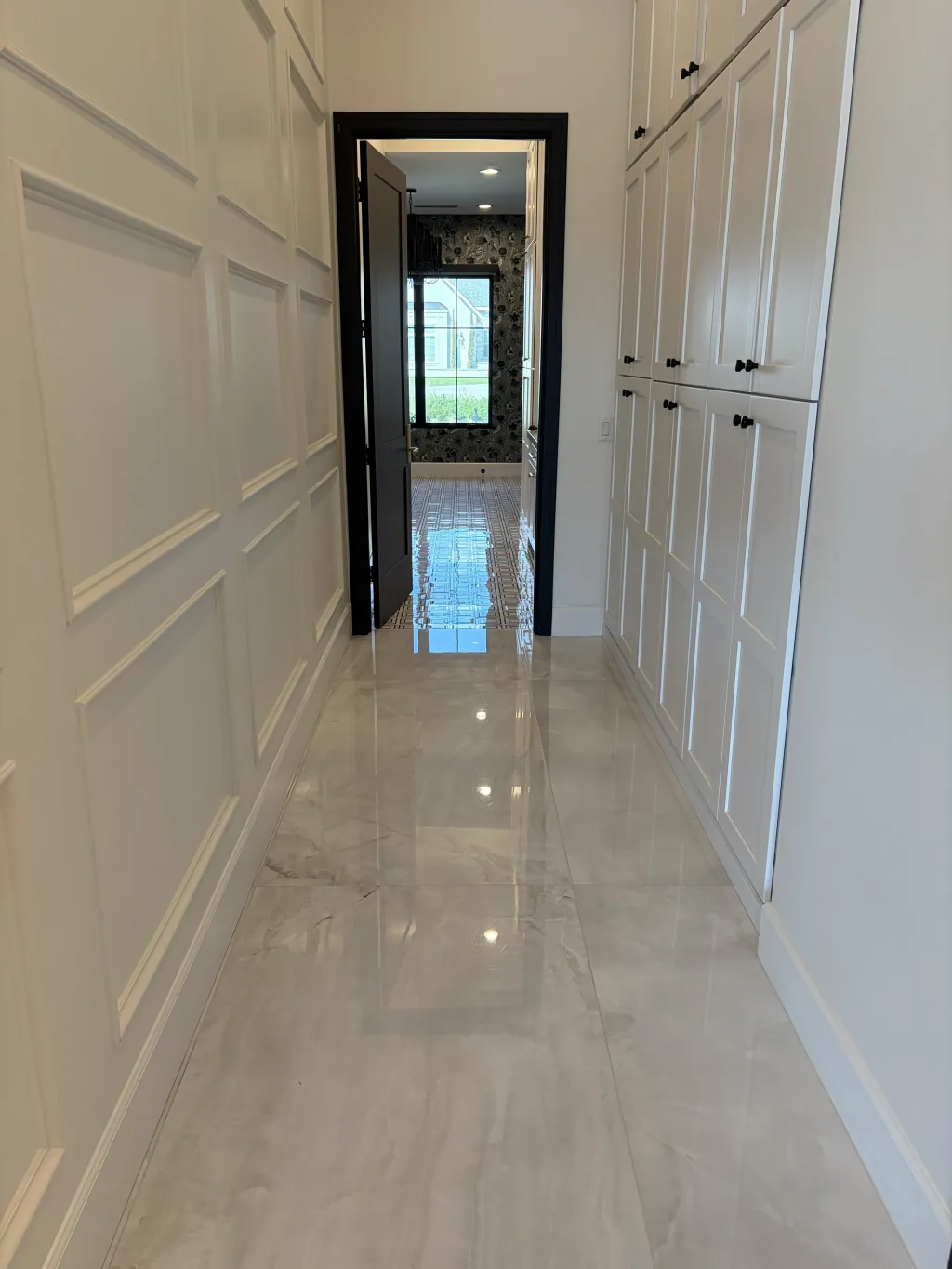
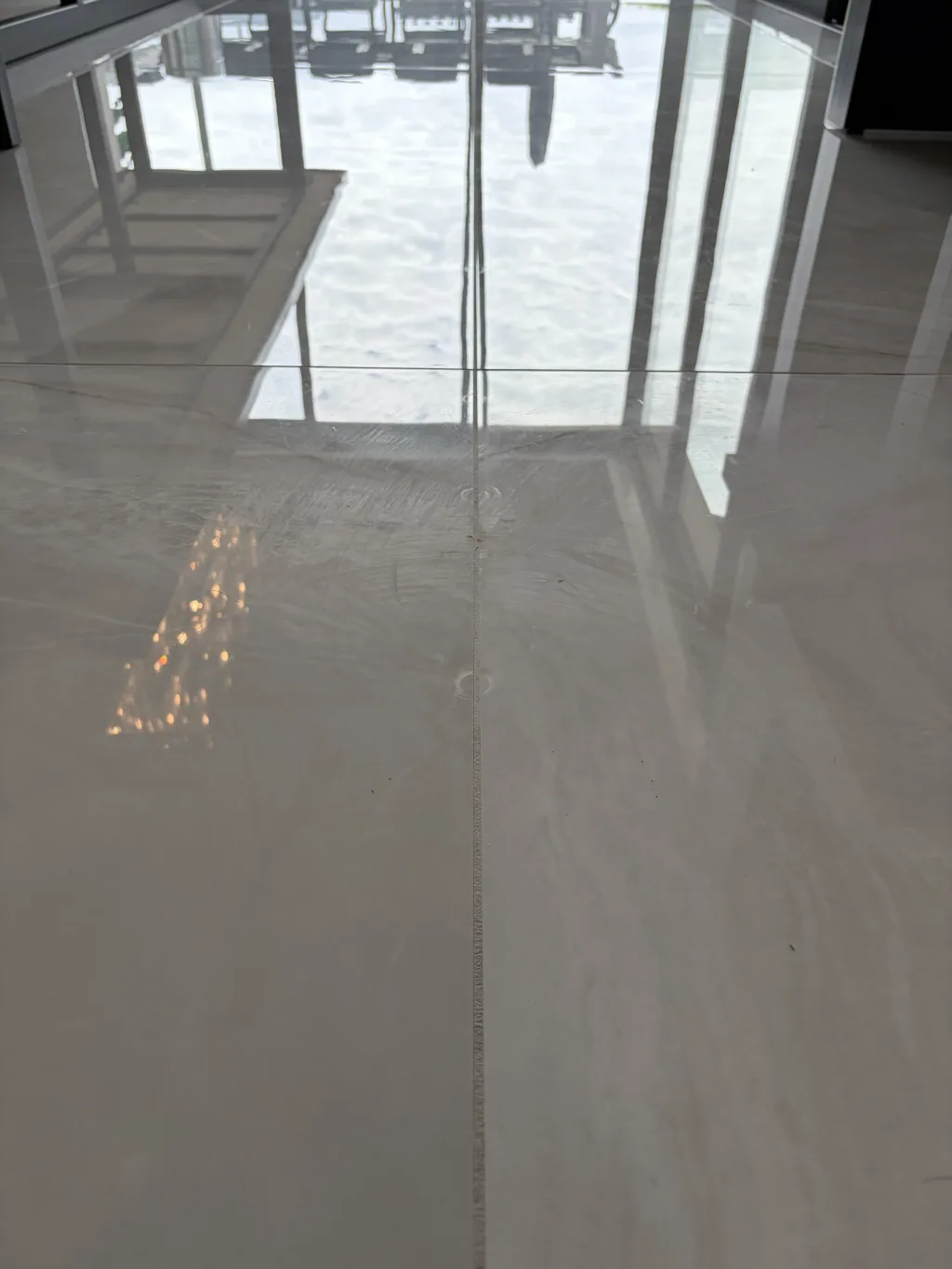
The floor had visible scratches from traffic and use, along with etch marks that created dull spots in the polished finish. Areas that once reflected light clearly had become flatter and less consistent, which made the floor look worn even though the marble was still in place.
Etching is not ordinary dirt. Marble is a calcium-based natural stone, so acidic substances can chemically react with the surface and damage the polished finish. An etch mark generally cannot be cleaned away; the affected surface has to be mechanically restored.
The restoration plan depends on the stone, the type of damage, and how deeply the surface has been affected.
Material
Acid exposure can leave a dull mark in the stone itself. That is why a cleaner or sealer is not a substitute for honing when the polished surface has been etched.
Condition
The floor was evaluated for dull traffic areas, scratches, etching, stains, lippage, cracks, chips, open joints, and any earlier repairs that could affect the finished plane.
Decision
The marble was a good candidate for mechanical restoration rather than a cleaning-only visit or a topical product intended to make the floor look shiny.
The goal was to refine the damaged surface itself, not hide it with wax or a coating.
Walls, baseboards, cabinets, and adjacent finished surfaces were protected before wet restoration work began. The marble was cleaned and prepared so residue would not be mistaken for damage in the stone.
Diamond honing physically refines the marble surface to address etching, scratches, and wear. This is the step that corrects the affected surface instead of covering it.
The stone was progressively refined through the appropriate diamond stages. Deeper or more noticeable scratches and dull areas require the level of correction the floor can safely accept.
After honing and refinement, the marble was professionally polished to restore clarity and reflectivity. Edges and corners received detail work where larger equipment could not reach, followed by final cleaning and inspection.
The owner describes a substantial improvement in the floor’s clarity, reflectivity, and overall appearance.
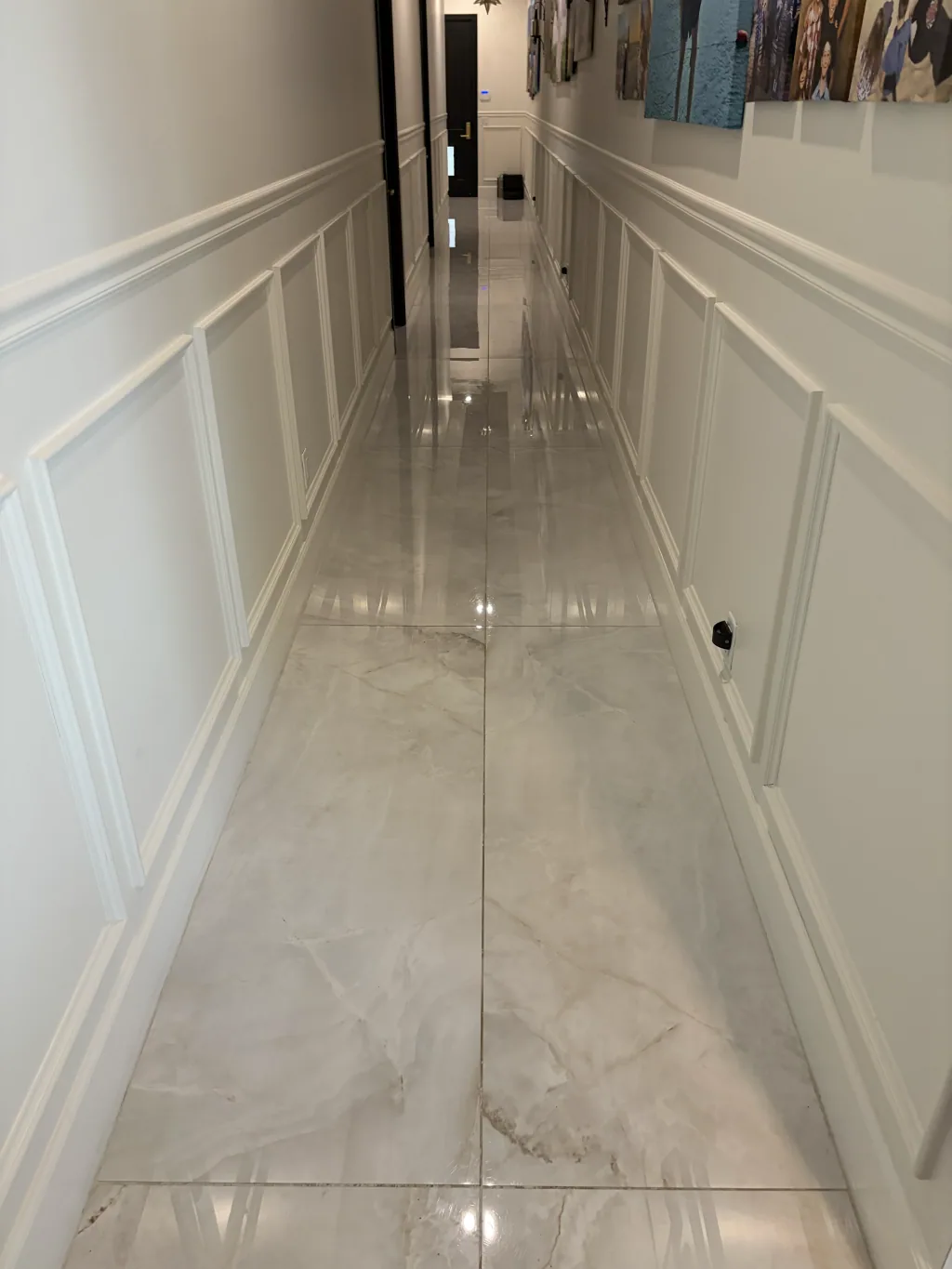
The visible etch marks, scratches, dull traffic areas, and surface wear were removed or significantly corrected through the honing process. The marble was then polished to restore a more consistent appearance and reflectivity.
The project demonstrates why worn marble does not automatically need to be replaced. With the right assessment, diamond abrasives, equipment, and restoration process, many surface problems can be corrected while preserving the original natural stone. Deep cracks, loose tiles, substrate movement, and damage below the surface still require a separate assessment.
Every natural-stone floor and type of damage is different, so the realistic level of correction is explained before work begins.
Stain Wranglers evaluates each project individually and explains what level of correction can realistically be achieved before restoration begins. Finish choice, damage depth, access, and repairs can all change the scope.
Stain Wranglers stands behind its workmanship with a 100% satisfaction guarantee. The finished restoration is inspected with the customer, and any concerns are addressed before the project is considered complete.
This project involved marble restoration, scratch and etch removal, diamond honing, and polishing.
Completed service
Learn how Stain Wranglers evaluates marble floors and chooses between cleaning, honing, polishing, repair, and protection based on the actual surface condition.
This project is documented in the Queen Creek / Gilbert, Arizona area, with the scope shaped by the marble’s condition and the surrounding finished surfaces.
The useful local detail is the property type and the restoration decision: this was a residential interior floor where cabinets, walls, baseboards, and adjacent finished areas needed to be protected while the existing marble was mechanically refined.
If your marble floor has dull traffic areas, etch marks, scratches, or uneven shine, send a photo or call Stain Wranglers. The first step is identifying what is happening on the surface so the recommendation fits the stone.
Have a similar marble floor?
Tell us about your surface and what you’re seeing. We’ll help you work out the next step for your home or commercial property.
Having trouble with the form? Open it in a new tab.