
Material
Filled travertine
Natural travertine has voids all through it. Some sit just under the surface, which is why a hard point load like a stool leg can open a new hole in a floor that looked solid.
Project proof · Pecan Creek South, San Tan Valley
In April 2026 we restored the travertine across the whole downstairs of a Pecan Creek South home, about 900 square feet. The floor was dirty, the holes in the stone were packed with grime, and the bar stools at the kitchen counter kept punching new holes in the tile. That last one was what the homeowner complained about most.
We deep-cleaned the stone, cleaned out and filled the holes, and honed the floor to a matte finish. The job came to about $1,800.
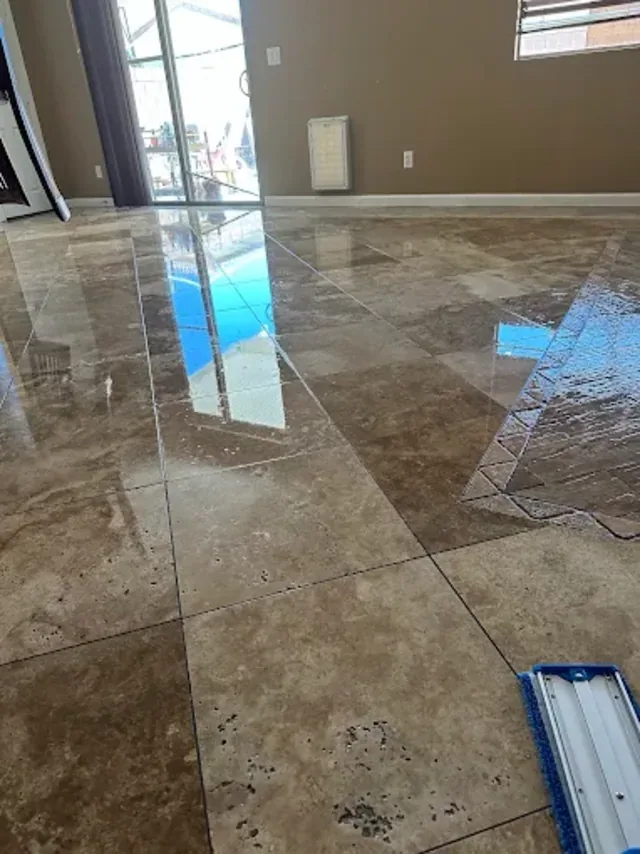
Travertine is full of natural holes. At the factory they're filled, but the fill and the thin stone over hidden voids don't always hold up.
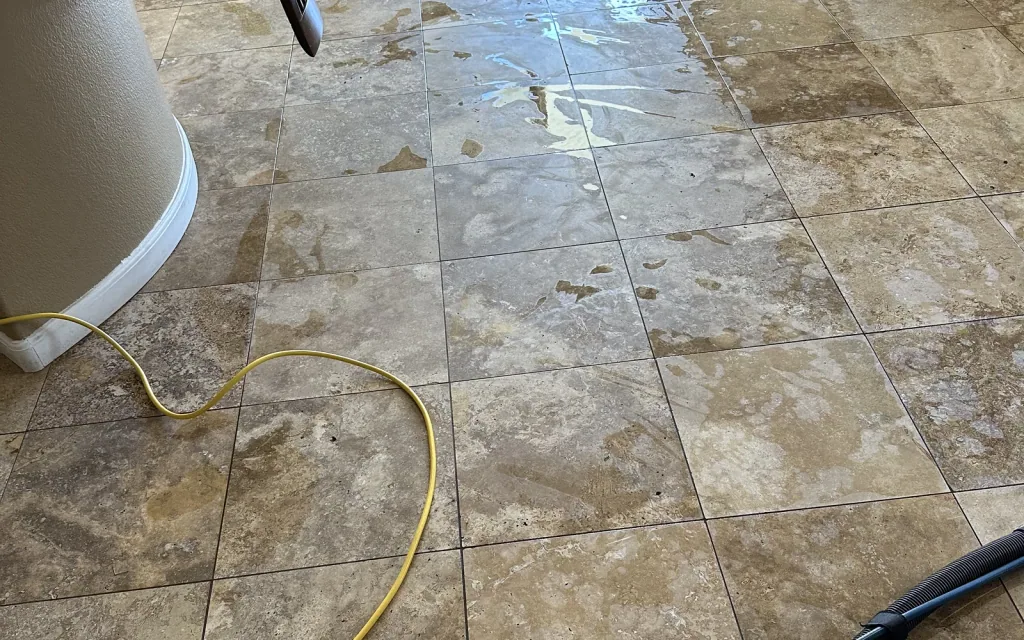
Two things were going on in this house. Across the downstairs, open holes in the stone had filled up with dirt and grime. Every dark speck on the floor was a hole packed with soil, and mopping just pushed more into them.
The second was at the kitchen counter. The bar stools there had narrow legs, and all of a stool's weight on one small point is enough to break through the thin layer of stone or old fill over a void. Every time someone sat down or slid a stool back, there was a chance of a new hole. The homeowner was tired of watching the floor get worse in the one spot everyone uses.
Cleaning alone wouldn't fix the holes, and filling dirty holes doesn't last. The floor needed both, in the right order.
Material
Natural travertine has voids all through it. Some sit just under the surface, which is why a hard point load like a stool leg can open a new hole in a floor that looked solid.
Condition
Old holes had to be cleaned out before anything could stick in them. New holes near the counter needed the same treatment.
Decision
Filling closes the holes so dirt has nowhere to collect. Honing afterward levels the fill with the stone and gives the floor one even matte finish.
About 900 square feet of travertine, done in order so each step sets up the next.
Stone-safe cleaning and extraction across the downstairs to lift the soil out of the surface and the grout lines.
Grime packed into the open holes was picked and flushed out. Fill won't bond to dirt, so this step decides whether the repair lasts.
Open holes, including the new ones by the kitchen counter, were filled with a color that blends with the stone.
Diamond honing brought the fill flush with the stone and left the whole downstairs one even, low-sheen matte.
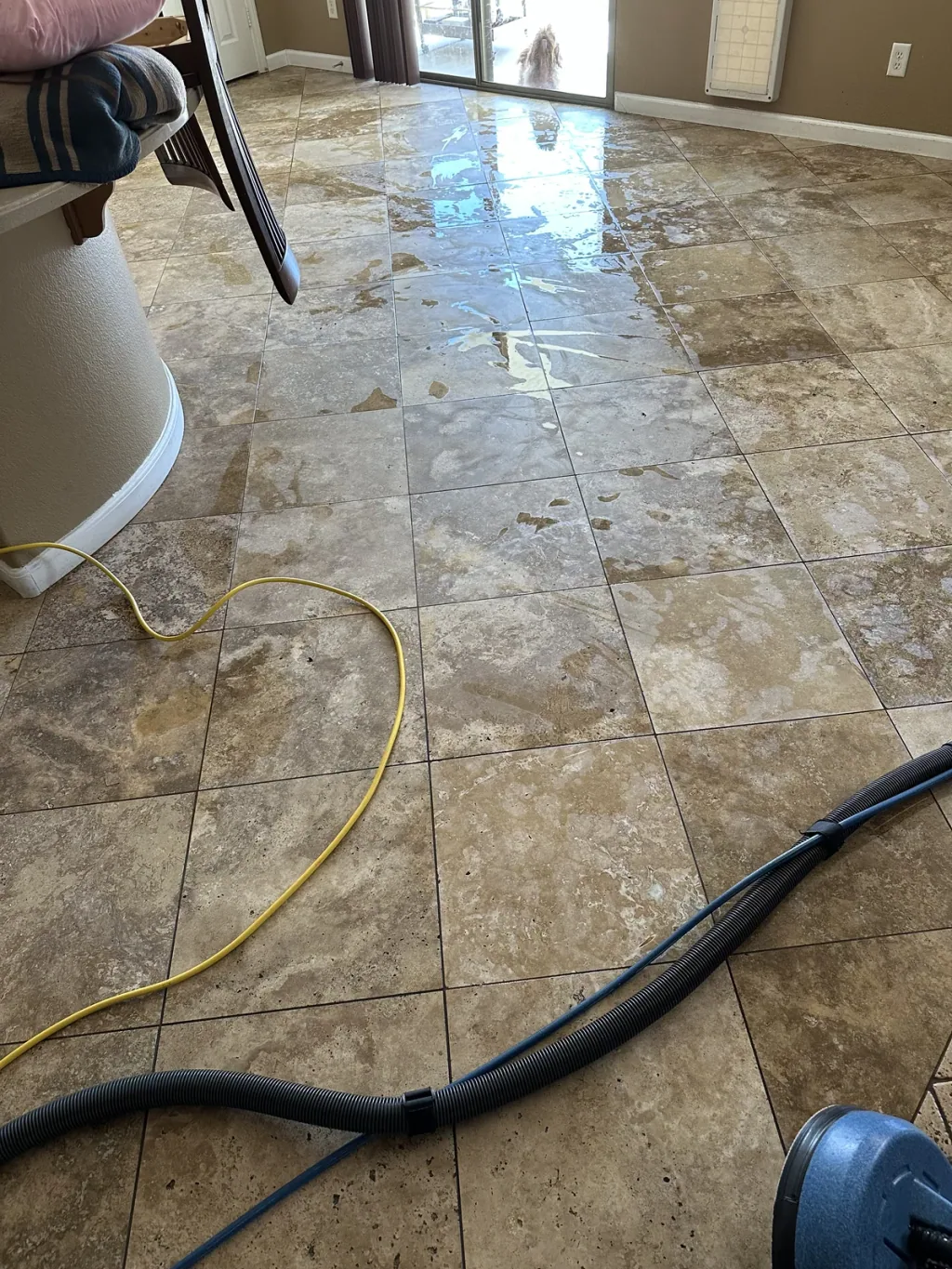
The downstairs reads as one even matte floor, and the dark specks from dirt-filled holes are gone.
Filling the holes made the floor look better, and it also means dirt has nowhere to collect. A matte honed finish suits travertine in a busy downstairs. It looks natural and doesn't show scuffs and wear paths the way a high polish does.
Pricing depends on square footage, how many holes need filling and which finish you want, so we quote after seeing the floor or a few photos.
Old holes cleaned out and filled, plus the new ones by the kitchen counter.
Honed to one even low sheen that hides scuffs and wear paths.
Felt pads or wider glides spread a stool's weight so it can't punch through thin stone over a void.
This job combined travertine cleaning with filling and honing. Here's where to read more.
Completed service
Cleaning, hole filling and honing for travertine floors that are dirty, pitted or worn but still worth keeping.
Pecan Creek South is in San Tan Valley, near Combs Road and Gantzel Road, just south of the Queen Creek line. That's a short drive from our home base.
Many homes in Pecan Creek and the surrounding San Tan Valley communities have travertine downstairs. If yours has dark specks or new holes showing up, especially near stools or chairs, it's probably the same problem as this one.
Text a photo of the holes, or call. We'll tell you whether filling and honing makes sense or whether a cleaning will do.
Holes in your travertine?
Tell us about your surface and what you’re seeing. We’ll help you work out the next step for your home or commercial property.
Having trouble with the form? Open it in a new tab.