
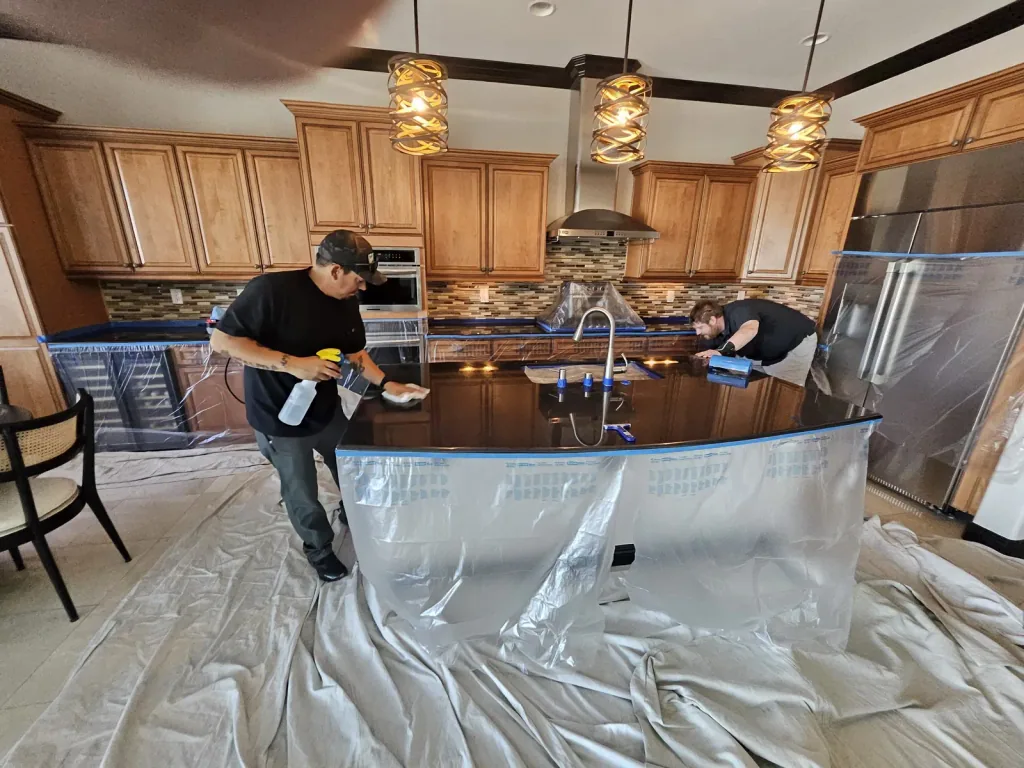
“Wonderful business. My counters and floors look awesome! Justin is professional and personable.”
For granite that needs more than an everyday wipe
Kitchen islands, food-preparation counters, and bathroom vanities collect different kinds of residue. Cooking grease can leave a smeared surface. Repeated cleaner use can build a film. Around a faucet, dried droplets can leave a rough mineral deposit. We inspect the problem before choosing the treatment.
Professional cleaning is a useful starting point when the counter still looks dirty after normal care. It also lets us see the condition of the stone before recommending sealing or polishing.
What the cleaning and sealing service covers
- Surface cleaning: grease, grime, and compatible cleaner-residue removal.
- Sink and faucet areas: assessment and careful treatment of mineral buildup where the finish allows.
- Stubborn marks: identifying absorbed stains that need treatment beyond a standard clean.
- Sealing assessment: checking absorption and existing protection on the clean, dry stone.
- Aftercare: clear instructions for the treatment used on your counter.
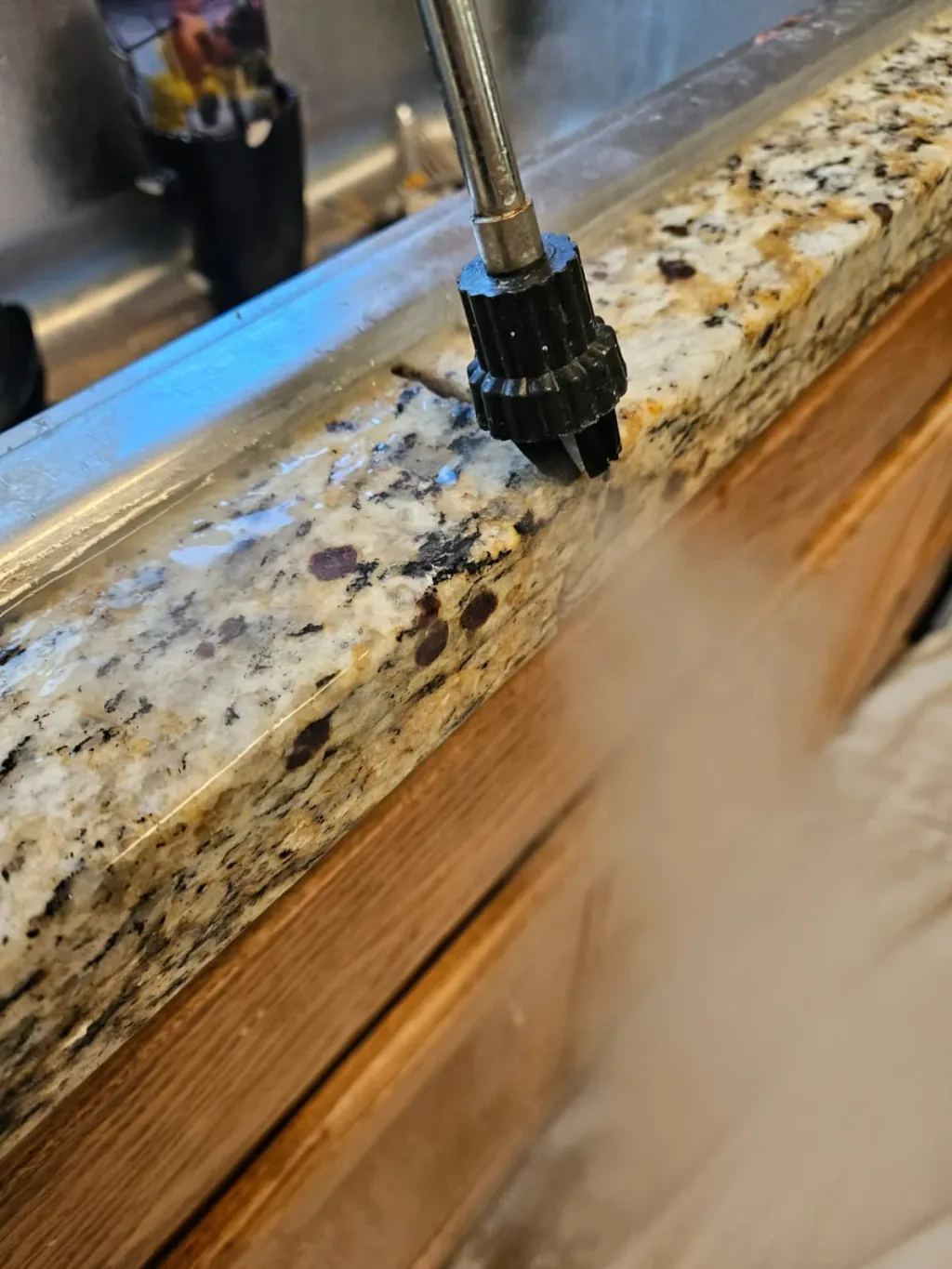
Cleaning, polishing, and sealing solve different problems
A clear sealer helps reduce absorption. It does not remove a scratch or create a polished finish. Adding it to a counter that is still coated in residue can also leave you with the same appearance problem.
If cleaning reveals worn areas, persistent dullness, or scratches, we can assess granite countertop polishing. We explain that additional work separately instead of assuming every cleaning job needs it.
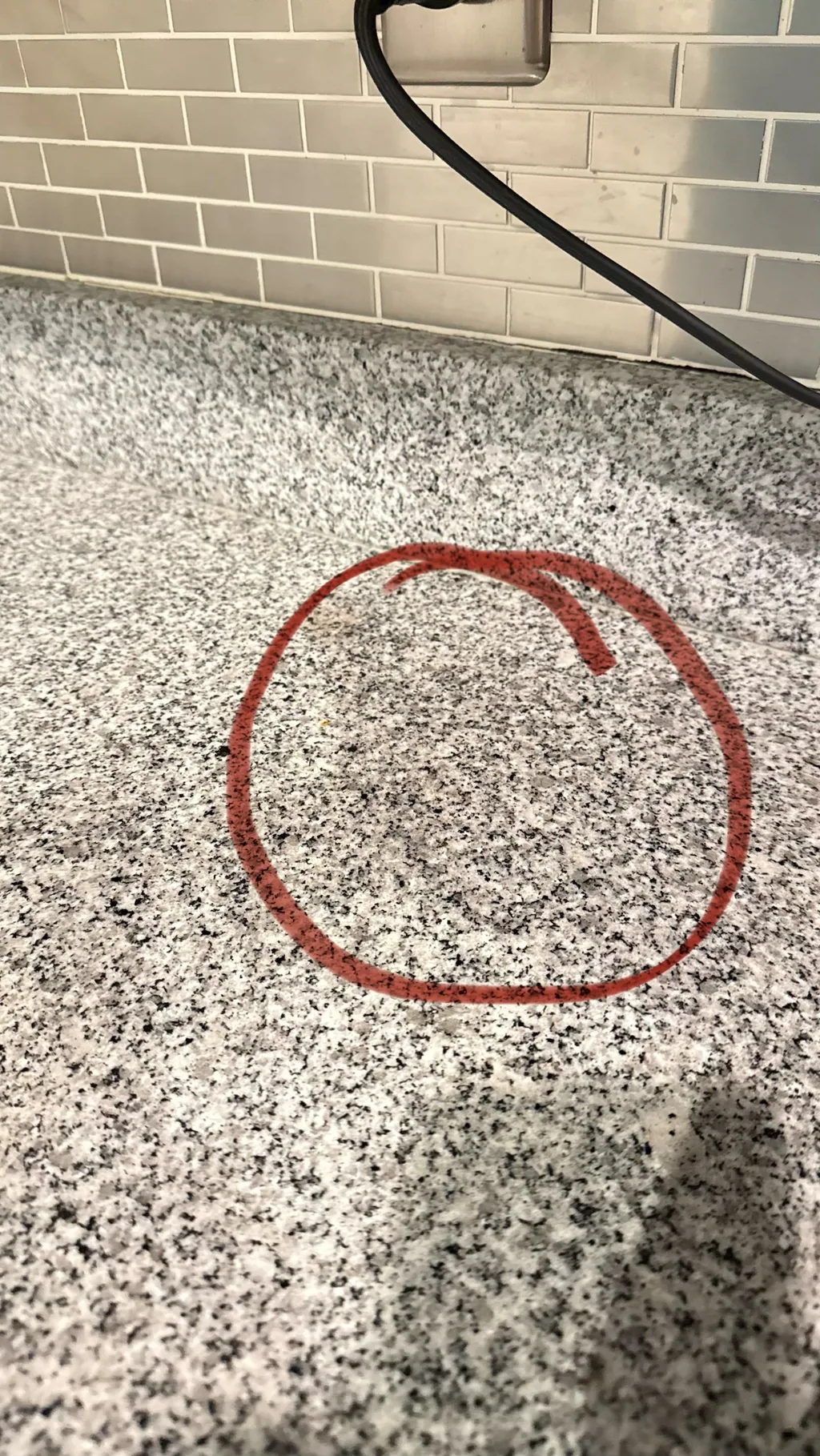
Dark stains beneath an espresso machine
This dark mark appeared where an espresso machine sat on the granite. From the photo, we would suspect an absorbed stain rather than an etch mark, but we would inspect the stone before confirming the cause. Coffee being acidic does not, by itself, mean the granite has etched.
We start by asking about spills, leaks, how long the mark has been there, and any cleaners already used. After checking for surface residue, we select a poultice suited to the suspected stain: an absorbent treatment that helps draw the discoloration out of the stone.
This can take a couple of days rather than a single cleaning visit. We allow time for the treatment to work and the stone to dry, then reassess the mark. A deeper or older stain may need another application and more time; some stains improve without disappearing completely.
We explain the expected treatment time and any limits on using that area before starting. Once stain treatment is complete, we assess whether the granite would benefit from sealing. Sealer helps with future absorption; it does not remove an existing stain. Our granite stain removal page explains how different stains are treated.
White buildup around the faucet is a different concern
A white crust around the tap needs a different assessment from a dark area beneath an appliance. We check whether deposits are sitting on the surface before selecting a treatment suited to the stone and its finish.
After the work, drying wet areas and using a cleaner suited to natural stone helps reduce recurring residue. We will explain what to use on your particular finish and when to have its protection checked again.