
“Wonderful business. My counters and floors look awesome! Justin is professional and personable.”
What an etch is
An etch is a spot where acid has dissolved the polish. Lemon, wine, vinegar and many bathroom cleaners react with the calcite in marble on contact, leaving a dull mark lighter than the stone around it. Nothing soaked in, so cleaning will not remove it; the surface itself has to be refined.
- Glass rings that stay after ordinary cleaning.
- Splash marks from citrus, vinegar, wine or other acidic spills.
- Cleaner damage: spray patterns or dull patches from the wrong product.
- Uneven sheen from several marks or earlier spot treatments.
Light etch or deep etch?
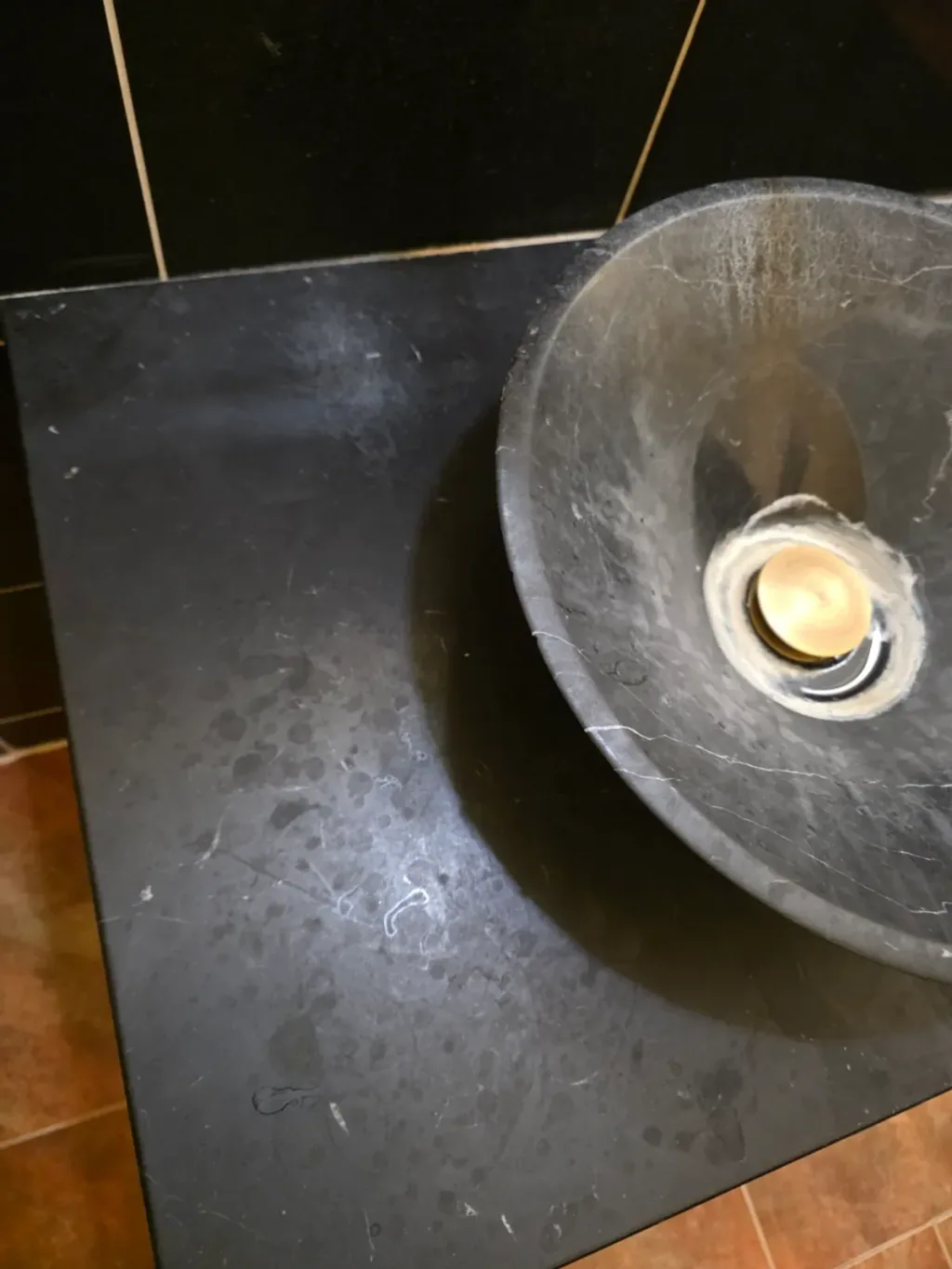
A light etch is dull but smooth to the touch, and on polished marble it may respond to a polishing treatment alone. A deeper etch feels rough or slightly sunken. It needs honing first, taking the surface down past the damage, then polishing back up to the finish you have. A small test area shows which one you have.
Either way, the work runs past the outline of the mark. Treating only the ring leaves a bright or dull patch, so we blend it into the counter around it, glossy or honed.
A few rings, or the whole counter?
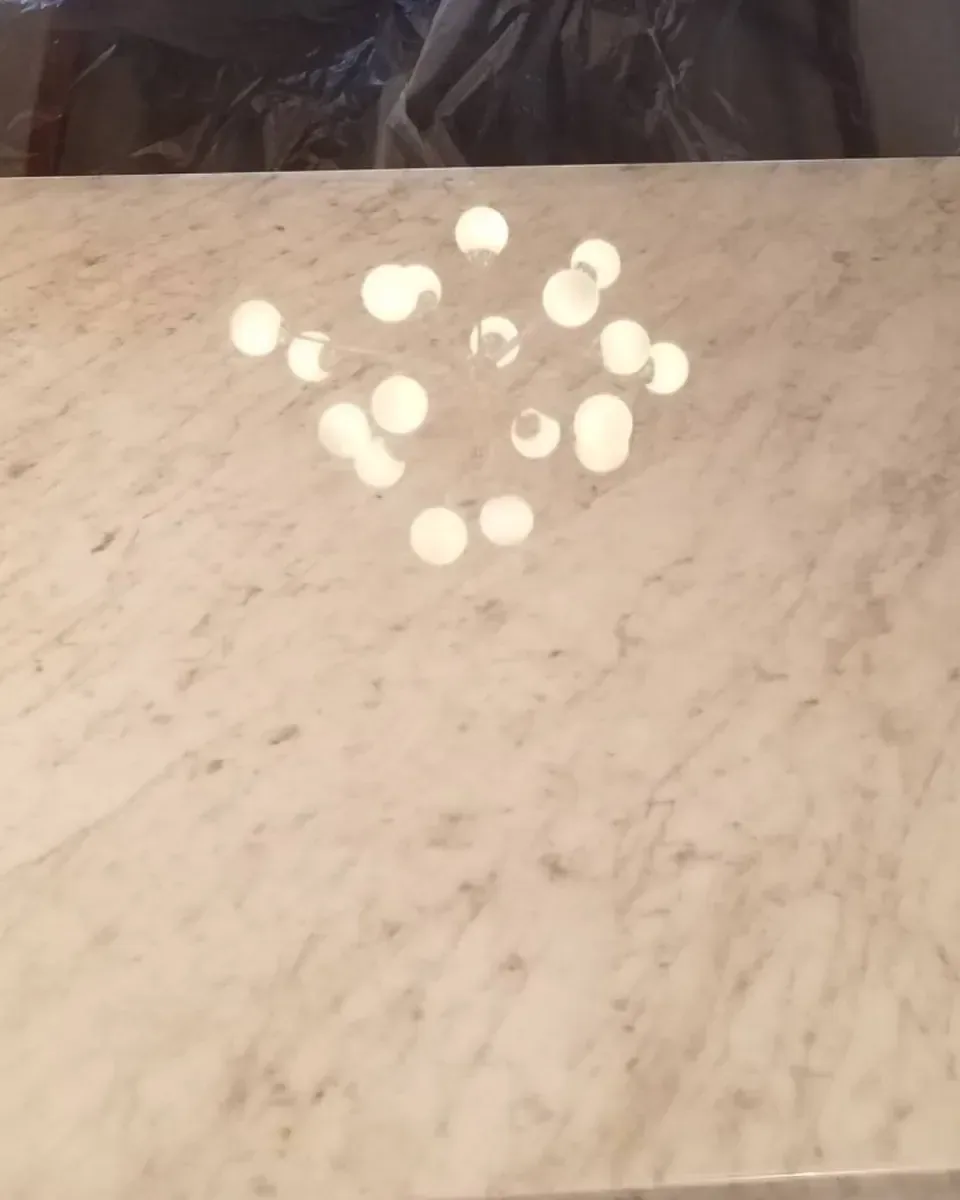
A few glass rings or one splash mark is spot work, and that is what this service is for. When etching has dulled most of the top, spot repairs leave a patchwork; marble polishing across the full surface gives one even finish.
A stain next to the etch
A spill can etch the surface and darken the stone at the same time, and a white deposit near a tap can look like an etch in a photo. Darker means something soaked in, which is a cleaning or poultice job: see our marble cleaning and sealing service. We check for both before choosing a treatment.
Etching is one part of marble care. For counters, floors and showers, see all marble restoration services.